
Once again I wish to acknowledge and thank my wonderful friend Shoba Nayar who edits my writing, and who’s careful eye and amazing suggestions helps bring alive, stories from our travels!
Where in the world are we? Seville Southern Spain

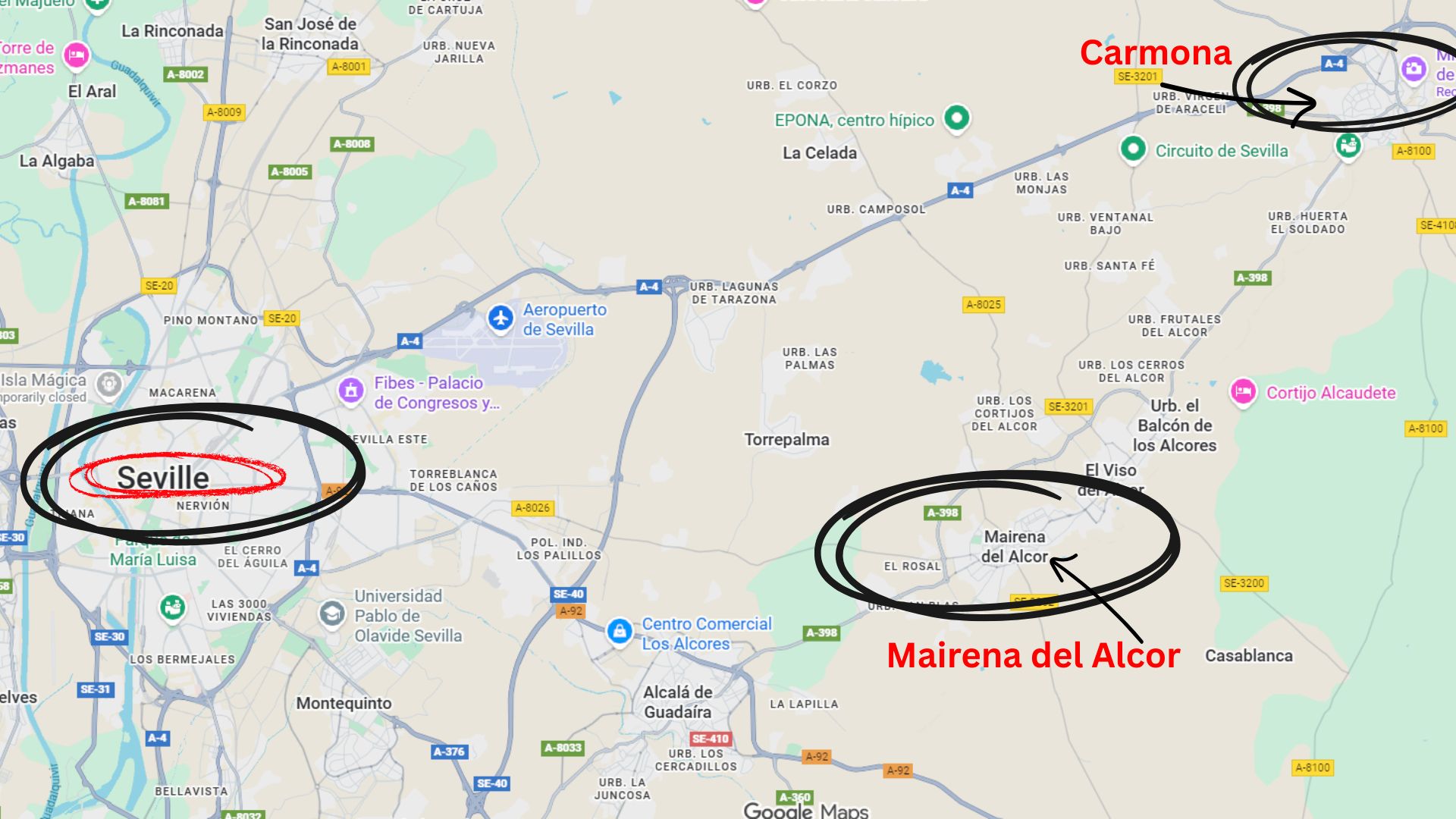
Leaving El Gastor, El Tajo and driving to Seville

As our time at the Casa Rural El Tajo came to an end, we closed the door, drove out the gate, and moved on to the last in this series of adventures in Andalucía, Southern Spain for 2025! I finished the previous story with the following:
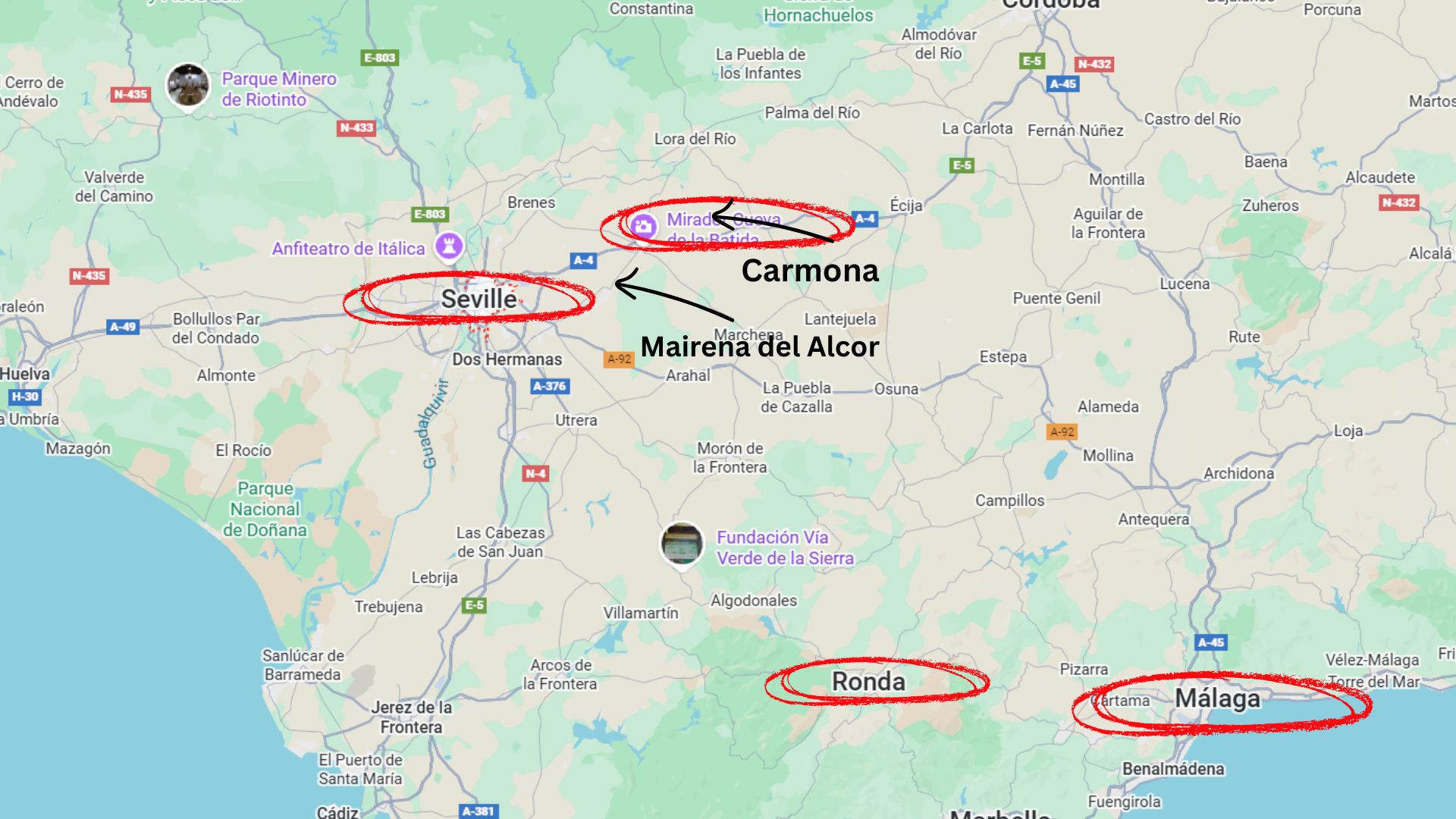
We made our way back to El Tajo and spent the rest of the day and evening in the swimming pool, eating dinner on the terrace and enjoying our haven on the hill as we planned our route to our next destination. This was to be a 3-night stay at a rural cortijo, ‘La Cansina’, in Mairena del Alcor, a village located just beyond the outskirts of Seville. From here, we spent a day in Seville and enjoyed the towns of Carmona and Mairena del Alcor. Come to the next story to explore with us!
You can read the full story here. https://teresaglobaltravels.com/spain-zahara-de-la-sierra-el-gastor-and-casa-rural-el-tajo/
Chatting as we drove along in the heat of the late morning, having enjoyed swimming and preparing to leave from our ‘haven on the hill’, we drove along the edge of the Embalse de Zahara-el Gastor (the lake), and bypassed Algodonales on the road towards Seville. With the windows down, we missed the GPS instruction to take a turn off and found ourselves on our way to Cádiz instead of Seville! Backtracking, we eventually got on the right road and stopped for lunch at a roadside bar and restaurant where we had a happy interaction with the staff and ate a lovely meal before making our way forward.
The changing landscape
The terrain became undulating and more agricultural once we came out of the national park, and one of the glorious sights was the fields of bright yellow, cheerful, waving sunflowers. The traffic became noticeably heavier as we approached the city of Seville and turned off towards the town of Mairena del Alcor, where we would stay for 3 nights with a plan to visit Seville’s ‘Barrio de Santa Cruz’ (the old Jewish quarter) and the Plaza de España, along with a river cruise. In 2008, we visited two of the other main tourist attractions, the Cathedral of Seville with the Giralda and the Real Alcázar, which are in the adjacent area. Our drive from the mountains of the Sierra Grazalema brought us into the intense heat of the interior of Cádiz and the Andalucian capital, Seville, which is situated on the lower reaches of the Guadalquivir River about 90km (54mi) inland from the Atlantic Ocean.
Huerta La Cansina – accommodation
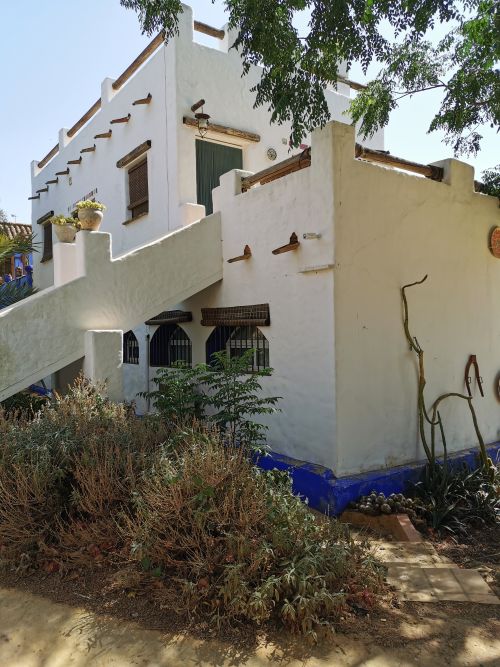
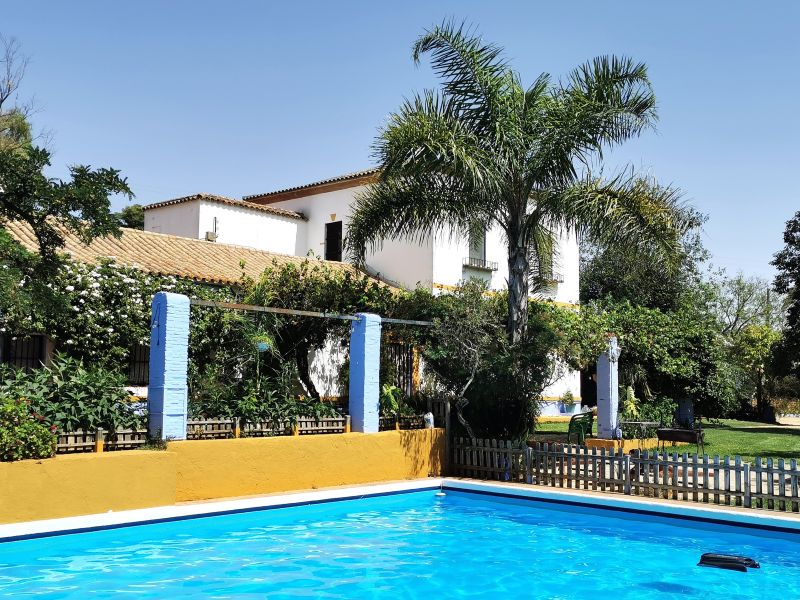
Following instructions from our hosts (and not GPS!), we found our way to the edge of Mairena del Alcor and to the Huerta La Cansina (see link below), just 20km (12.5mi) from Seville in the agricultural belt between the main highways to Cordoba and Granada. La Cansina has four houses for accommodation, a ‘celebration hall’, gardens, and a swimming pool, along with areas for campervan/camping and children’s play.
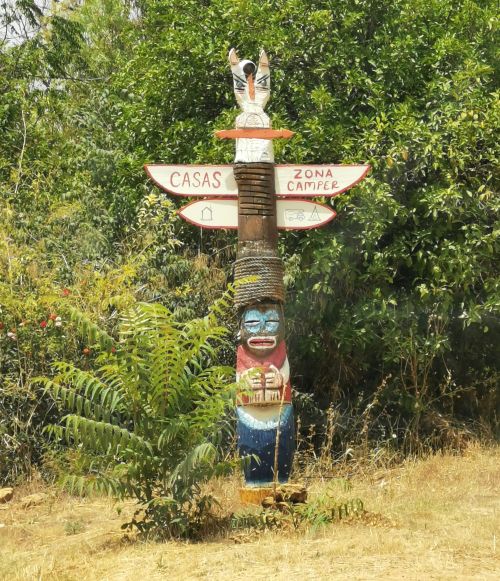
A great location for leisure and relaxing in nature, La Cansina is a place of fairytale holidays, weddings, and has even been used in the scenes of movies.
After settling in we chose to swim in the warm inviting pool and relax.
Manfred chatted in his best Spanish to the people who were taking care of the place while the owners were away for a few days, and acertained that the best plan for the following day’s visit to the city was to drive to a mall, park the car and take a taxi into the centre, where we could spend the day at our leisure and enjoy the best of Seville’s architecture and artistic heritage.
Our first visit to Carmona
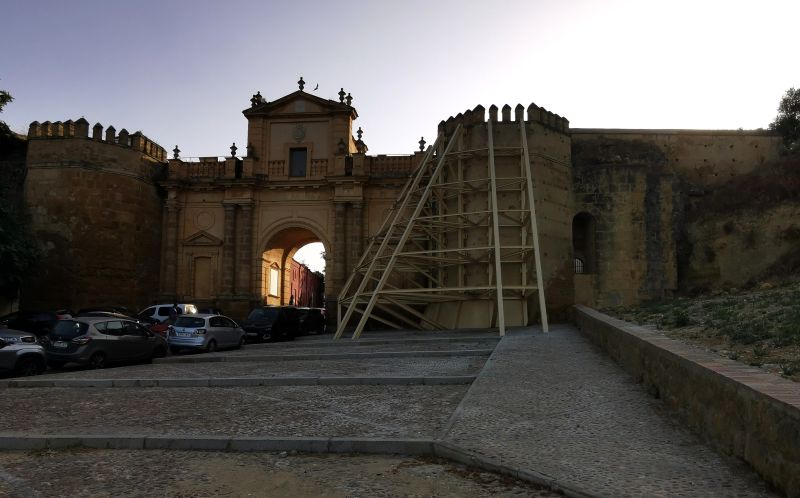
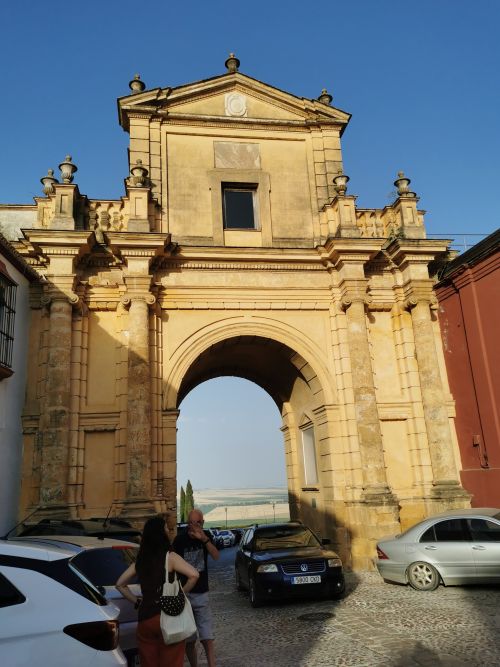
For dinner, we drove to Carmona which lies to the east in the direction of Cordoba. Our route took us up a very steep road to the ‘Cordoba Gate’. Built in the 1st century BC—1st century AD as a triumphal arch in the northwest end of Carmona town, the gates were flanked by two octagonal towers over a large base where originally three openings allowed for pedestrian and carriage traffic. Today, following numerous renovations and remodelling since Roman times, the two smaller side openings are closed and the north tower rebuilt after an earthquake in 1504. In the late 1700s to 1800, the gates were remodelled by the architect José de Echomorro, with additions to the upper section in the form of a balustrade, topped with a triangular pediment and balcony open to the exterior. There were a lot of people around the Gate walking on the cobbled streets on this warm Friday night, and the carnival atmosphere felt fun to be around.
We walked to the restaurant ‘La Almazara de Carmona’, passing a balcony that looked out to the farmland to the east and past tapas bars, restaurants, hotels, homes, plazas, and a bike rental shop.

The golden fields as seen from the Mirador Cueva de la Batida on the way to the restaurant


The restaurant has been renovated to incorporate the architecture of the Moorish and Roman eras and has a terrace described as ‘cosy and pleasant’, a bar for tasting and tapas, and two more spaces for meetings, haute cuisine workshops, promotions, and private events. The dining room we were seated in is called ‘The Old Oil Mill’, where the essence of the architectural elements of the building has been preserved. With its wooden ceilings and arched earthen pillars, it has seating for 38 people with white tablecloths and napkins, white wooden chairs and smartly dressed wait staff. Seated where the air-conditioning was freezing we requested to be moved to another table and felt justified when, later, a young couple also asked to be moved from the same table!
We enjoyed the food and wine and when we decided to leave around 10pm we asked for a taxi to take us the 1km back to the car. However, the waiter informed us there were no taxis and so under the starlit night we walked back to the car and returned to La Cansina, where it was still 30°C (86°F) at midnight.
Click here to see La Almazara de Carmona
https://almazaradecarmona.com/
A day in Seville
In the morning, we relaxed in the pool after breakfast on the terrace of our apartment ‘Casa Mediterránea’, that overlooked an eclectic group of buildings and trees that were our backyard.
Remember to open up the groups of photos to see them fully!


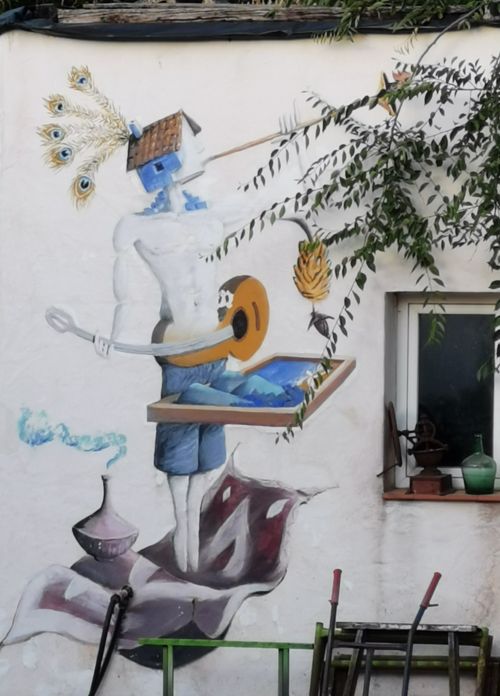
The view from the balcony of our apartment ‘Casa Mediterránea at La Cansina
https://www.lacansina.com/2014/05/casa-mediterranea.html
Early afternoon, we set out towards Seville, found the mall (thanks to GPS!). Parking in the underground car park, we then took a taxi to the Plaza España in the heart of the old city.
History of Seville:
Founded by the Phoenicians who came to the Iberian Peninsula for the rich metals such as silver, copper, and gold in the 9th century BC, they hailed from Cyprus and the eastern Mediterranean, having come from the bronze age Canaanites (from Cannan). Seville at that time was called Ispal. The Phoenicians blended with the Indigenous Iberians to form the Tartessian culture, and so began the development of art, religion, commerce, and the building of temples. Then came the Carthaginian control of Iberia in the 6th century BC, leading to the Punic Wars. After the Roman conquest in the 3rd century BC, it was renamed Hispalis, and after the Muslim forces overtook the Visigothic rule in 711, it was named Ishbiliyah and became a major cultural and commercial hub as the capital of the Almohad Empire in the 12th century. During this time, architectural monuments were built, including the Giralda Tower and the Real Alcázar.
Remember to open up the groups of photos to see them fully!


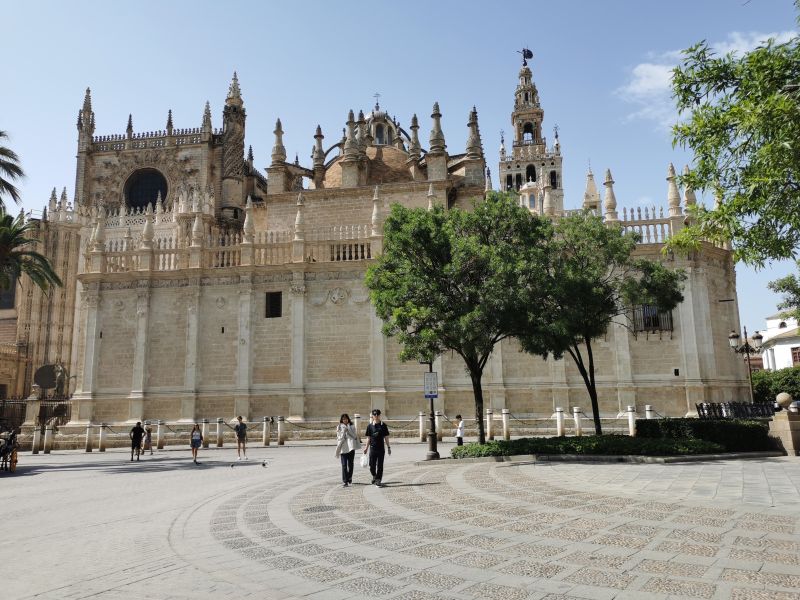
The Cathedral, Giralda, A tower of the Real Alcázar, The Galleon on the Guadalquivir river
Seville came under the Kingdom of Castile following the Reconquest of the Muslim rulers in 1248. Following Magellan’s first circumnavigation of the globe starting in 1519, the 16th century became a ‘golden age’ whereby the port held a monopoly of trade with the Americas. In the 17th century, this monopoly of trade was moved to Cádiz, due to the difficulty of large ships reaching the inland port on the Guadalquivir River because of silting, and the economic decline in Seville began. Culture, with notable artists, Bartolomé Esteban Murillo (Baroque artist with paintings in the Seville cathedral, the Casa Murillo and the ‘Museum of Fine Arts’) and religious painter Francisco de Zurbarán, rose in this time; however, due to a devastating plague in 1649, the population declined and did not recover until the 19th century.
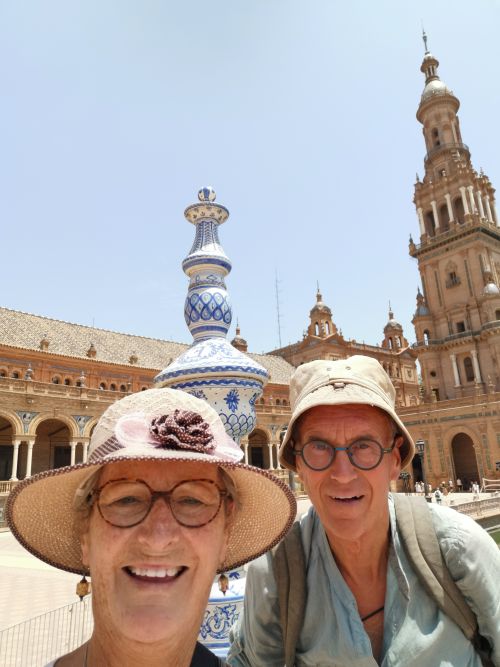
It was very hot at 37°C (98.6°F), and Seville was living up to its nickname ‘the frying pan of Spain’ due to it being considered one of the hottest cities in Europe where temperatures can reach over 40°C (104°F). Many locals leave for the mid-summer months of July and August due to the excessive temperatures that the city experiences. The rest of the year is pleasant and mild with low humidity. Locals and administrators have implemented some great ideas to keep the residents and visitors cool by continuing to uphold the tradition of siesta from 2-6 pm. Historic urban design, with its narrow streets and internal courtyards with thick stone walls, helps to keep interiors cool.
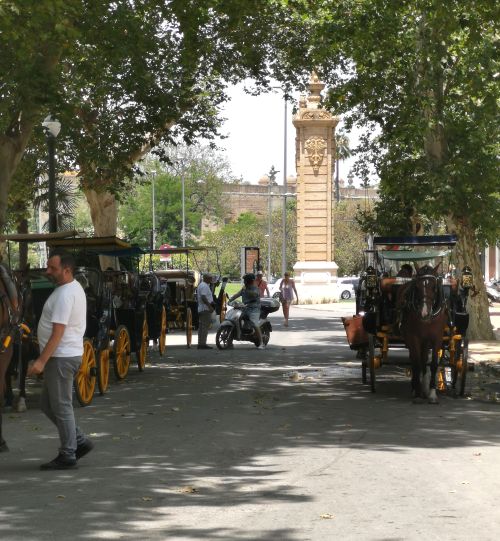
More modern shade awnings are used across major shopping streets and large plazas. Water misters in cafes and restaurants blow cool water from the veranda and awning edges, a wonderful way to keep customers cool, and there are many lovely trees and fountains that provide natural cool spaces. Modern and ancient technologies meet in Seville with a project using the Persian qanat system of underground cooling to lower ground temperature in public spaces. Like typhoons and hurricanes, they name the heat waves to raise public awareness and actions for safety. Visitors are encouraged to book places with air conditioning; drink water and cold soups like gazpacho; plan sightseeing in the cooler parts of the day; and visit museums, churches, and indoor spaces during peak heat hours along with the sensible option of wide brimmed hats and fans, and light loose fitting, light coloured clothing. We certainly made good use of many of these suggestions, and the air conditioning was a Godsend in our accommodation, while daytime resting or nighttime sleeping, it was the only way possible, and it was not full summer yet.
Plaza de España
Remember to open up the groups of photos to see them fully!


Several views of the North and South Towers at Plaza España

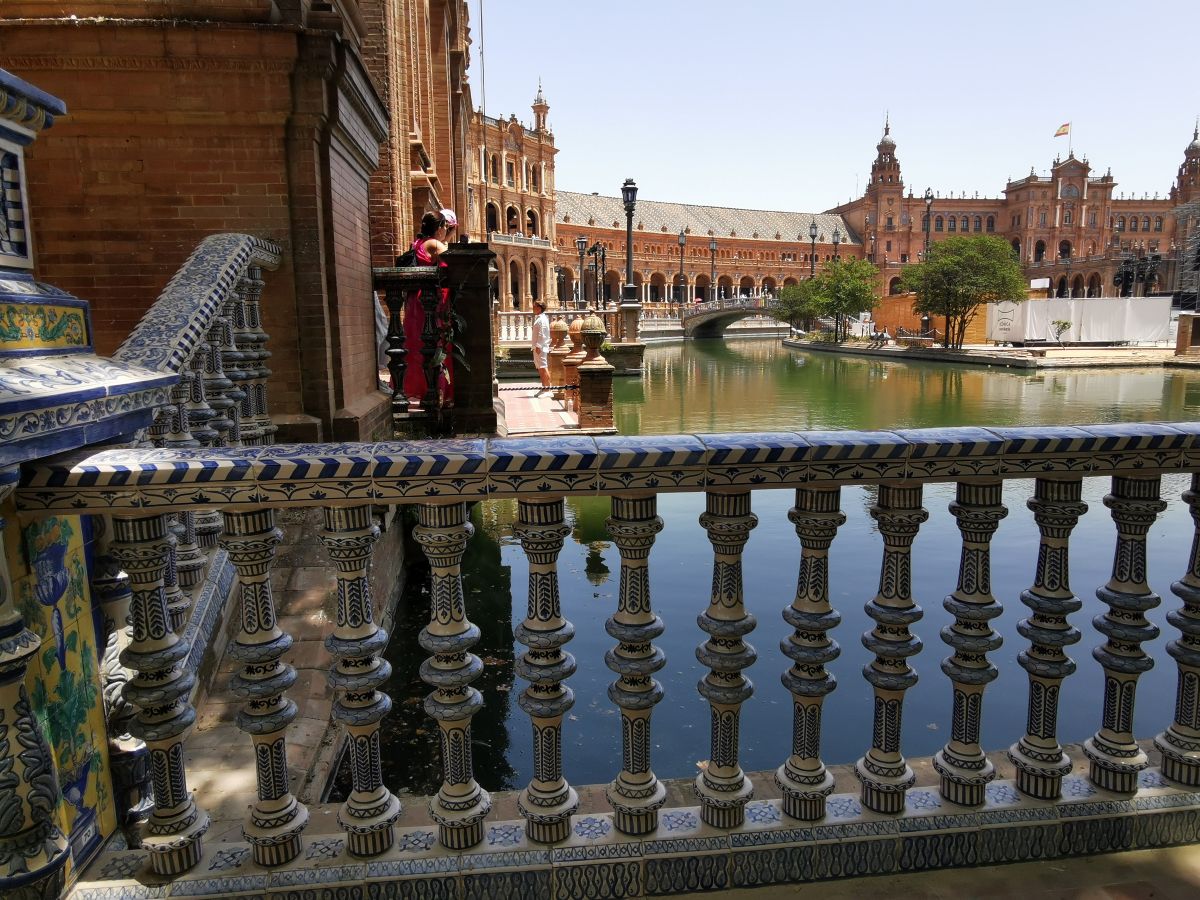
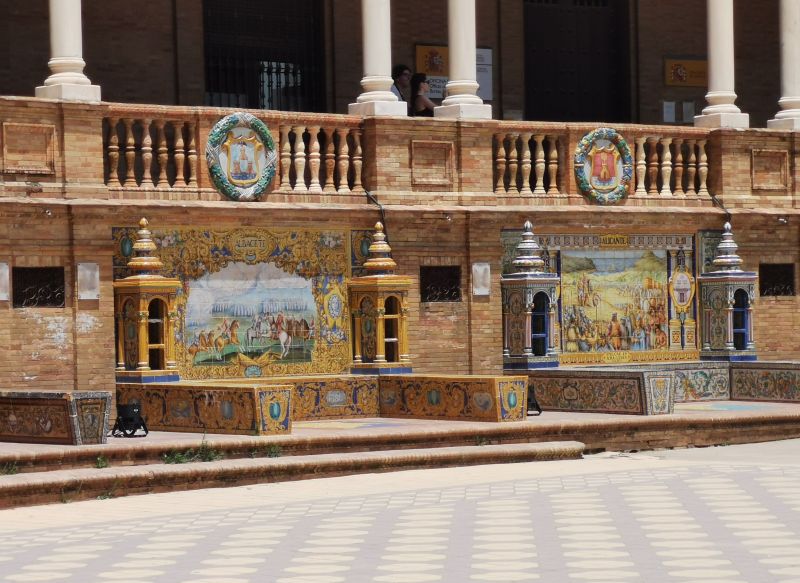
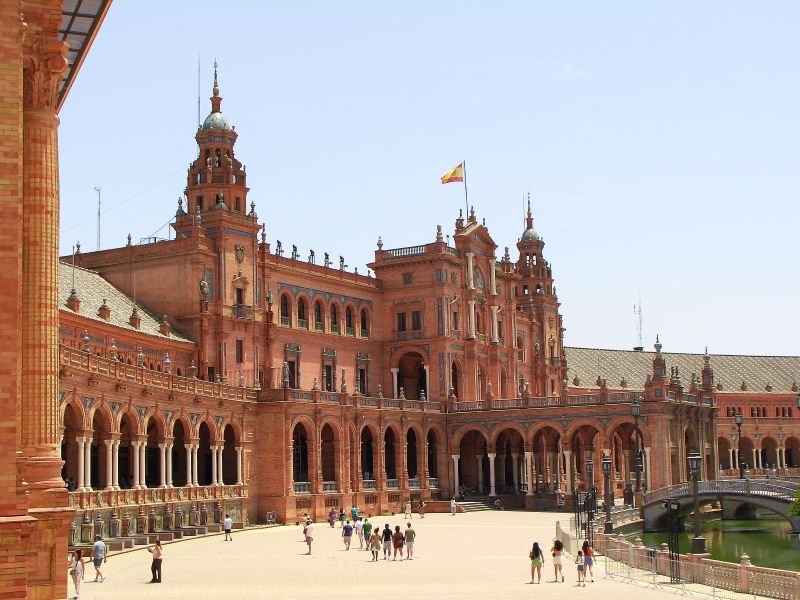
In the city, we spent time at the Plaza de España, designed by a great Sevillian Architect, Aníbal González, for the Ibero-American Expo in 1929. The heat was intense, and we could only stay in it for short periods of time before going under the veranda for shade. We took photos of the mosaic tiled alcove displays depicting the regions of Spain, the four bridges which are said to represent the ancient kingdoms of Spain, the 515m-long (1690ft) moat (canal), and the Plaza as a whole. There was a stage being erected for a concert near the moat, fountain, and bridges that run through it, and we were delighted with our visit.


Set in the María Luisa Park, and covering an area of 50,000sqm (538,195.5sqft), Plaza de España is shaped semi-elliptically, which is said to be a symbol of the embrace between the ancient metropolis and the countries it colonised. It faces the main river that passes through the city, the famous Guadalquivir, which is of great historical significance as the only navigable river in Spain and was the port where the explorations of the ‘new world’ began and became the gateway for trade with the Americas in the 16th century. In 1519, Ferdinand Magellan, from Portugal, set sail with 5 ships and a crew of 270 men, for the first ‘around the world’ trip. Taking his ships to Sanlucar de Barrameda on the Atlantic coast before taking to the open sea and circumnavigating the globe in exactly 3 years. Magallán was killed in the Philippines in 1521, and the only remaining ship, Victoria, was ‘bought home’ to Seville by Spaniard, Juan Elcano and only 18 men.
Remember to open up the groups of photos to see them fully!

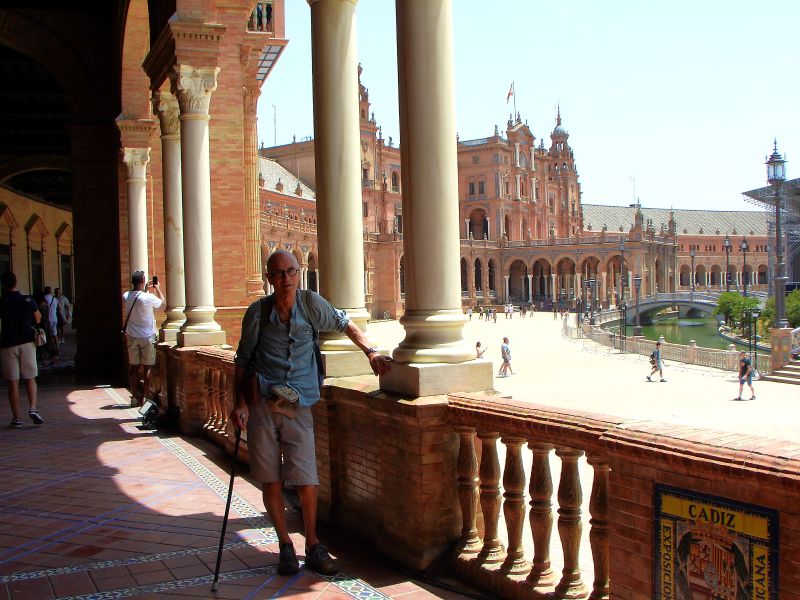


The Guadalquivir has been strategic during sieges and conquests for both defence and attack, alongside the provision of water as part of urban development, despite frequent flooding. Bridges have been built to connect Triana and the historic centre of the city of Seville. Today, the river and its canal are central to the city’s recreation, providing scenic views and the riverboats offer a unique perspective of many of the city’s great landmarks. Cruise ships sail down the 87km (54mi) length of the river to the Atlantic Ocean and Cadiz.


Use the down arrow to read more once opening the link below
https://visitasevilla.es/en/el-rio-guadalquivir/#
Walking from Plaza de España to Barrio de Santa Cruz

Leaving Plaza de España, we walked along wide tree-lined streets past the Universidad de Seville and the Real Alcázar de Seville (Royal Alcázar of Seville), the historic royal palace and one of the official residences of the Spanish royal family, towards the Jardines de Murillo (Murillo Gardens of Seville). Initially, the Alcázar was the Islamic-era citadel for the city, and building began in the 10th century and developed in the 11th—13th centuries, being rebuilt progressively after the Castilian conquest in 1248, where new palaces and gardens replaced what had gone before. Built in the Mudéjar style of the Iberian Peninsula, it also includes Gothic and Renaissance sections. It was registered by UNESCO as a World Heritage Site in 1987 along with the Seville Cathedral and the ‘General Archive of the Indies’, which houses the historical archives of the Spanish Empire, including those of the Americas and Asia.
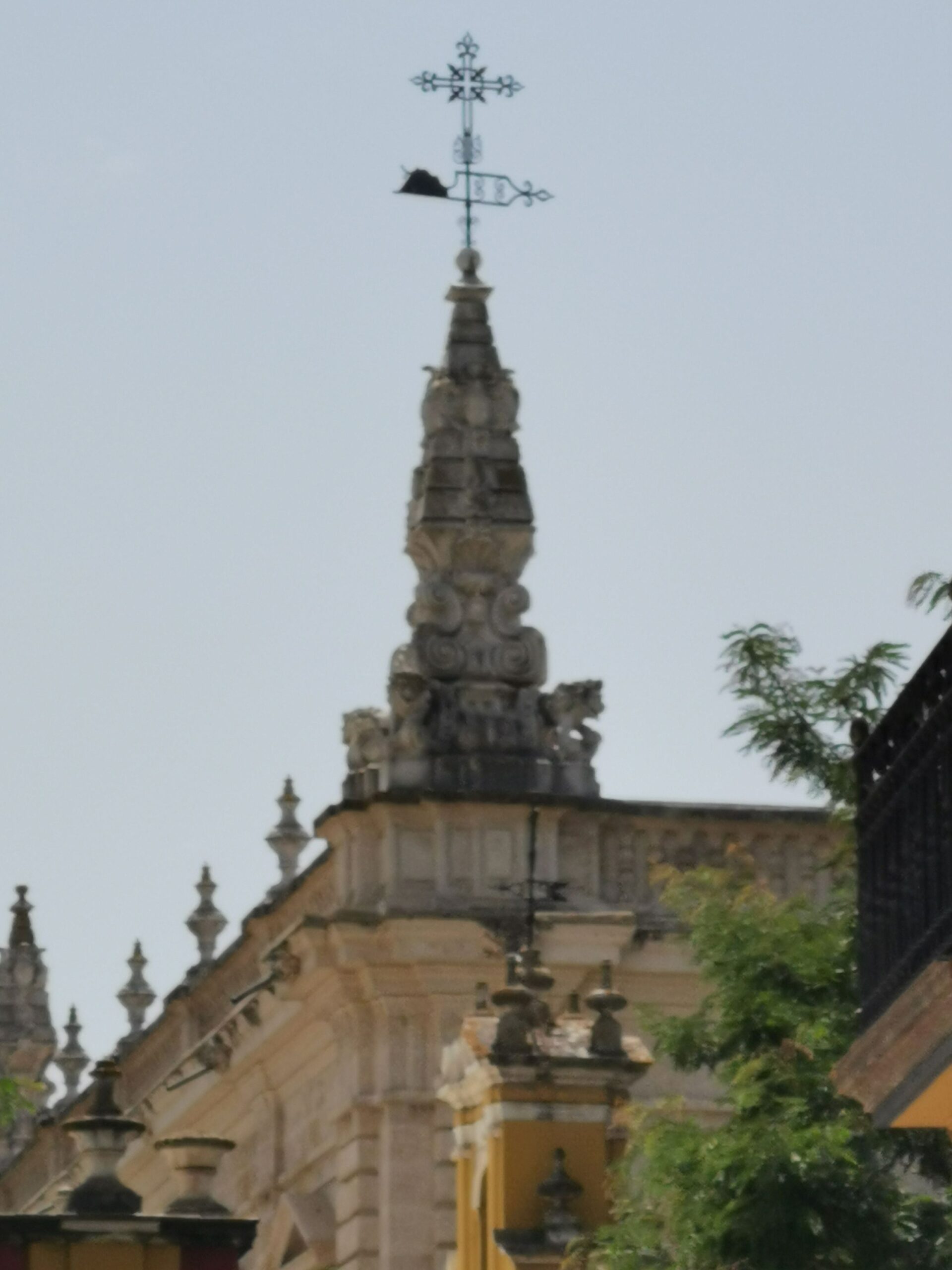
We had visited the Cathedral with its Giralda and the Alcázar in 2008 and decided not to revisit this time due to our plans for the Plaza de España, the visit to the Barrio de Santa Cruz, and a river cruise to fit into our day.
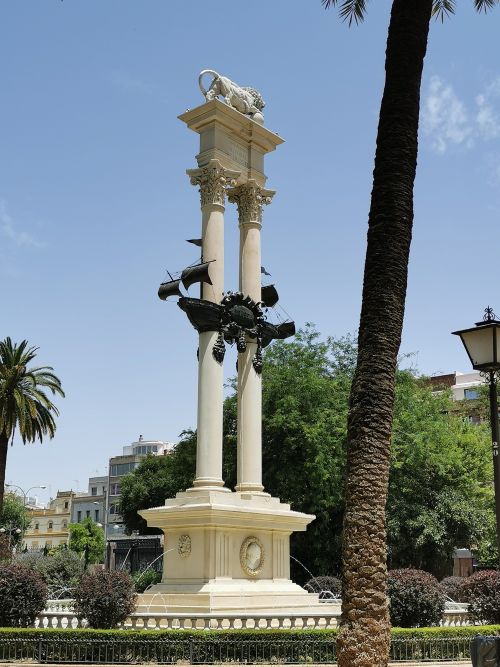
The Murillo Gardens, formally part of the Alcazar gardens, has been described by a tourist guide as having botanical exuberance with many pieces of Sevillian ceramics, making it an ideal stop before entering the Santa Cruz neighbourhood. The gardens were developed between 1911 and 1929. Over a space of just under 1km (0.6mi), there are small band stands and fountains, and a huge and interesting monument and obelisk—with a lion on the top and a black ship spanning the two columns half way up with the name ‘Isabel’ emblazoned on one side and ‘Ferdinand’ on the other. These royals, King and Queen of Spain, sponsored the voyages of Christopher Columbus (Cristóbal Colón) during that ‘Age of Exploration’, and the monument, installed in 1921, is dedicated to Columbus. We stayed a while in the peaceful surroundings to rest our legs and sit out of the sun.
Eventually we turned towards the Barrio de Santa Cruz. A street artist sat under an umbrella, conducting her art, and selling her finished pieces. We stopped, and Manfred talked to her in Spanish. We bought some of her artistic cards and moved towards the Barrio entrance, where, as one enters, the atmospheric change can be felt.


The street artist near the entrance to Barrio Santa Cruz
Barrio Santa Cruz
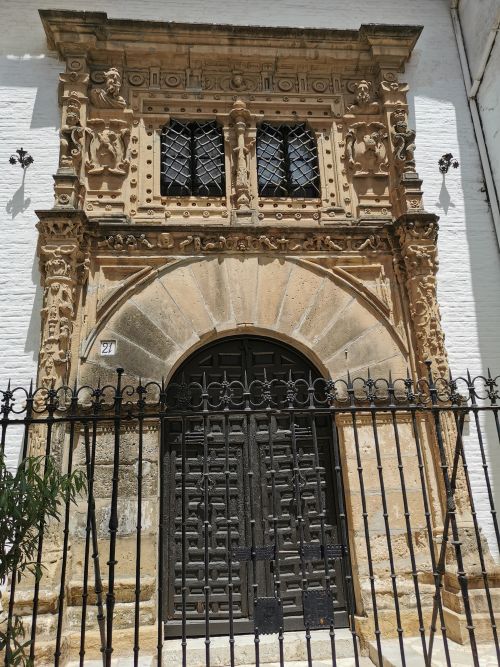
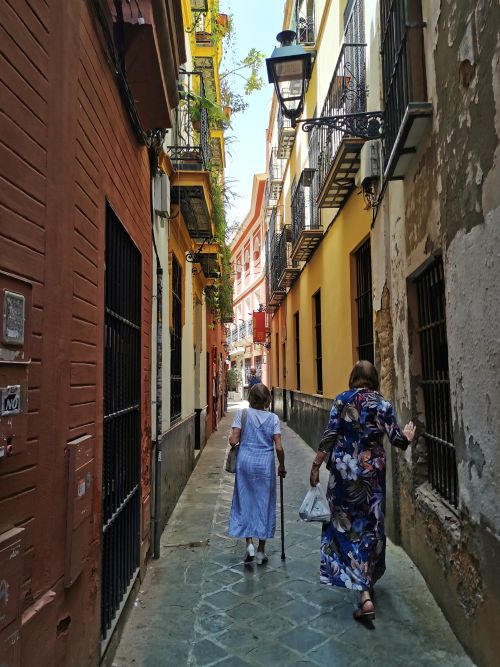
Formally the Jewish quarter in what is Seville’s ‘old town’, the Barrio de Santa Cruz is an amazing labyrinth of streets, narrow, winding, and laced with plazas. Orange trees and jasmine line the plazas and provide shade to the cafe and restaurant goers. Walking the maze of cobbled streets twisting and winding among the whitewashed, walled or high stone buildings, some have windows so close you could shake hands across the street. A vibrant area of the city, it is enchanting to just wander and enjoy, peeking through wrought iron gates and admiring the colourful tiles. It can get quite crowded because it is the main cafe and restaurant area for the major tourist attractions listed above.
Scattered throughout the area, plazas with poetic names, such as Plaza de Doña Elvira and Plaza de los Venerables, house fountains and outdoor seating at eateries where you can ‘people watch’, observe the charming architecture of houses, cathedrals and churches, museums and homes. Balconies are adorned with cheerful and colourful flower pots, and behind open verandas are beautiful inner courtyards. (we did not take a lot of photos, we were just enjoying the area)
The Barrio’s rich history and layout, designed to provide shade from the intense heat, has developed over time into residential housing, artisan galleries, and hidden gems of shops situated in picturesque corners near restaurants and cafes serving typical Andalucian cuisine.
One of the major cultural experiences is flamenco and the Barrio, along with Tirana, is considered the birthplace of this unique combination of music, song, and dance. You can locate plenty of intimate and authentic ‘tablaos’ – performance venues in the Barrio. In 2008, we enjoyed a performance at ‘Tablao Los Gallos’, and on this day we ate at the restaurant ‘El Rincon de Murillo’ without realising we were so close to this flamenco haunt.
https://www.tablaolosgallos.com/blog
Eating in the Barrio
We sat at a table in the street with mist being periodically sprayed for cooling customers in the heat. A team of Hungarian handball players occupied an outdoor corner of the restaurant on this narrow street opposite the hotel, with walking room for only 1-2 people.


We very much enjoyed our food, beer and Tinto de Verano, and wandered through one of the artisan gift shops next door, where handmade and painted fans were for sale in ornate boxes along with many other souvenirs. The shop owner was a young woman, and we had a great chat about her work and how beautiful it was to have the opportunity to see it in her shop. (Photos were blurred, sorry.)
https://www.elrincondemurillo.es
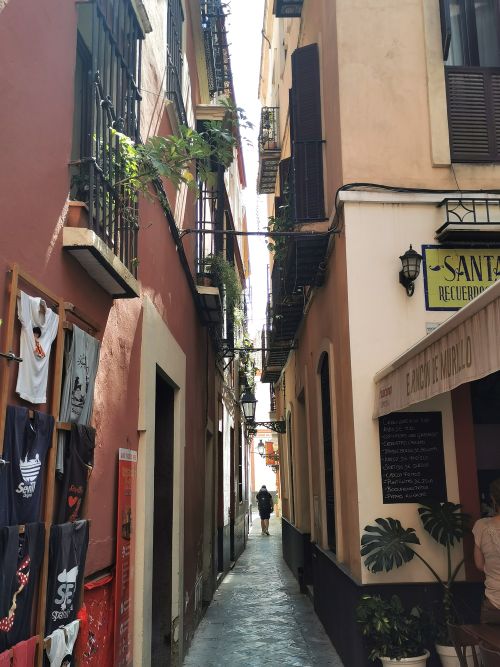
Walking through the Barrio towards the Cathedral & Giralda
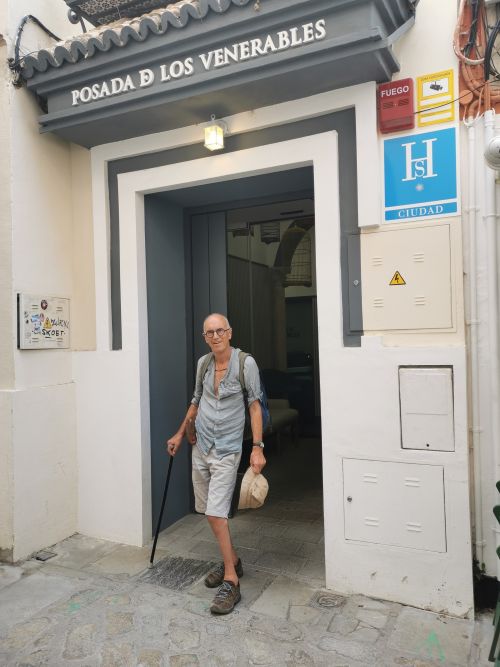
We wandered the narrow lanes and shops into the Plaza Venerables, coming to the area near an entrance to the Real Alcázar de Seville (Puerta de Marchena), the Archivo General de Indias and the Seville Cathedral, where we stopped for coffee at Café Santacruz Tapas Bar. It is situated in a small but very busy Plaza on Rodrigo Caro Street, where tables are set up under the shade of orange trees, beside the stone and brick wall of the historical landmark, which houses the ‘Fundación Biodiversidad’, a unique space for activities related to the environment. A small fountain sits in the cobblestones in the centre of the plaza. It was so atmospheric that we could have stayed for hours; however, we had a boat to catch!
(see photos in the link below)
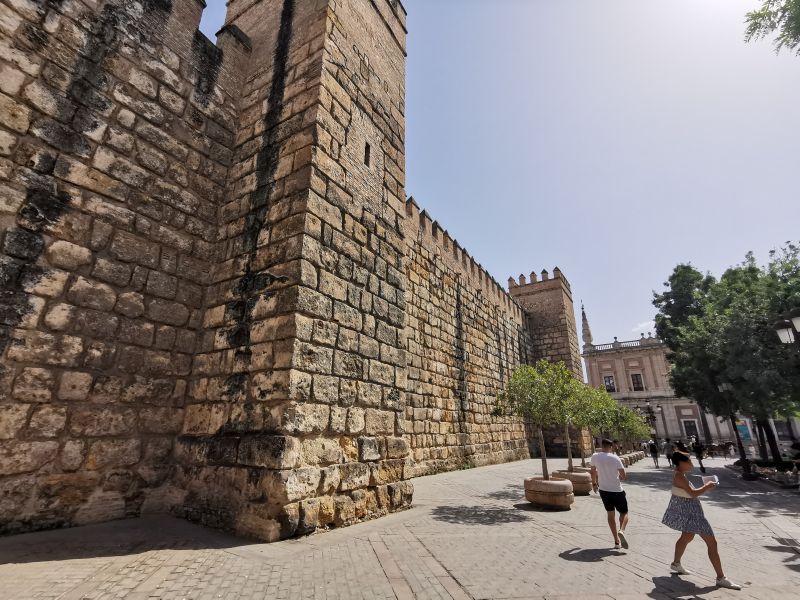
We continued towards Plaza del Triunfo, which is lined by the Cathedral, the Convent of La Encarnación, and another entrance into the Alcazár, Puerto del León. Here, cars are allowed, along with horses and carriages—a novel way of getting around the old city. From here, there is a clear view of the Girlada, the bell tower of the cathedral, which we had walked to the top of in 2008. Using Islamic techniques of brickwork, building as a minaret began in 1184. Following the Reconquista in 1248 it was converted to a Christian cathedral. Modifications between 1558 and 1568 included a Renaissance-style section for the bells that respected the original architecture in a harmonious way of blending styles.
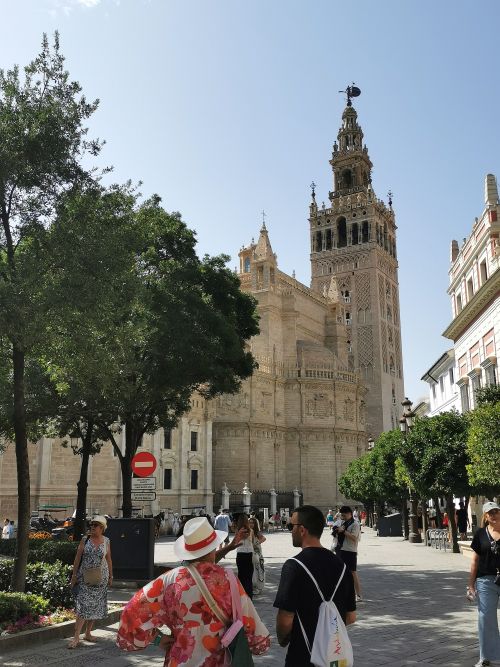
The Giralda houses 35 ramps instead of stairs, which were used when riding horses to the top for the Islamic call to prayer and subsequently to ring the bells. Now the ramps are used by visitors to walk up, ring the bells, and enjoy the 360-degree views of the city and surrounds. Below, on the backside of the cathedral, is the Plaza del Triunfo, where we admired the statue ‘Monument to the Immaculate Conception’ installed in its original form 2 years after a devastating earthquake in Lisbon in 1755, where no people were hurt while in the cathedral for mass. (I don’t have a good photo, so see a photo and info here)
https://en.andalucia.org/listing/plaza-del-triunfo/18085101/#
A cruise on the Guadalquivir River
We made our way towards the Puente de S Telmo (bridge near the meeting point for our river cruise). The small boat holds 11 passengers, and once on board we settled in with a complimentary cold drink.
Remember to open up the groups of photos to see them fully!


Enjoying the boat cruise and our cruise director Jose
The canal of the Guadalquivir, casually called ‘the river’, was established to prevent flooding, and houses the major port activities, including cruise ships.
Images from the river cruise


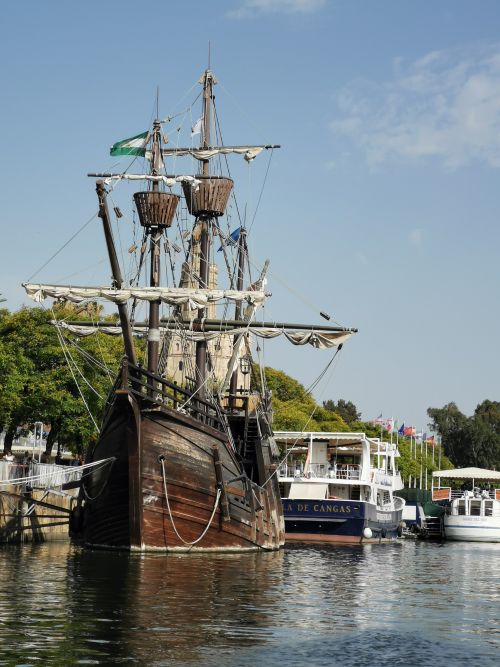
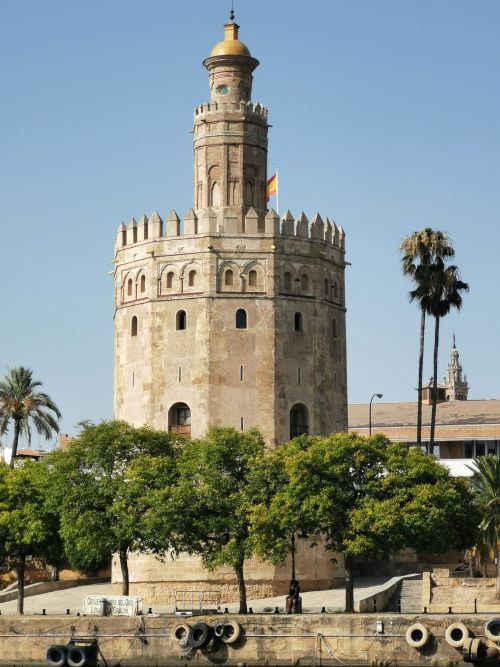
Torre del Oro, A cruise ship on the river and the Galleon and a wide view of the river area


Trajan holding a wolf – sculpture on the banks of the river, The Real Alcatráz, Giralda etc, The Queen’s Sewing room (The Costurero de la Reina) and more sculptures in a riverside park
Lined with tall palm trees and wide walkways, it is dotted with many historical landmarks and the old city’s amazing buildings on one side, and Triana, home of the gypsies and Flamenco on the other (now more upmarket and full of riverside bars).


Triana riverside houses and restaurants, Calle Betis, Barrio de Triana and the ‘Iglesia de Santa Ana’ Church of Saint Anne


Jardines de las Delicias, Castillo de San Jorge by the Triana Bridge, a turtle, And a statue on the bank of the river
We saw turtles and bridges, a cruise ship, paddleboarders, and preparations for a major rowing event the following day. It is a great way to see another view of the city and our ‘captain’, Jose, was fantastic at explaining the landmarks and sharing some historical information with wry humour that kept us captivated for over an hour.


Torre del Oro, Replica of the Nao Victoria Galleon, Seville School of Art, Puente de Isabel II – (Isabel II bridge).


Puente de los Remedios, Jarden de las Garreras, Memorial to the first round the world sea voyage by Magellan and Elcano, Parroquia Nuestra Señora de la O bell tower Seville – The The church of Our Lady of the O
Jose’s repertoire on the boat tour
Jose told us about the iconic buildings and their stories including the Torre del Oro (a military watchtower built to control river access), the Seville Cathedral (the largest Gothic cathedral in the world) and the Giralda tower, the Real Alcázar (one of the only royal palaces still in use in Europe), the Torre Schindler otherwise known as ‘The Schindler Tower’ (an observation tower built on the the Isla de la Cartuja between 1989 and 1992 for the 1992 Exposition of Seville along with the Pavilion of Navigation and in 2012 was converted into the Museum of Navigation. Built in modern style, 65m high (213ft), 18 accessible floors reached by lift over 24 seconds offer views of the river and the city of Seville), and the Isabel II Bridge (which connects the old city and the Tirana neighbourhood).


Triana Bridge and Torre Seville, 1 & 2, Torre Schindler otherwise known as ‘The Schindler Tower’ & kayakers on the river
Relaxing back at La Cansina
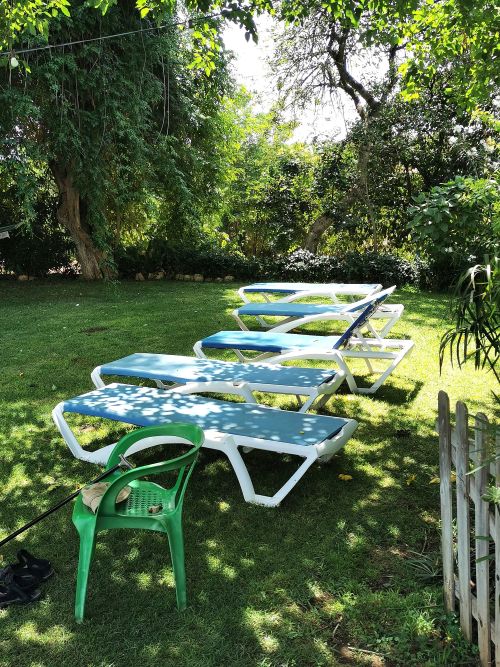
Back on shore, we caught a taxi to the mall and drove back to our little home in La Cansina where we once again enjoyed cooling off in the pool.
What a great day in the city!! There is so much to see and do in Seville that we could easily fill a few more days here, but we had only apportioned this one day and were happy with our choices on this second visit.
See some great photos that we didn’t manage to catch in the links below!
https://all.accor.com/a/en/limitless/thematics/top-things-to-do/seville-old-town.html
https://sevillecityguide.com/santacruz.html#
Remember to open up the groups of photos to see them fully!


La Taberna, Mairena del Alcor. Ensalada Russo and Boquerones, fresh, small white anchovies, at La Taberna, Mairena del Alcor
Later, we drove into the town (Mairena del Alcor) and found a restaurant for dinner, painted in the red and yellow of the Spanish flag, and simply called ‘La Taberna’, where we had a light meal soon after it opened. As we were leaving, in typical Spanish style, the locals were just arriving to dine. We familiarised ourselves with the main street, the ice cream shop, and the surroundings.
A busy last days experiences in Spain!
Churros and Chocolate!
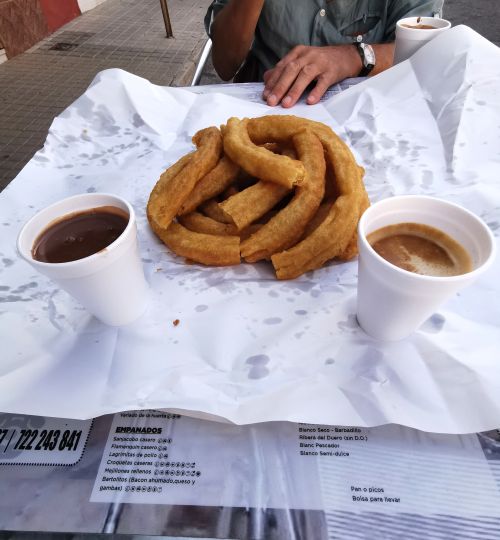
A trip to Spain is not complete without eating the famous ‘Churros and Chocolate’, and Manfred had asked our hosts to recommend the best place in Mairena.
The little shop, in a side street, has its only table on the footpath outside the door. We were advised to be there before 10am as that is when the locals all ‘flock in’ and so we were there about 9am along with a few locals. We got our order and sat at the table and chairs on the roadside and enjoyed the deliciousness of the chorros with perfect chocolate, not too sweet and not to thick!


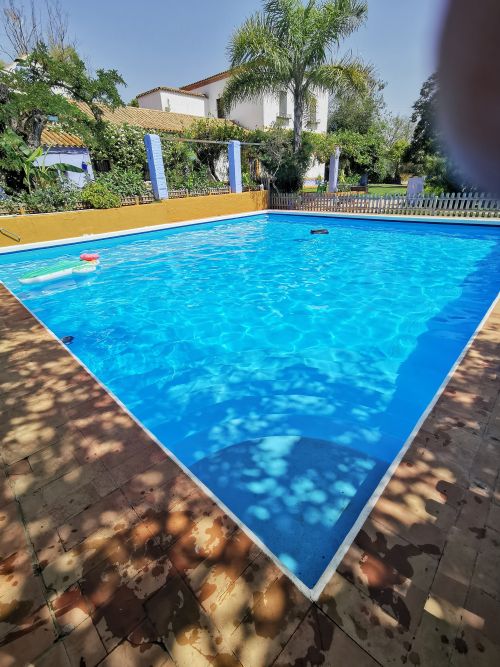
Feeling a little jaded after our big day in the city, we went back to La Cansina for a swim, rest, reading and relaxing for the rest of the morning and early afternoon.
Last visits to Carmona

Mid-afternoon we headed back to Carmona and to a restaurant we had passed the night before, a small tapas bar at a bifurcation in the narrow streets, but they had just finished serving food. Another restaurant on our list was fully booked, but as we were leaving a man told us there was a nice restaurant, ‘Taberna El Tabanco’, not far from here, and part of a hotel complex, ‘Hotel Alcázar De La Reina’.


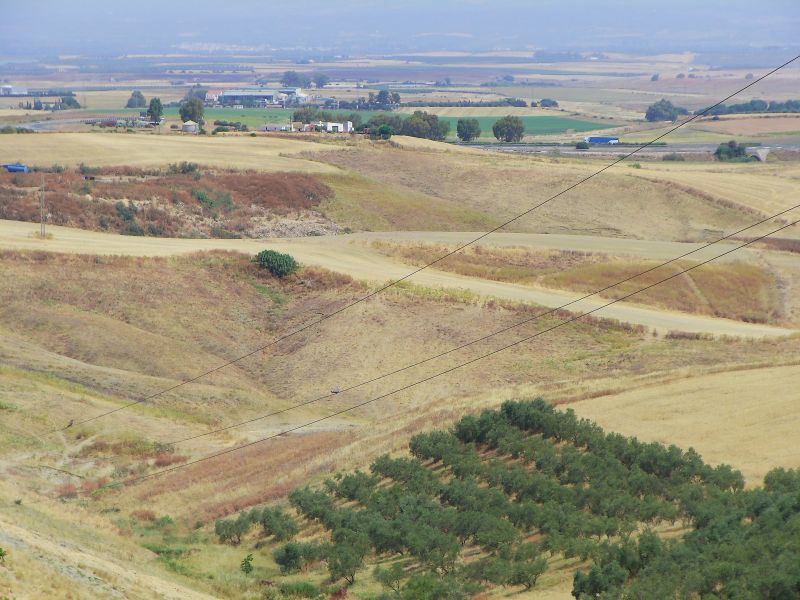
I knew exactly where it was because we had passed it the night before, and so we strolled there feeling the heat of the day and finding ourselves rather thirsty. It was opposite the Mirador Cueva de la Batida, a large, grey tiled area with concrete seats and plant troughs. The view over the gold coloured agricultural land dotted with the light green of olive trees is breathtaking, vast and beautiful, as far as the eye can see and where the horizon becomes hazy towards Cordoba!
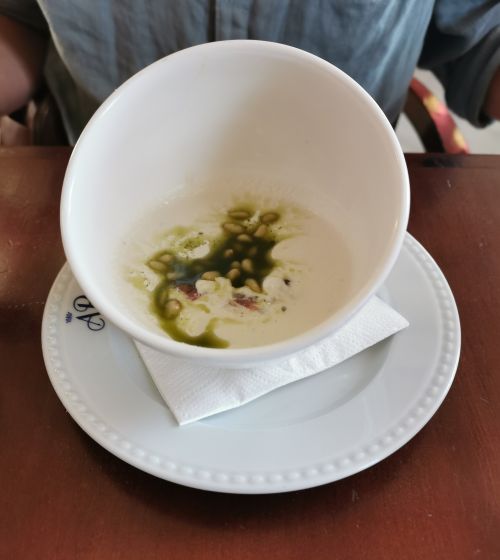
We had a delicious meal in this lovely restaurant, and chatted quite a bit with one of the waiters. On our way back, the man who directed us there, saw us and came to ask us if it was satisfactory. He told us he and his wife lived 3x3x3x3 months here in Carmona and near Tarragona on the east coast of Spain.
Remember to open up the groups of photos to see them fully!


At the Taberna El Tabanco restaurant in Carmona


A collage of famous flamenco and local personalities on the wall in Taberna El Tabanco
We came back to La Cansina, rested, swam, and went out in the mid evening for an ice cream, knowing that the following day we would be making our way to the airport hotel in preparation for our onward journeys, I was going to England to spend time with my eldest daughter and family and Manfred to Germany before flying back to Aotearoa New Zeland.

Our last day in Spain!
With this leg of the journey coming to an end, deciding how to spend our last day in Spain was easy. Hanging out at La Cansina, swimming, packing, sorting, we then made another trip to the lovely town of Carmona.
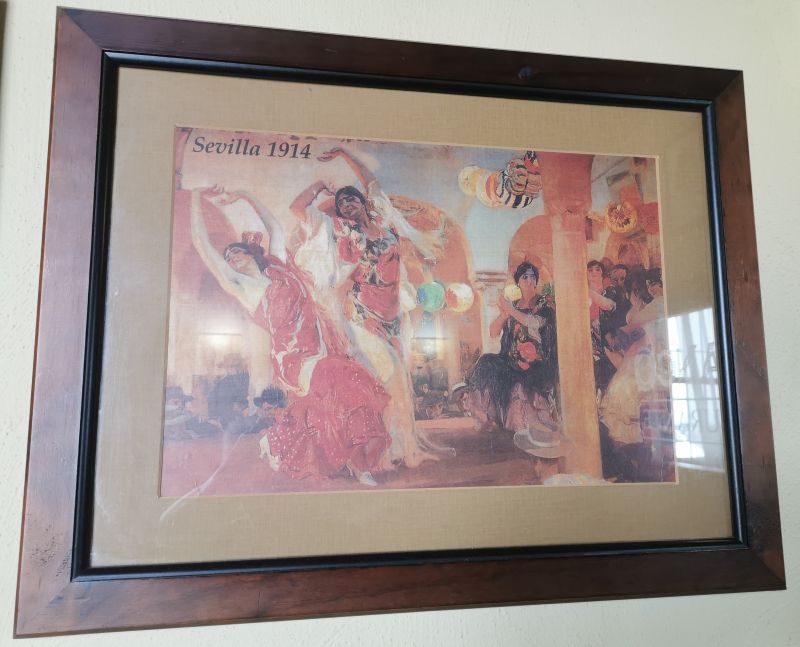
We had time to enjoy and wander part of the town, past some of the old buildings on our way to the ‘Taberna El Tabanco’. The history of Carmona is interesting, dating back to the Neolithic period. Apparently, rich prehistoric sites have been found in its surroundings. In its position on a hill overlooking the vast lands below, it was strategic during many wars in the times long before the Romans came, and below the city beyond the Gates to Cordoba, a Roman bridge remains. In the centre of the town is the Alcázar de la Puerta de Sevilla, the Roman Amphitheatre and a Roman Necropolis of Carmona, with a large cemetery which has all been archeologically excavated– but we did not have time to visit on this trip.
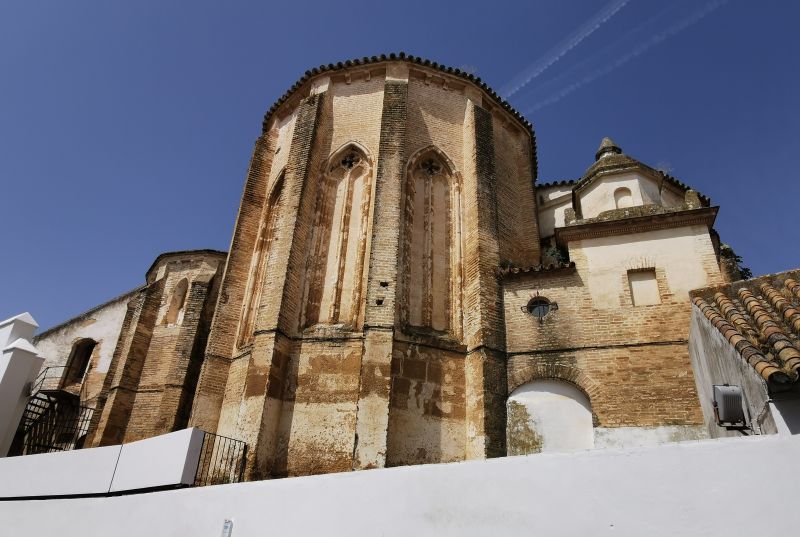
We wandered past the oldest church in Carmona, the huge stone and brick ‘Iglesia de Santiago’, built over a mosque in the 14th century and added to over the centuries, including a Giralda and bell tower, with storks nesting on its high pinnacles.


Storks on the bell tower of the Iglesia de Santiago, Carmona
Remember to open up the groups of photos to see them fully!


A view from below the bell tower at Iglesia de Santiago
The church was closed, so we could not look inside, but the photos of the ornate tiling and baroque altar are stunning. There are several entrances to this large catholic church, and the main entrance opens onto Plaza de Santiago.


Through the closed gates towards the main doors of the Iglesia de Santiago & Cruz de la Plaza de Santiago, Carmona
Convento de Santa Clara, Carmona
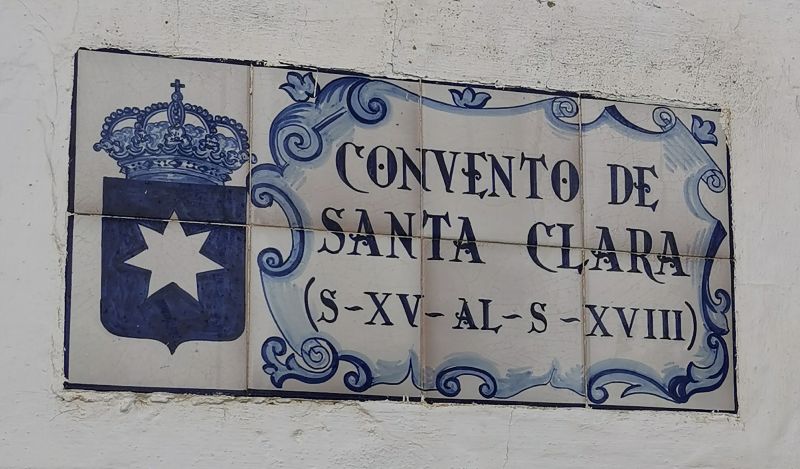
We then came to the very large Convento de Santa Clara (Saint Clare), thought to have been built at the end of the 16th century, beginning of the 17th century. When parishes were created in the 15th century, convents followed, and this is the oldest of them all. It belongs to a closed order of the Franciscans, and the nuns are called ‘The Clarisses’, who live a life of poverty, charity, and sacrifice, and were originally led by the founder Saint Clare of Assisi, a disciple of Saint Francis of Assisi. The Clarisse sisters (nuns) have a bakery producing many sumptuous cakes of Moorish origin, and in the old days sold these cakes via a revolving half-sized hatch in the door during non-face-to-face transactions. This was to respect the intimacy of the closed order requirements. These days, the cakes can be purchased at reception, and the convent is now open to tourists, which helps provide the necessary financial means to upkeep the convent. A door in the big gate was open, and I peered into a lovely, peaceful garden.


Capilla de la Caridad, built in 1510 and part of the care of the sick & The main entrance door of the Convent of St Clara
A final visit to the Taberna, Carmona!
We arrived early at the Taberna and sat waiting in the mirador across the street when our friendly waiter from the previous day came along and took us into the hotel ‘Alcazar De La Reina’, set us by the swimming pool and bought us coffee while he got the restaurant ready.


Manfred & Teresa under the shade at the pool at Hotel Alcázar De La Reina, Carmona
It was very restful after our long, hot walk around the old town. We had another stunning meal, this time sitting in the small bar area where the walls were adorned with interesting photos from the past.
Remember to open up the groups of photos to see them fully!


Lunch and Limoncello in the bar at Taberna El Tabanco, Carmona
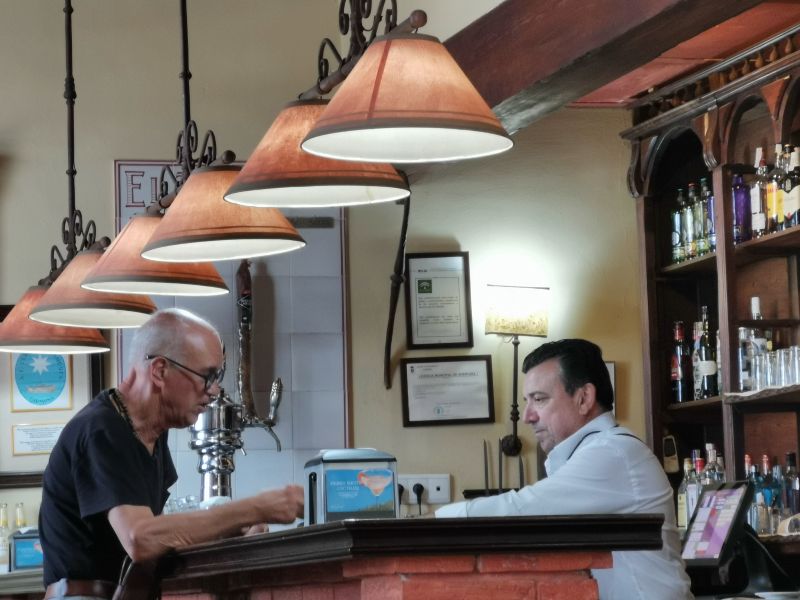
After our meal, we returned to La Cansina, packed the car, drove past the entrance to the town with its statue of Don Quixote as a centre piece and on to the airport hotel, where we checked in, returned the hire car and prepared for our flights the following day.


Leaving La Cansina and A statue of Don Quixote on a roundabout at the entrance/exit to Mairena del Alcor
And so ends this leg of the trip, but there will be more stories coming soon. To quote Manfred’s words:
‘This trip has surpassed all expectations‘!
I can only agree.