
Once again I wish to acknowledge and thank my wonderful friend Shoba Nayar who travelled with me this time, who edits my writing, and whose careful eye and amazing suggestions helps bring alive stories from our travels!

Where in the world are we? INDIA!!
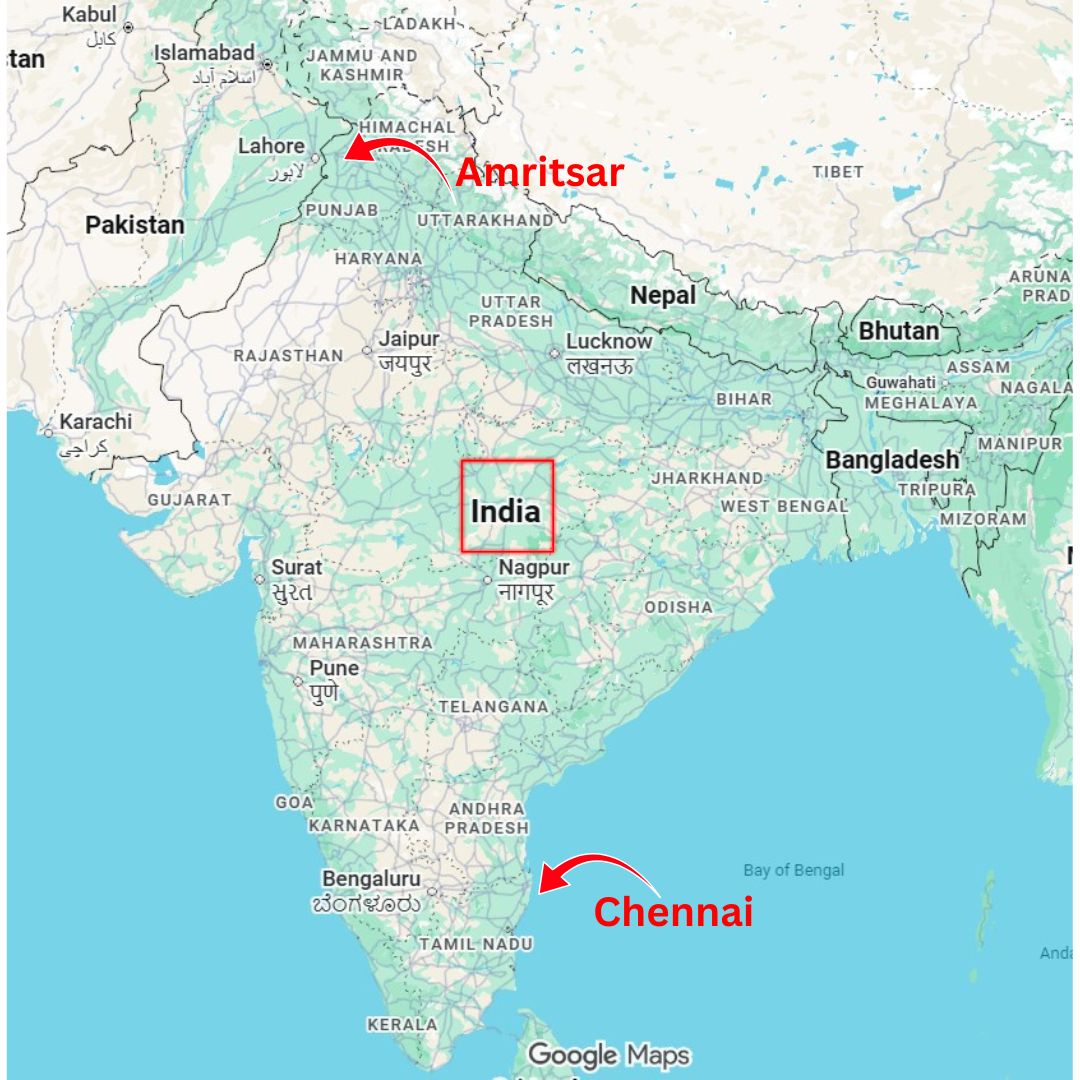
Chennai to Amritsar
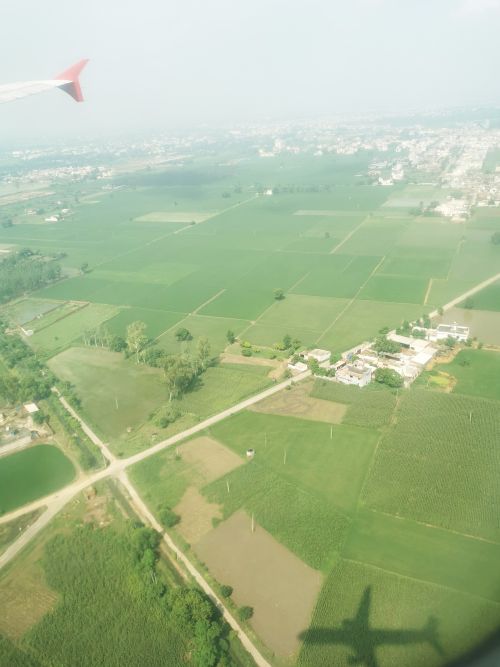
I arrived in Chennai, India, to stay with my friend Shoba. We had planned a short trip to Amritsar to visit the famous ‘Golden Temple’ and other places of interest in the region. The journey began with flying low over the striking green fields into Amritsar in the mid-afternoon and driving directly to ‘The Golden Sarovar Portico’ hotel situated north-west of the city centre.
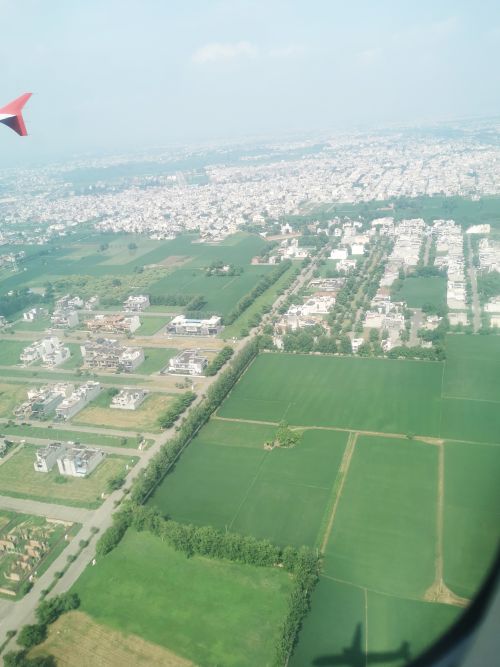
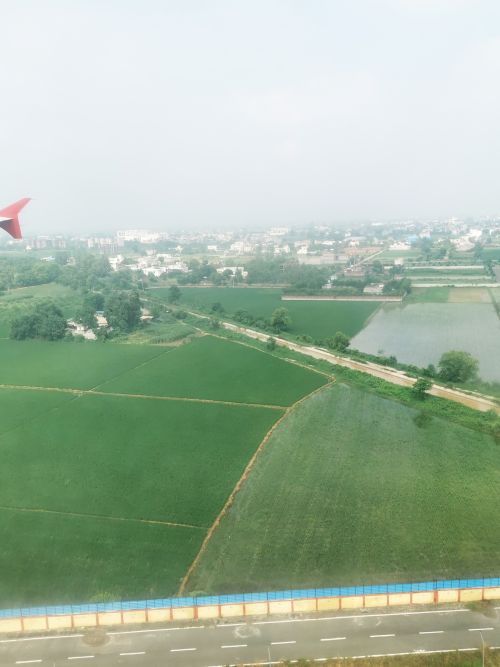
Beautiful green fields on our descent into Amritsar
After settling in, we went for a walk along the streets near the hotel, passing a small park, several houses and businesses. En route we came across two young lads taking photos of a poster with a QR code. It was headed up ‘Rahul, you cheated on me’ and at the bottom, ‘I’m leaving here photos for everyone to see what you did’. We were very curious, and so scanned the QR code and found it was an advertisement for a restaurant! A novel way of advertising indeed!

Book your stay here: https://www.sarovarhotels.com/golden-sarovar-portico-amritsar/
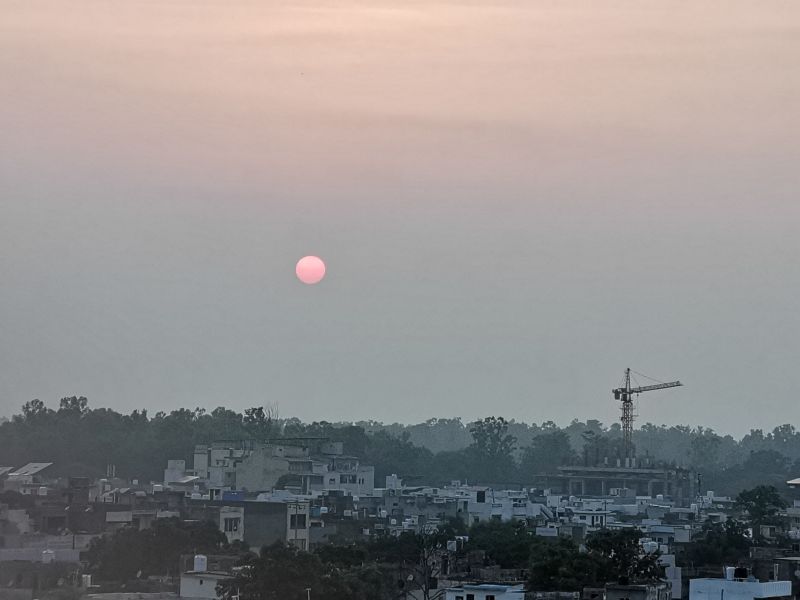
That evening, seated at the rooftop bar, we enjoyed our evening meal looking out over the roofs of the local houses, with a view to the ‘District Administrative Complex’. Built in heritage style, these red stone buildings house various government offices of civil administration used in running the city. It made for a stunning view as the sun set on this beautiful day.
Remember to open up the groups of photos to see them fully!
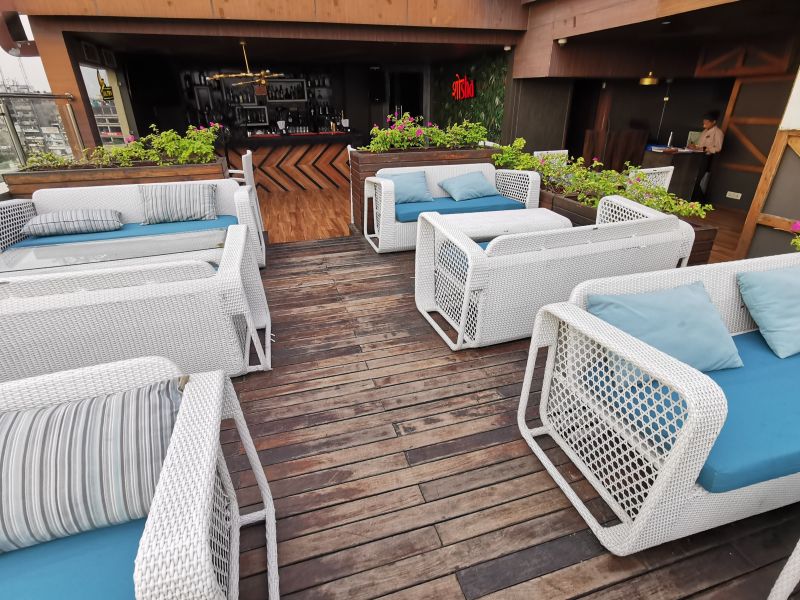
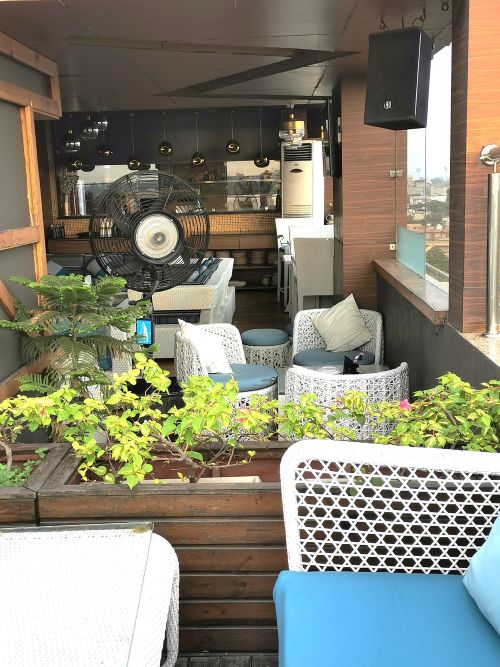
The gorgeous roof top bar!
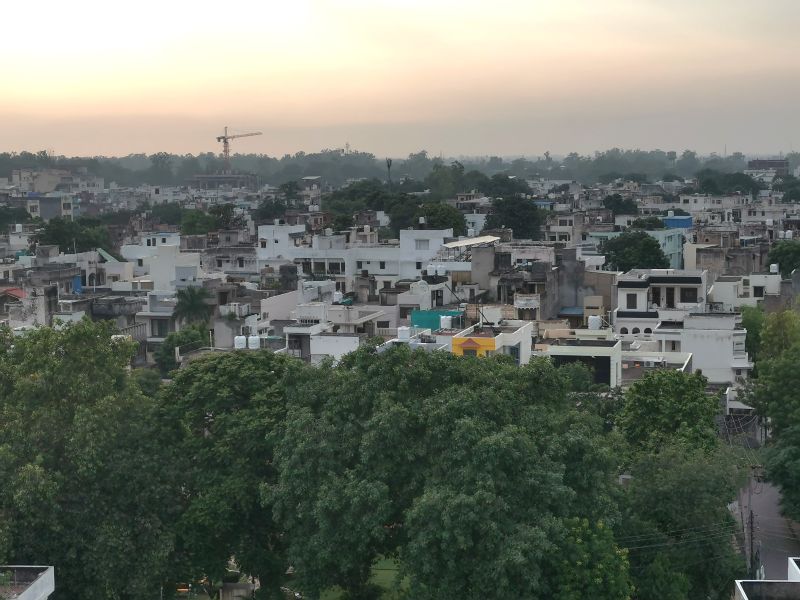
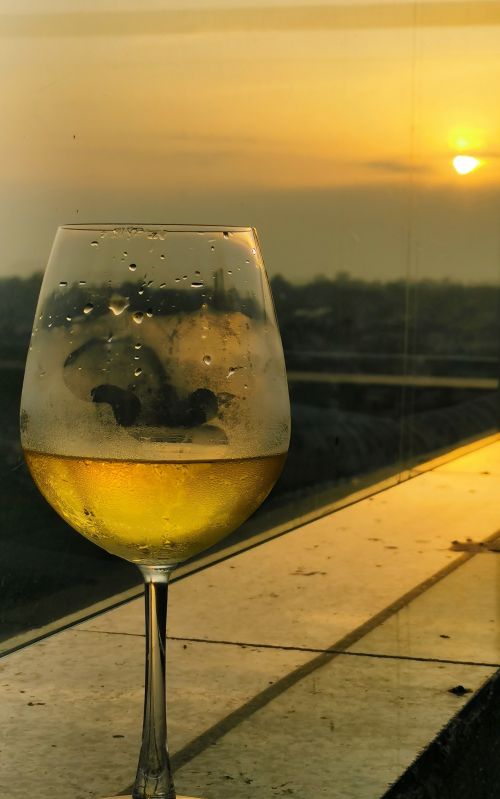
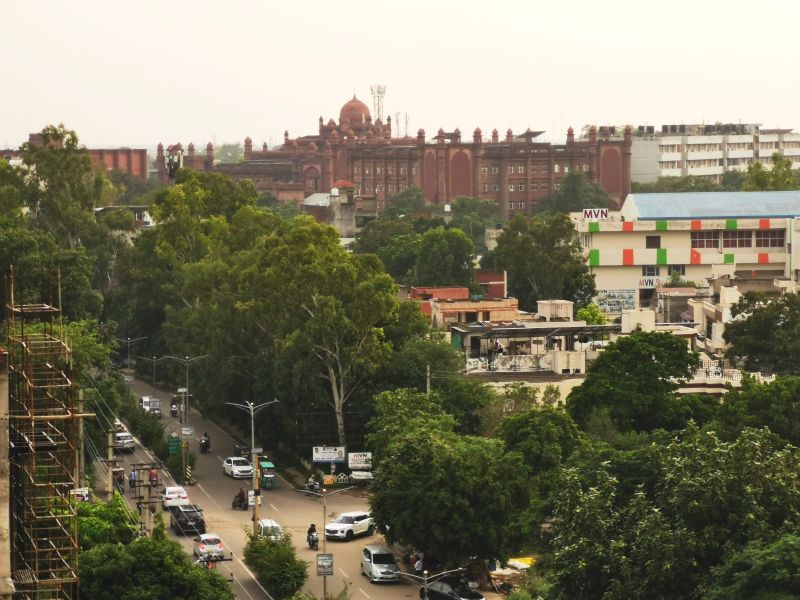
Sunset over Amritsar and the ‘District Administrative Complex’ buildings Amritsar
With a population of approximately 1.5 million, Armitsar is not a particularly big city; however, it is a city steeped in history and spirituality, offering a rich tapestry of experiences, as was evident to us over the next few days. We had a busy schedule planned and so retired early to be prepared for a lot of walking; sightseeing; and learning about this fascinating city’s history, religion, culture and much more. After breakfast, we met our guide and driver and set off on our adventure.
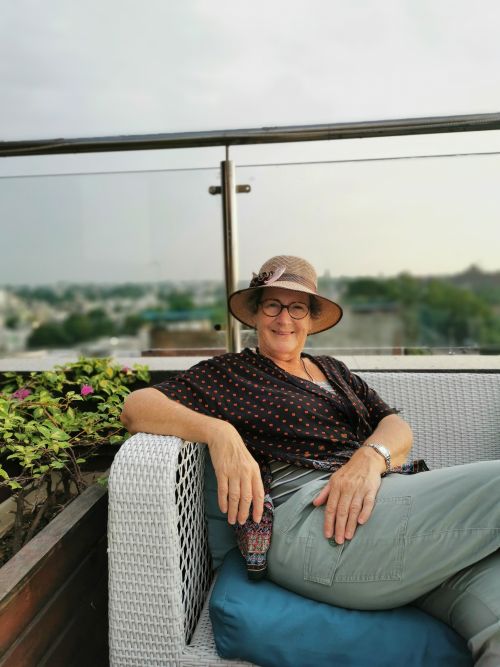
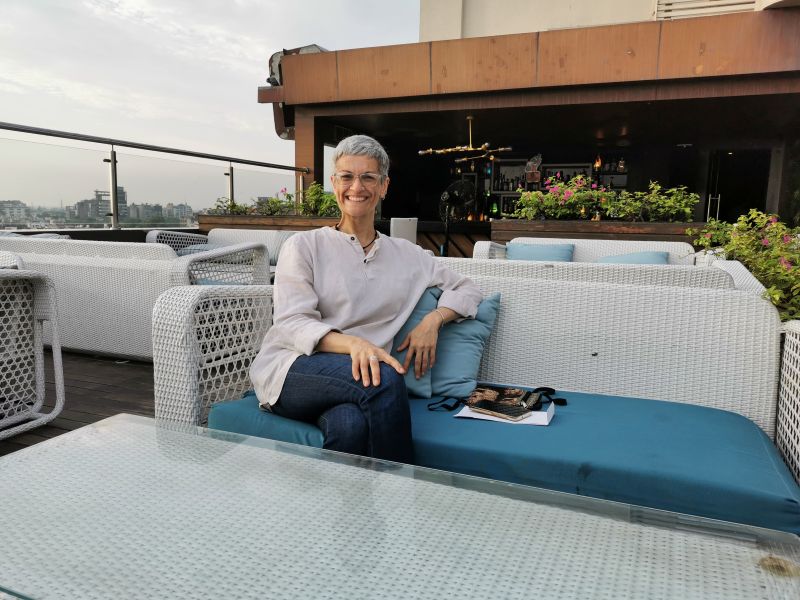
Enjoying the roof top bar at the ‘The Golden Sarovar Portico’ Hotel Amritsar
Exploring Amritsar!
We arrived at a drop-off point under the red sandstone modern Metro built in the heritage style of the city, where many vehicles were dropping off visitors, travellers, and workers for the day. The architecture of the buildings in this area is stunning, often red but sometimes white as snow, such as the ‘Akali Baba Phoola Singh NRI Niwas’ – the entrance to Sikh Gurdwara and the Bakarwana Bazar.
Remember to open up the groups of photos to see them fully!
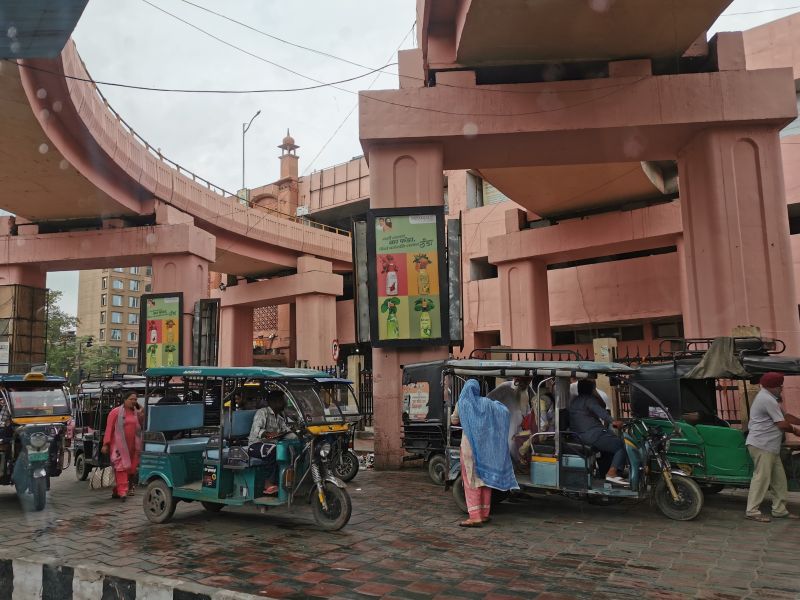
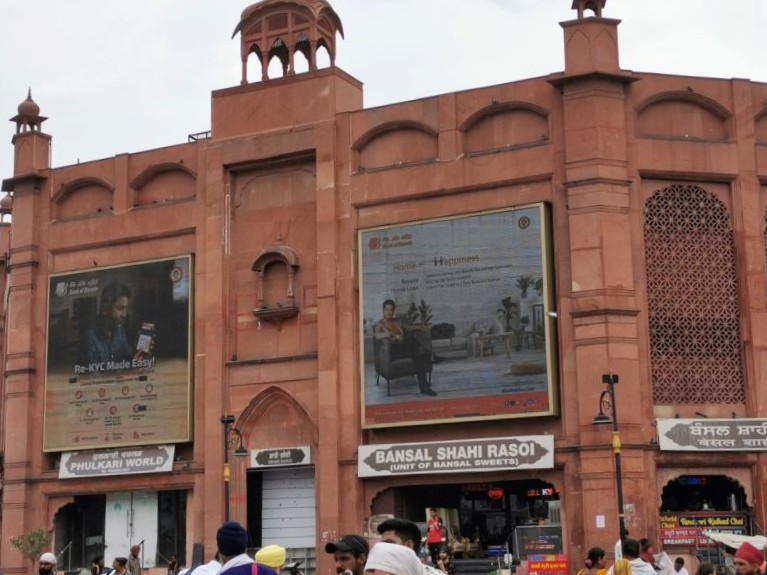

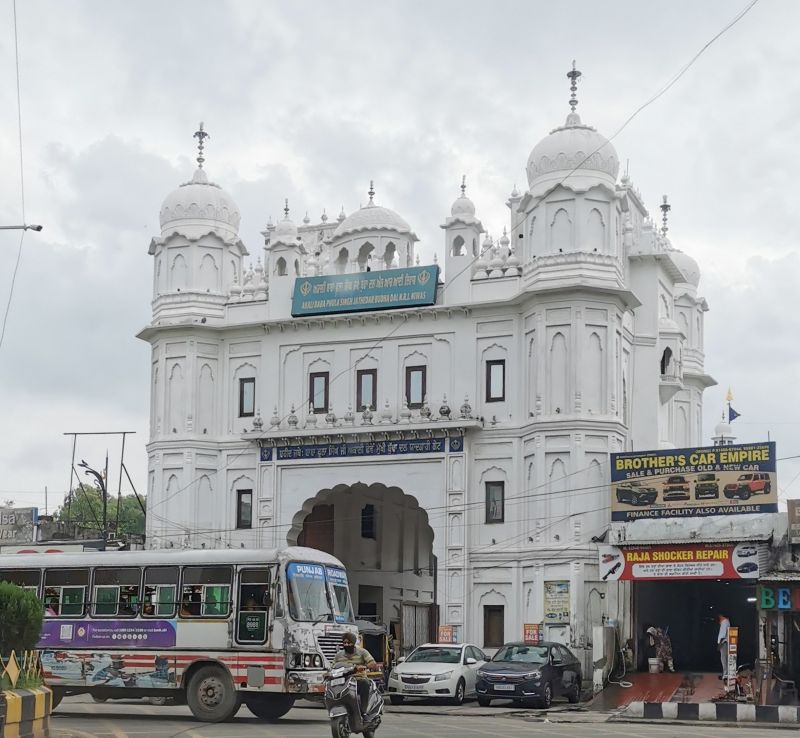
The metro drop off point, the Dharam Singh Market and Akali Baba Phoola Singh NRI Niwas
The area includes the red sandstone prominent structure, Dharam Singh Market on Heritage Street, and the wide cobblestoned road around the Maharaja Ranjit Singh Statue (The Lion of Punjab). Sitting atop a horse, this bronze statue is located on a multi-tiered white marble podium covered in intricate carvings and is situated in the heart of Amritsar at Chowk Phuwara (also known as Ghodewala Chowk).
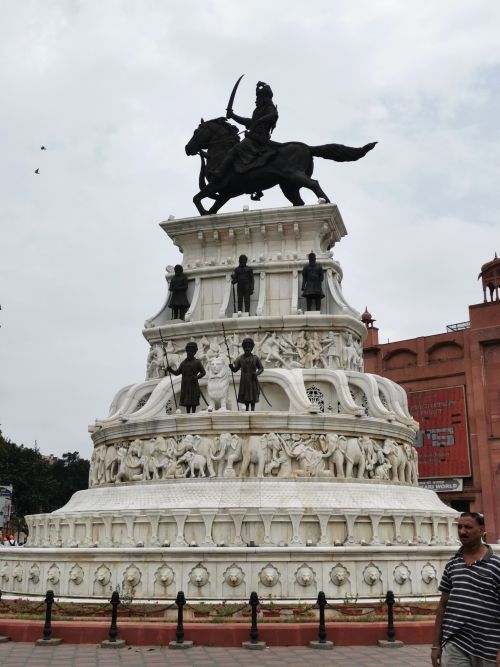
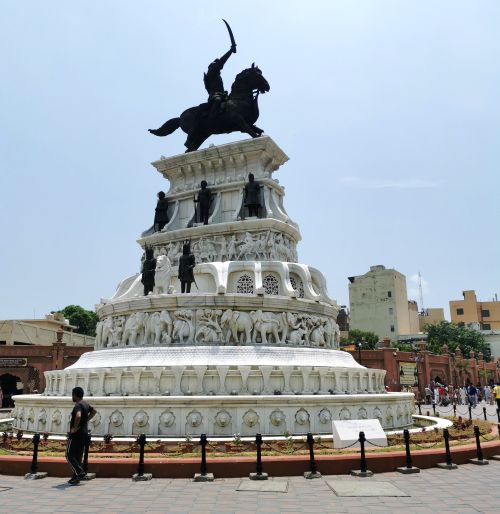
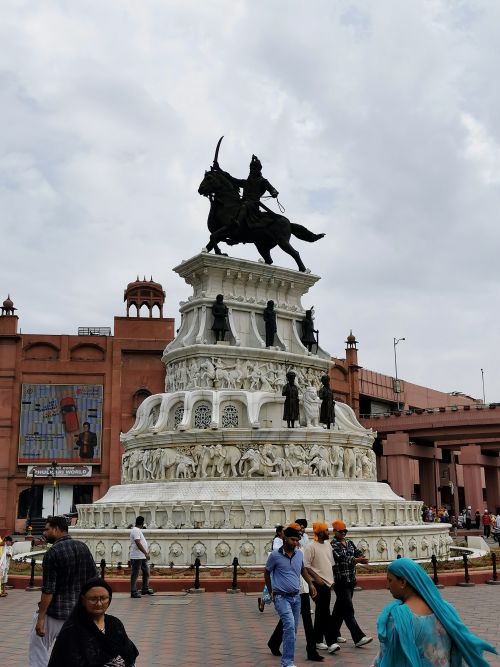
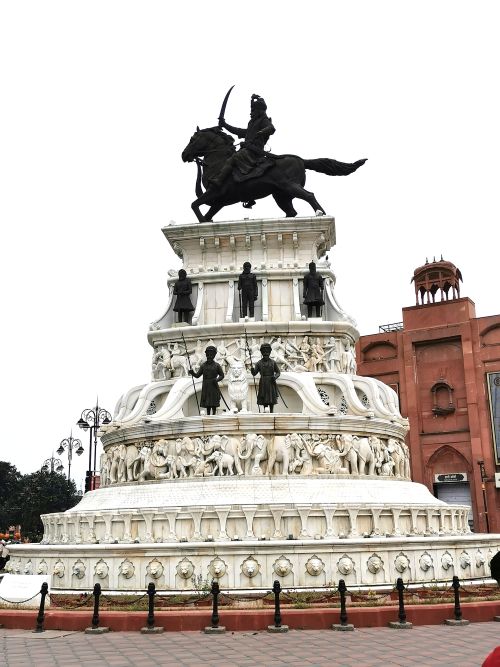
Maharaja Ranjit Singh Statue as seen from 4 angles on the large carved stand
A long walk down Heritage Street
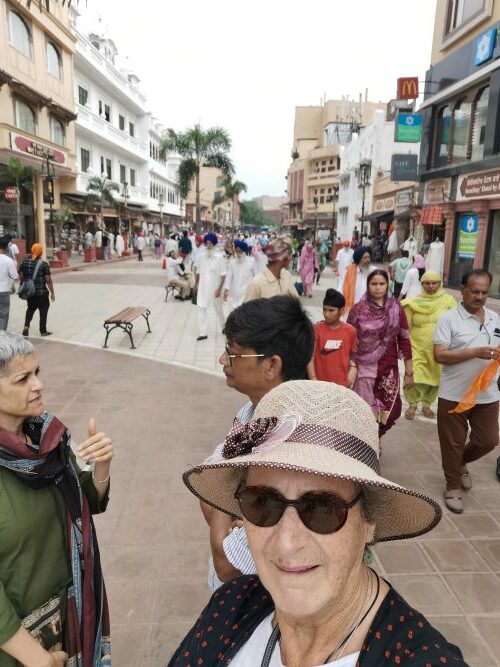
We took the long walk along the busy, wide, tiled street, lined with shops set back under verandas and walkways which protect from the intense, bright sun. Despite being closed to vehicle traffic, the street was busy and crowded as we made our way towards the Sri Harmandir Sahib ‘Golden Temple’ complex. Several sculptures line the walkway, and one in particular caught my eye; a white marble statue, ‘The Flame of Liberty’, situated at the narrow entrance to our first stop, Jallianwala Bagh.

The work of architect, Anoop Bartaria, the statue is designed in the shape of a flame and displays faces representing the innocent men, women, and children who were massacred at this site. The names of the 2,000 victims are inscribed on the plinth. On April 13, 1919, a group of Indian people gathered to protest the Rowlatt Act, which essentially extended repressive wartime measures. With no warning, General Dyer ordered his troops under the British Raj to open fire on this unarmed gathering. In a space that had a narrow entrance way, now blocked by soldiers, there was nowhere for the people to escape. Those who tried to climb walls were shot, and many jumped into a well and drowned. Set over 7 acres of gardens in Heritage Street, the site honours the victims of the massacre. This tragedy became a turning point in India’s freedom struggle, awakening national consciousness and uniting millions against oppression. Today, the garden remains a solemn space of remembrance, honouring the martyrs whose sacrifice ignited the spirit of independence.
Remember to open up the groups of photos to see them fully!
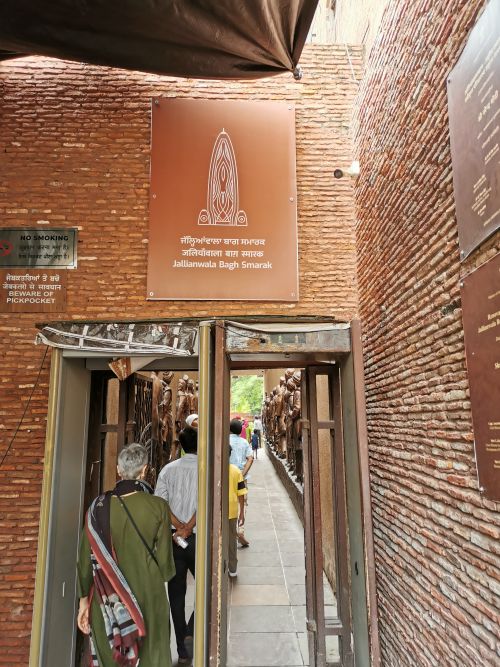
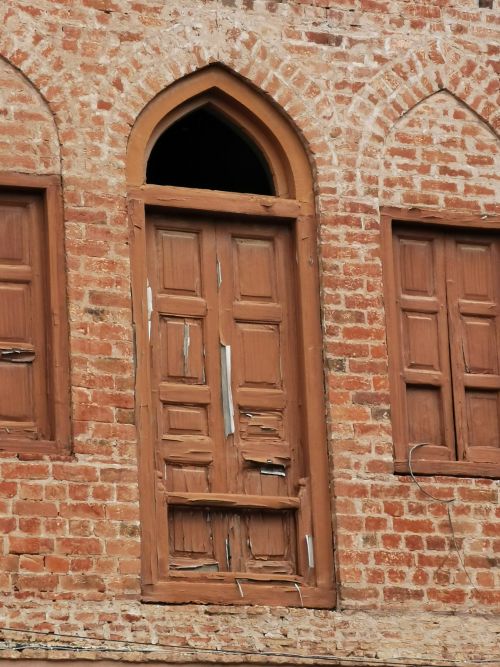
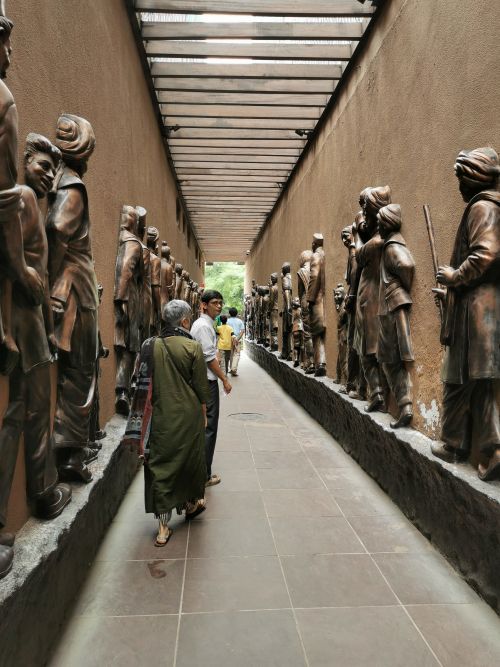
The bronze statues in the narrow entrance into Jallianwala Bagh gardens and an atmospheric ancient door and window
The gardens are serene, powerful in their story of barbarism committed towards the people in their moment of unarmed, innocent protest. It was humbling to be in this place, to see the bullet marks in the bricks of the walls, the well where 120 bodies of people were recovered, the ‘Amar Jyoti’ – ‘The Eternal Flame’, and the red stone obelisk standing tall and graceful – a monument to those slaughtered at this spot. Two interesting features exist in the garden. The first is a curved wall behind the obelisk where two people at either end can talk into the wall and be heard clearly by the other. The second feature is a raised platform called ‘Salvation Ground’ (Memorial Zone). Situated among the trees in the garden of Jallianwala Bagh there are quotes and poetry on bronze pedestals that provoke reflection by the reader.
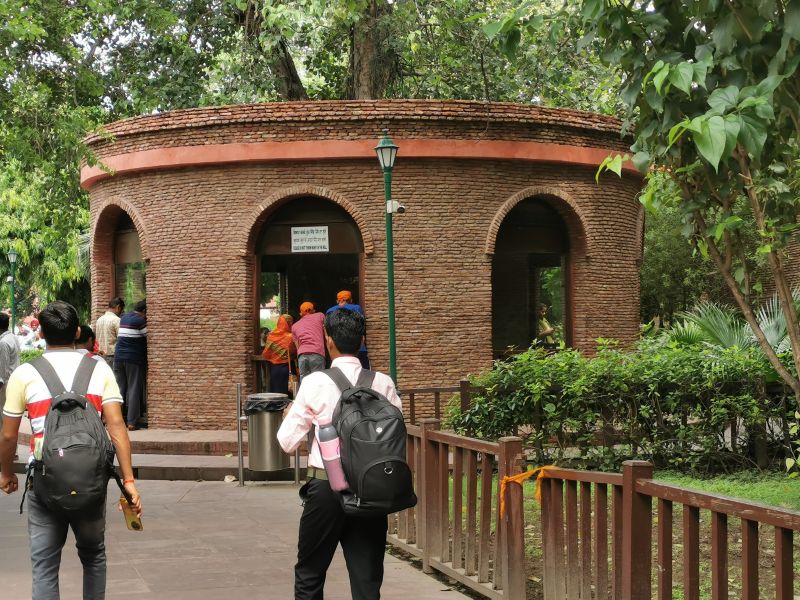
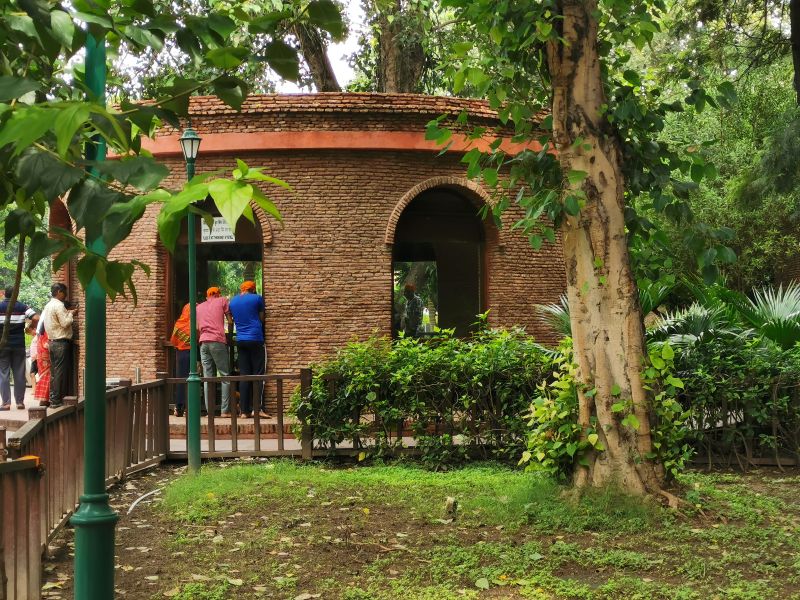
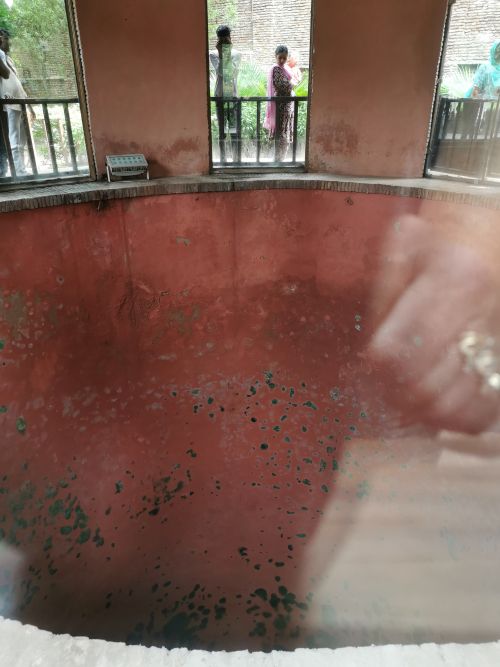
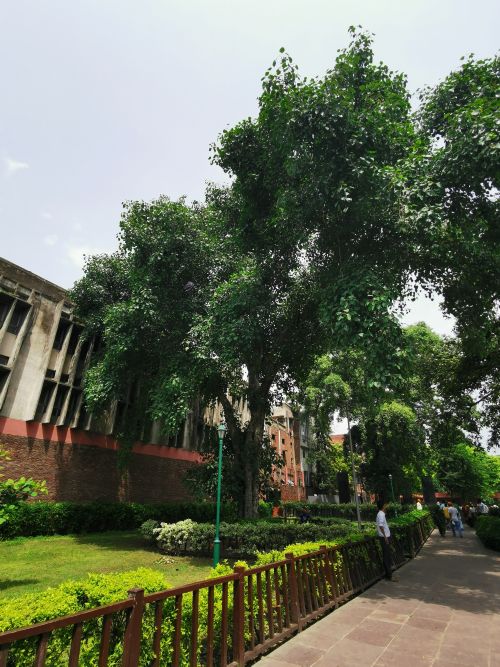
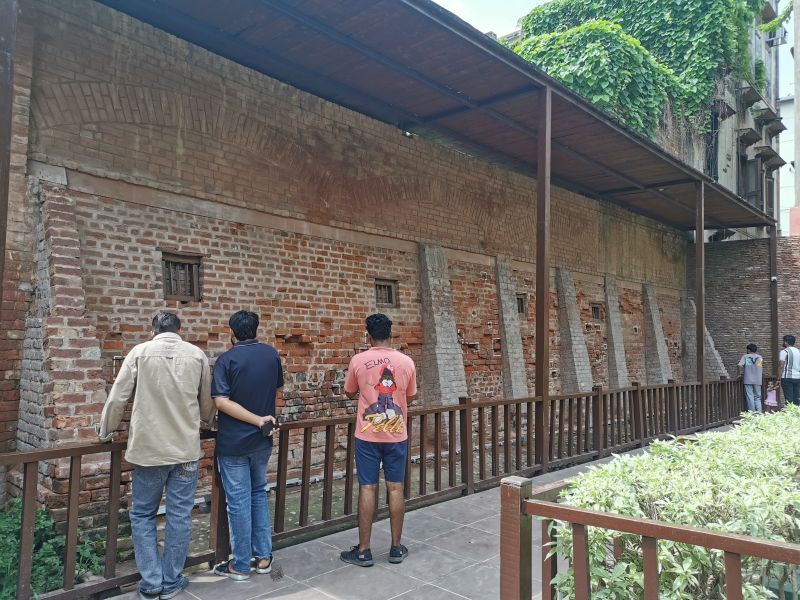
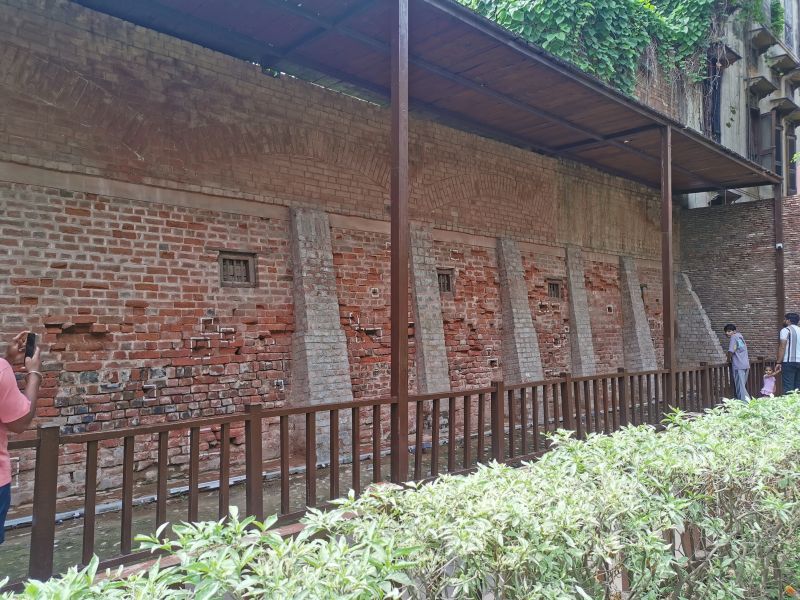
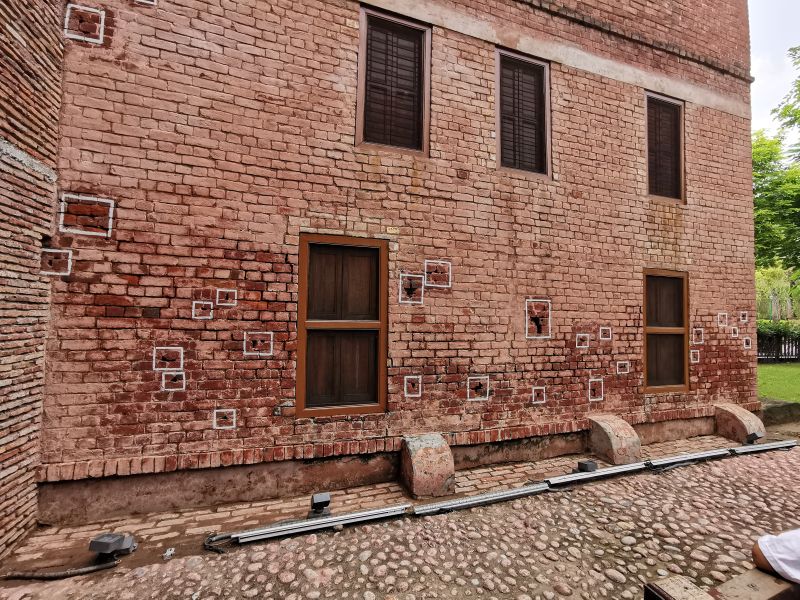
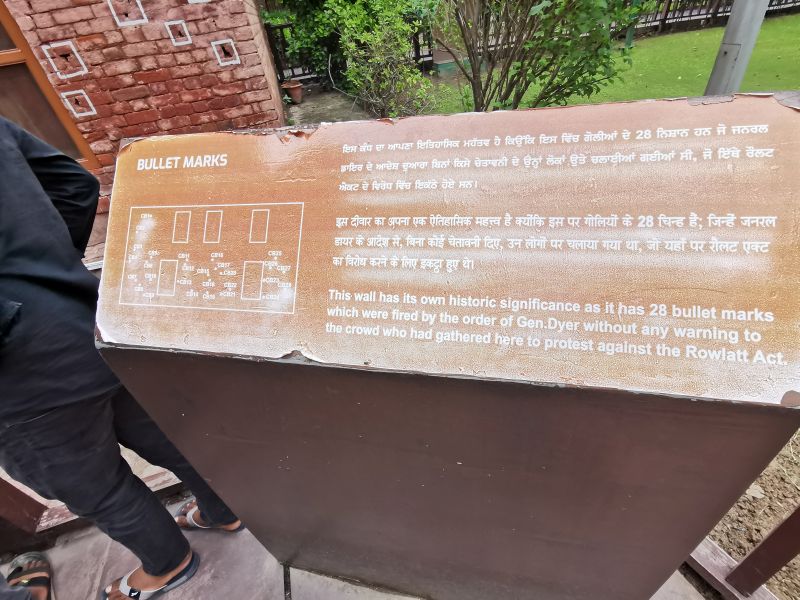
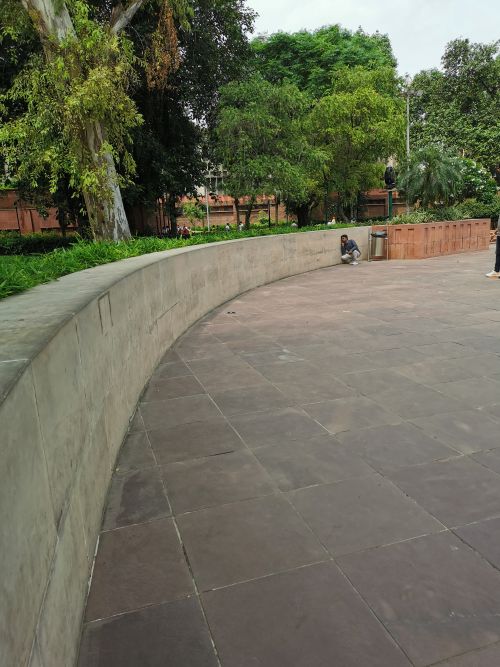
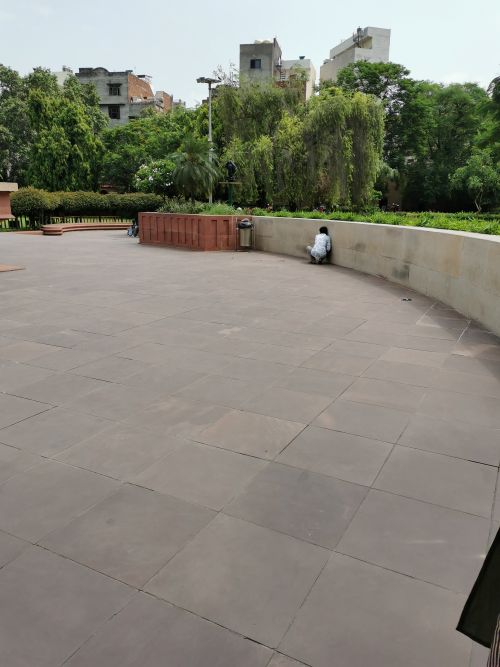
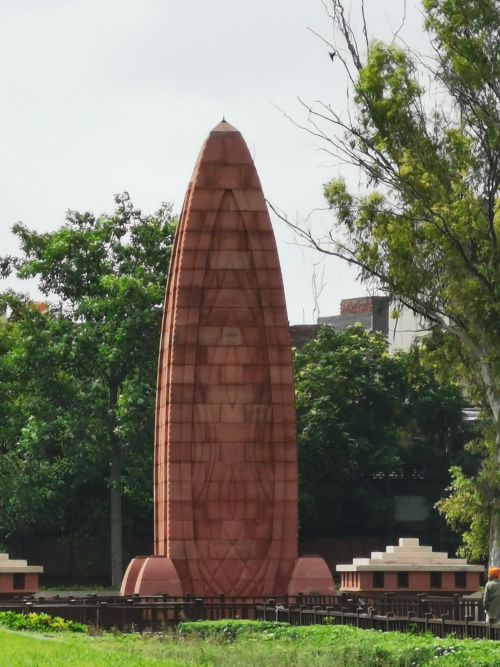
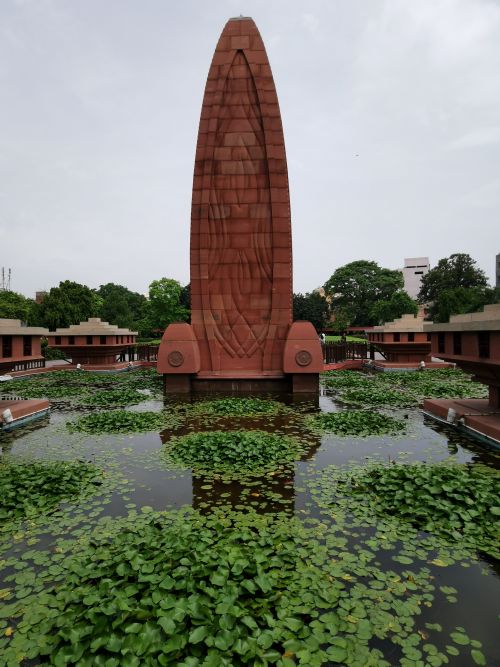
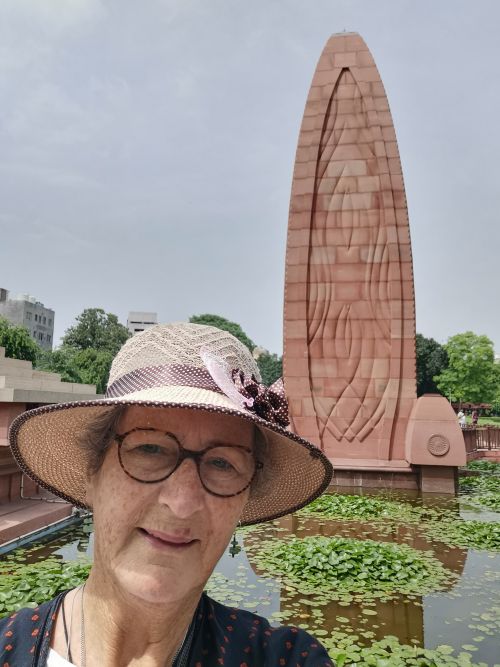
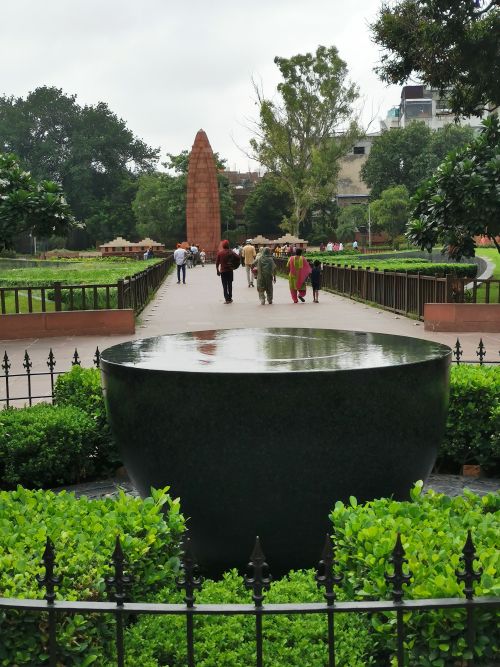
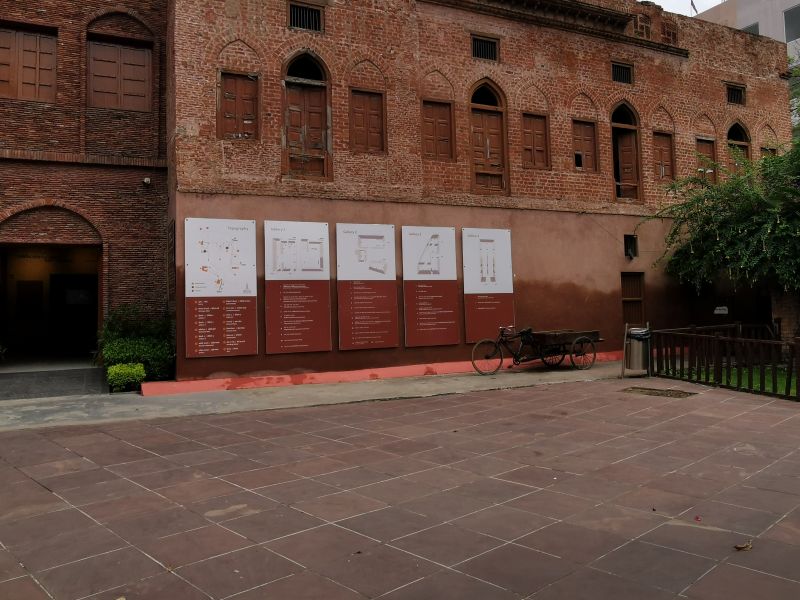
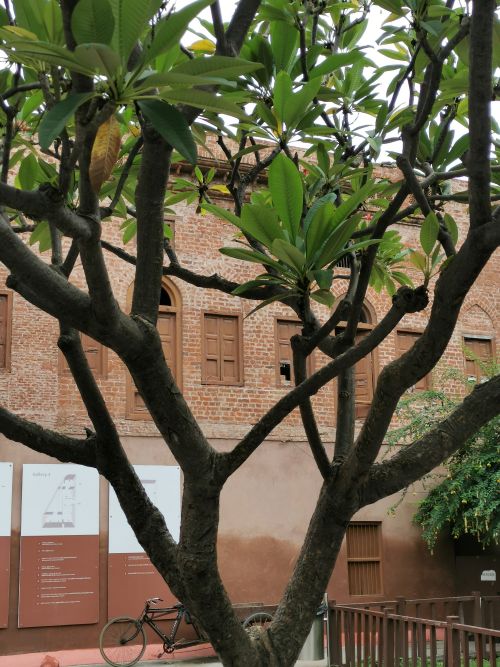
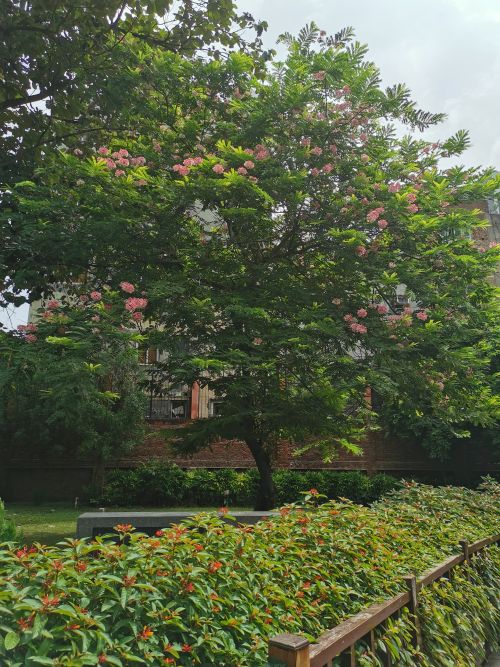
Scenes from the Jallianwala Bagh Gardens
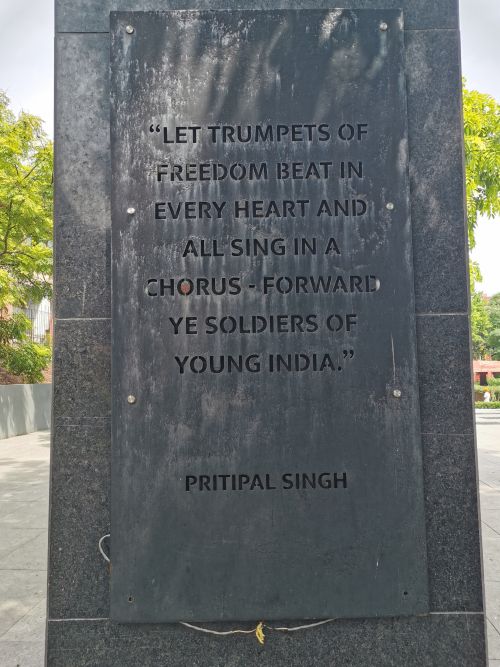
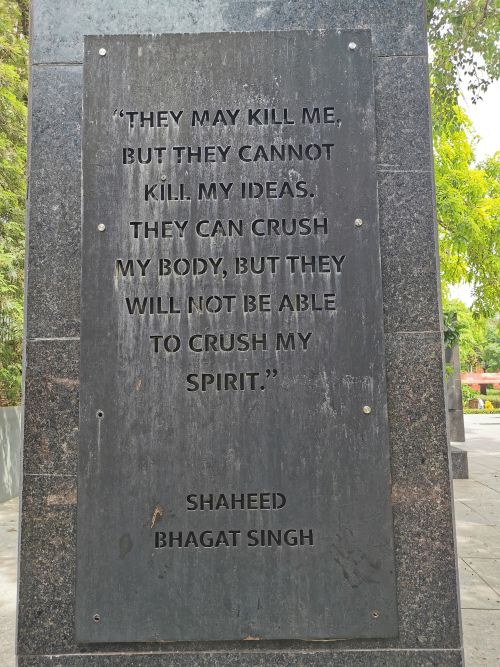

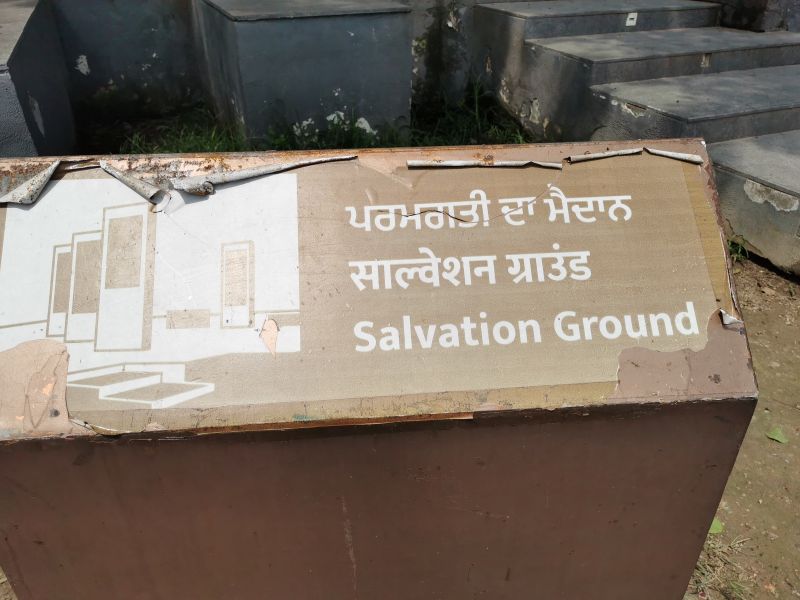
Get more information here: https://amritsar.nic.in/tourist-place/jallian-wala-bagh
Sri Harmandir Sahib – Golden Temple
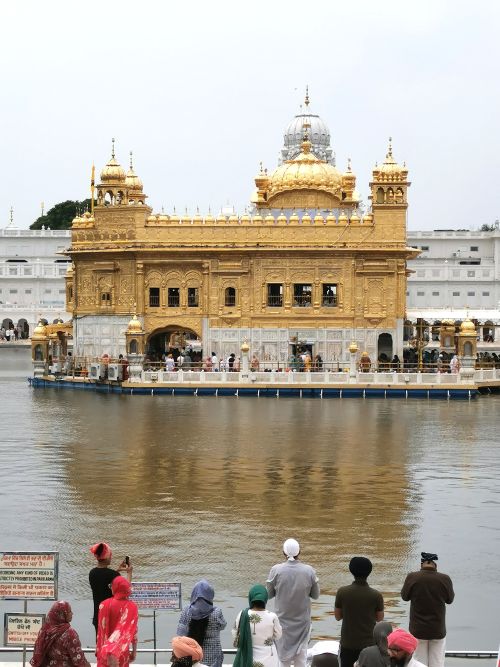
After staying a while, we passed back through the narrow passageway entrance to Jallianwala Bagh and walked towards the entrance of the Sri Harmandir Sahib – Golden Temple complex.
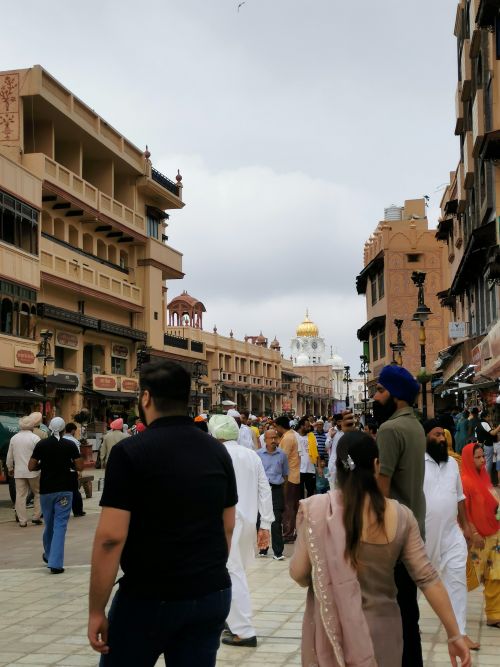
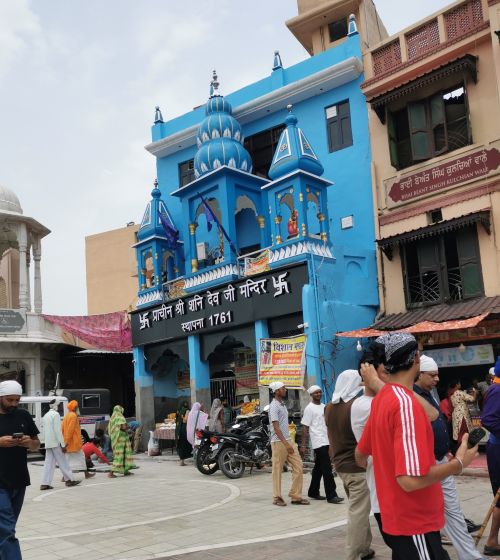
In the preparation area where we left our shoes and washed our feet, our guide talked to us about the temple, history, and the Sikh people’s faith.
Remember to open up the groups of photos to see them fully!
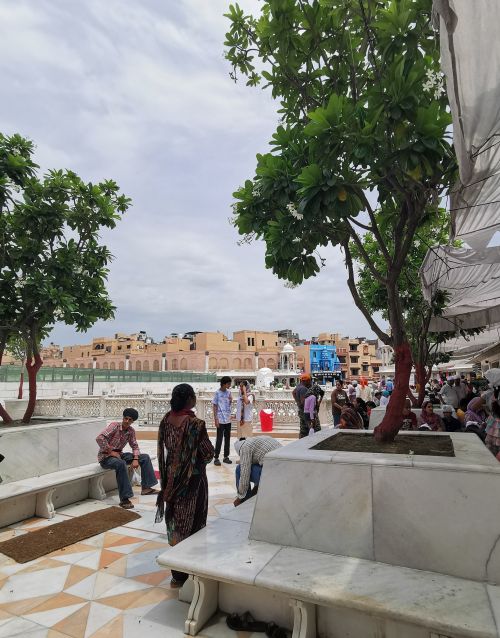
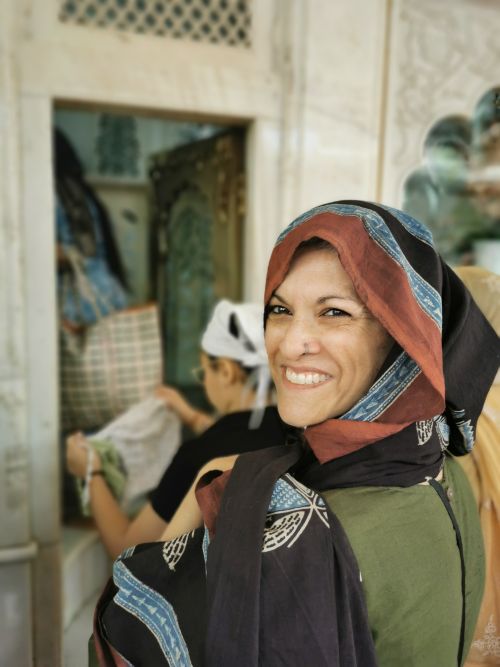
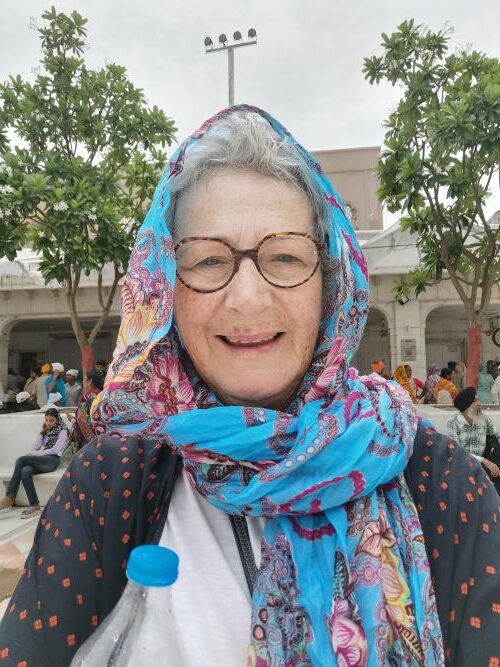

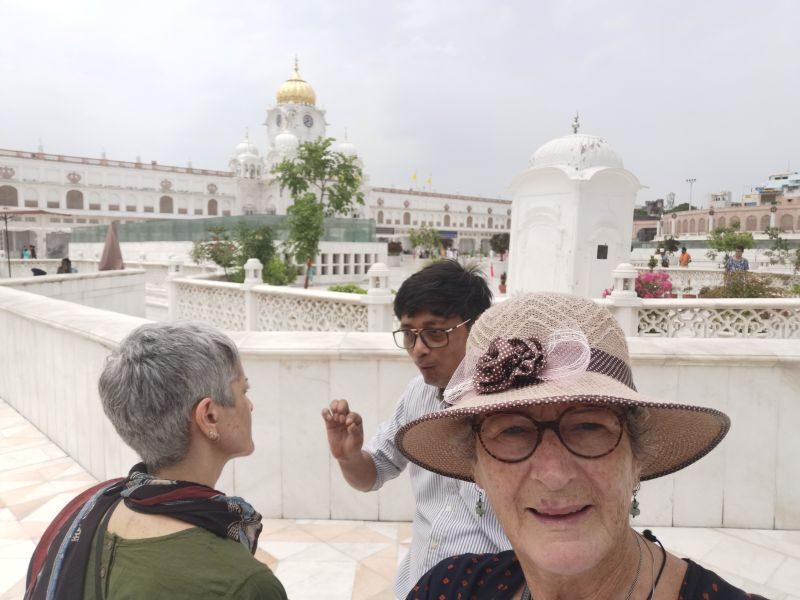
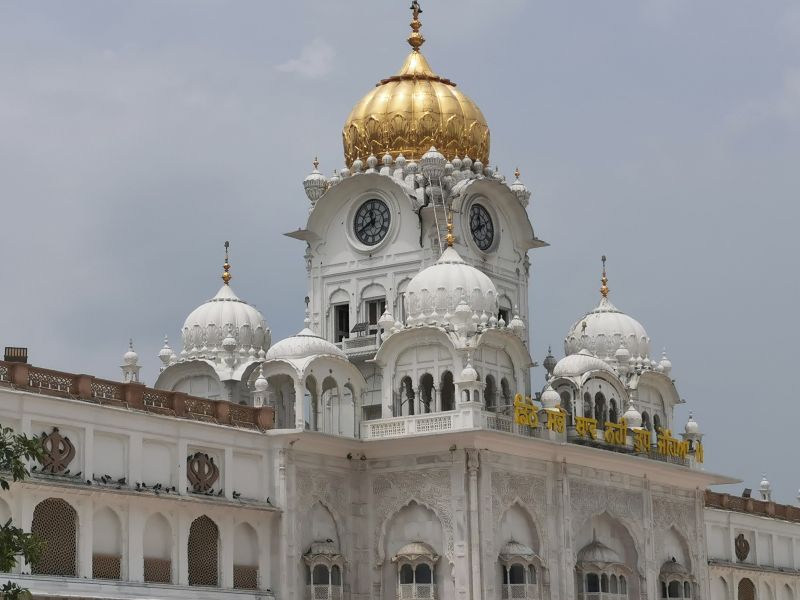
In the shoe drop and preparation area before entering the main temple complex
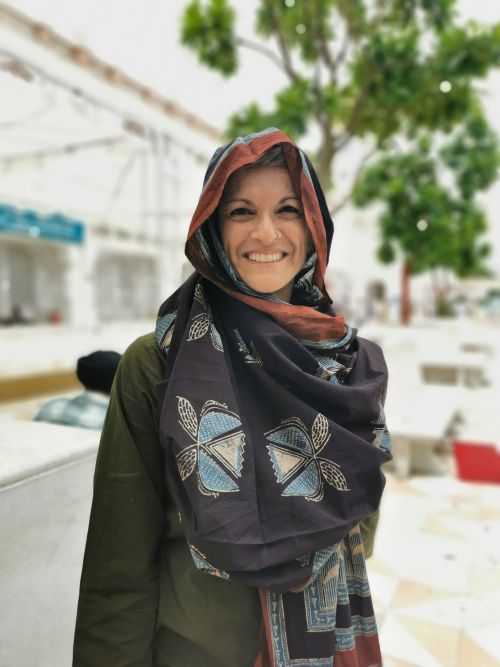
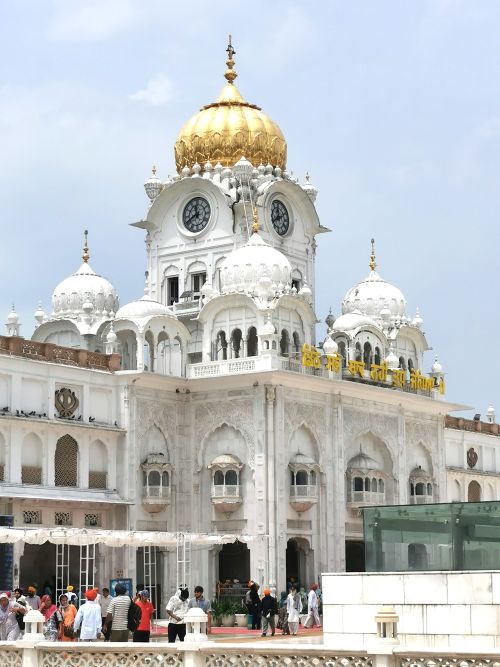
Shoba ready to enter the Golden Temple complex and the entrance
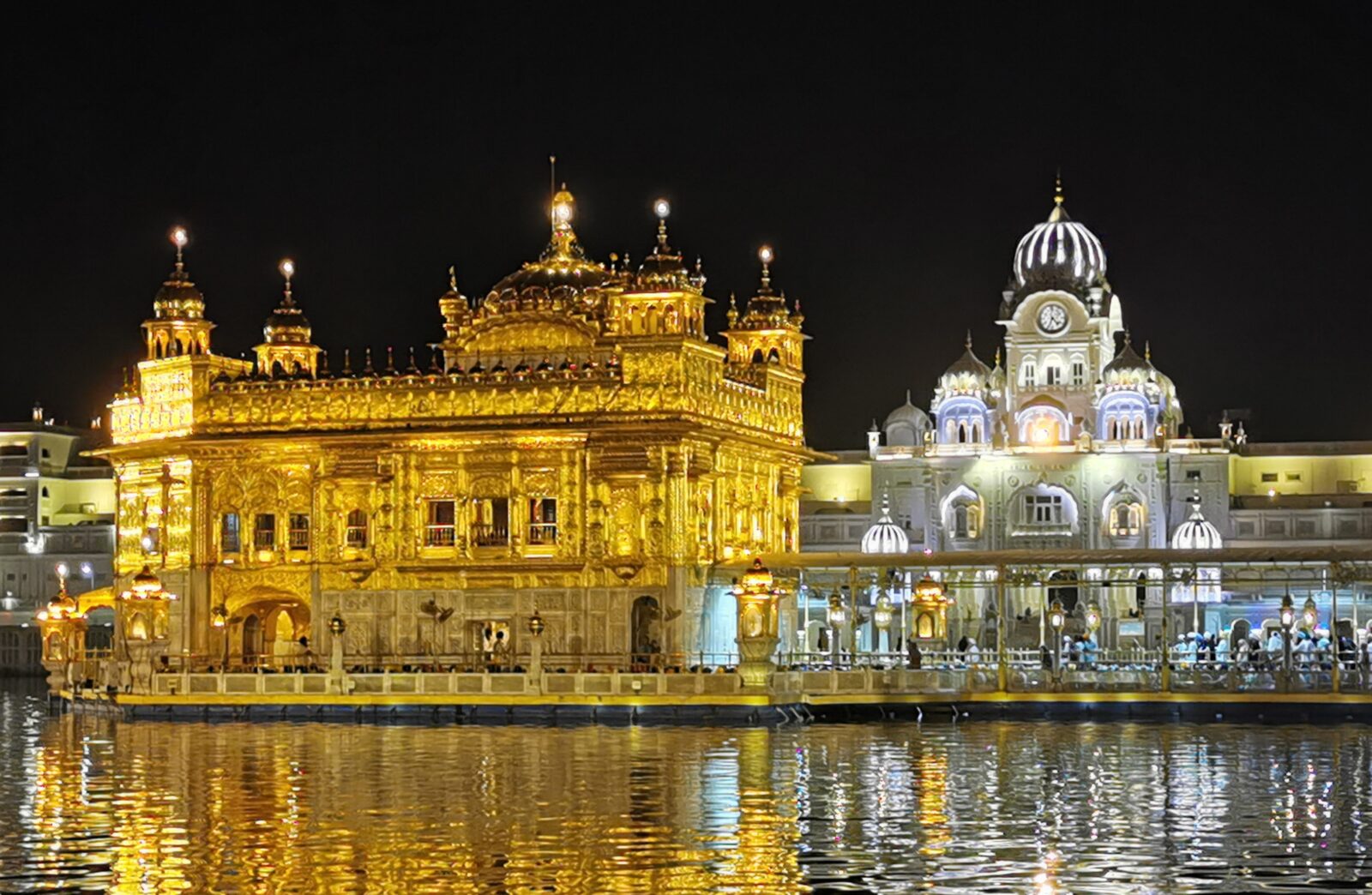
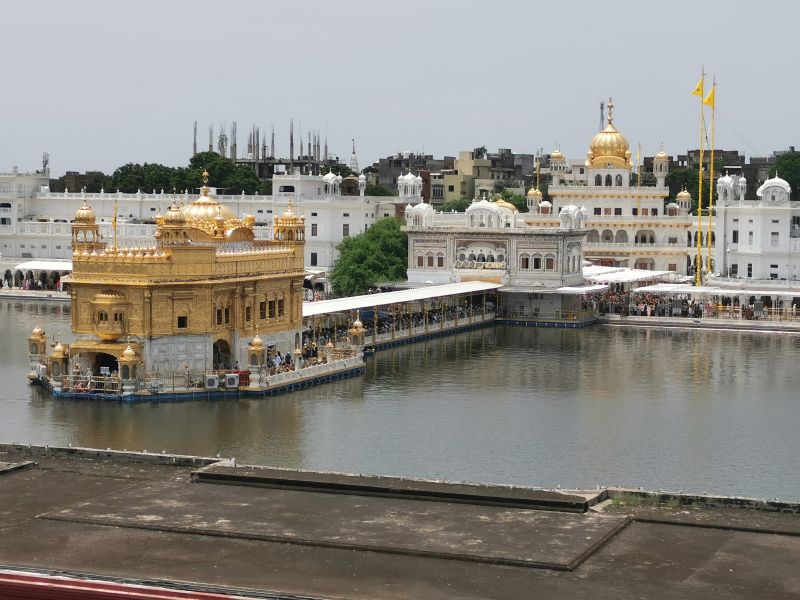
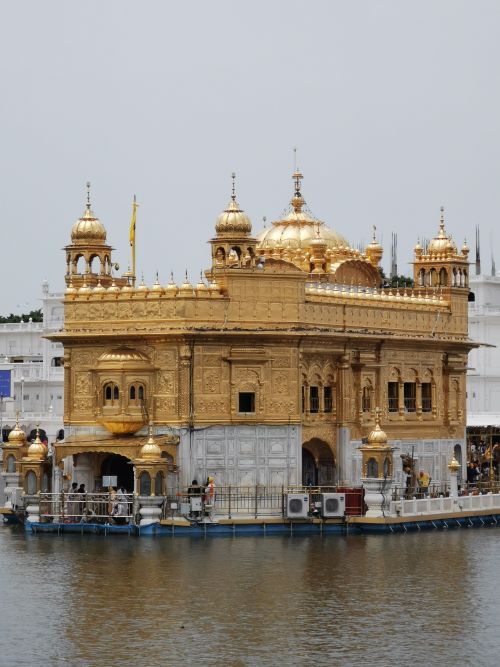
Following protocol, we covered our heads and descended the steps towards the sanctum within the greater complex. The first view of the temple was quite breathtaking, shining gold on a silver-white base extending out into the ‘Amrit Sarovar’, otherwise called the ‘Pool of Nectar’.
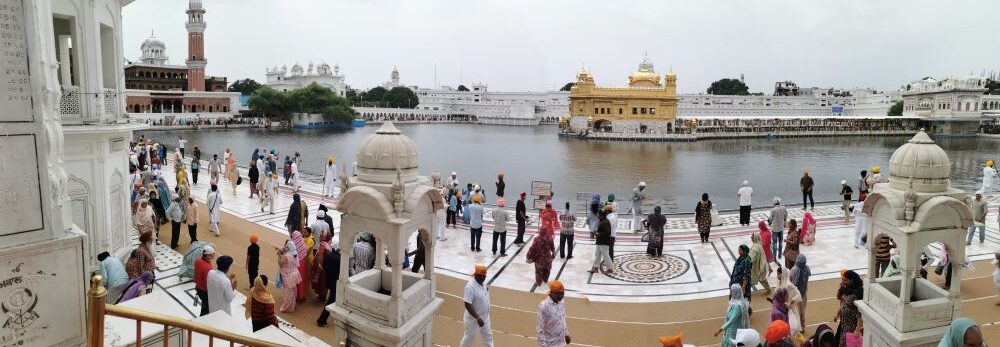
This pool is about 5.1m (16.8ft) deep, believed to have healing properties, and it is considered ‘holy water’ where devotees bathe for spiritual cleansing.
“For many visitors, the Sarovar is not just water—it represents purity, peace, and a connection with the divine. Sitting near the water or walking around it often brings a deep sense of calm”. Quote from the Golden Temple website below:
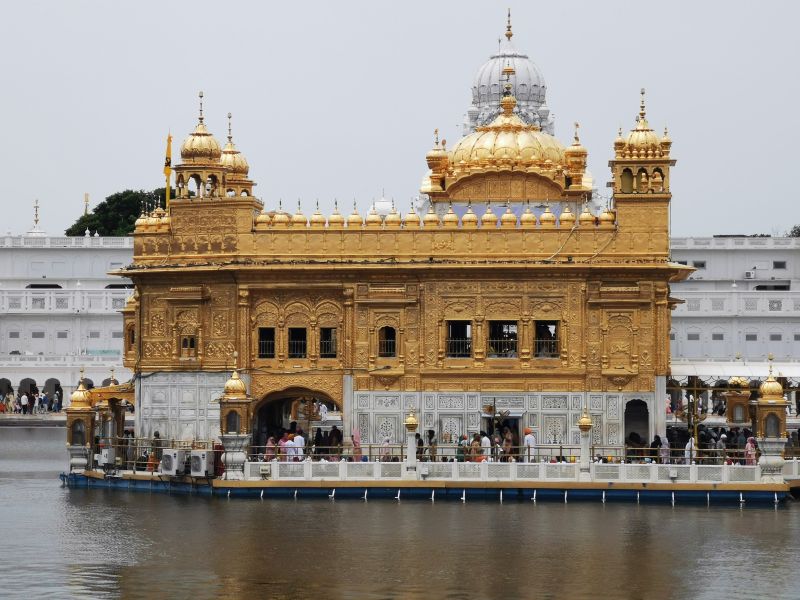
Building of the sarovar was completed in 1577 by the fourth Sikh Guru, Ram Das, and is central to the temple complex. The name of the city, which grew up around it, is Amritsar, derived from the ‘Pool of Nectar’.
History of ‘The Golden Temple’ Harmandir Sahib
This is the holiest Sikh Shrine, considered a site of deep peace and spiritual significance, initiated by the fourth Guru Ram Das in the late 16th Century (1577) and completed in 1604 during the time of the fifth Guru Arjan Dev. There are four entrances which represent universality, regardless of caste or religion, and an openness to all people of the world. By design, the temple is built at a lower level than the surrounding buildings, which signifies humility. In 1830, the Maharaja Ranjit Singh added the golden cover. Standing over it is the ‘Akal Takht’ built by Guru Hargobind in 1606, a place representing justice and the community’s political sovereignty. It is also called the ‘Throne of the highest one’, the highest temporal seat of authority for Sikhs, symbolising the union of spiritual and temporal life and community decision-making, whereby the Golden Temple represents the spiritual guidance.
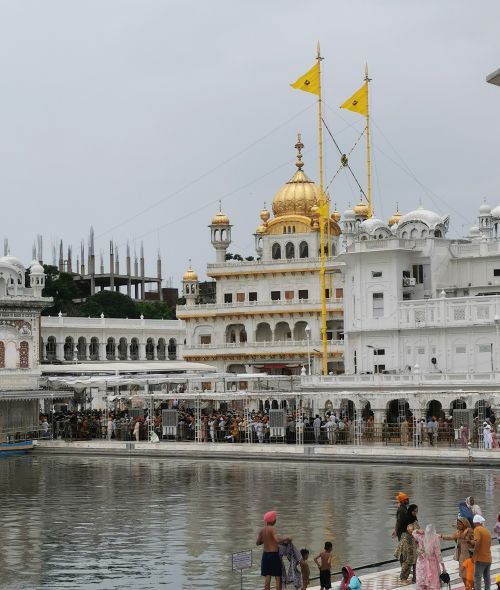
The Golden Temple is a blend of Hindu and Islamic styles, symbolising the Sikh belief in the equality of all people regardless of background. The complex has been destroyed and rebuilt at various times following one conflict or another. The ‘Adi Granth’, later to be renamed the ‘Guru Granth Sahib’, is the holy scripture of the Sikh religion and was compiled by the fifth Guru Arjan and installed in the Golden Temple in September 1604. Hymns, poetically rendered in a rhythmic ancient North Indian classical form of music, were added in 1708. We were taken into a small room where the recitation of the teachings is carried out daily throughout 24 hours. Several such rooms are spread about the complex. It felt sacred and mesmerising knowing the reverence with which these hymns are spoken has been carried out on this spot for hundreds of years without pause.
Ber trees & their special place in the Golden Temple Complex
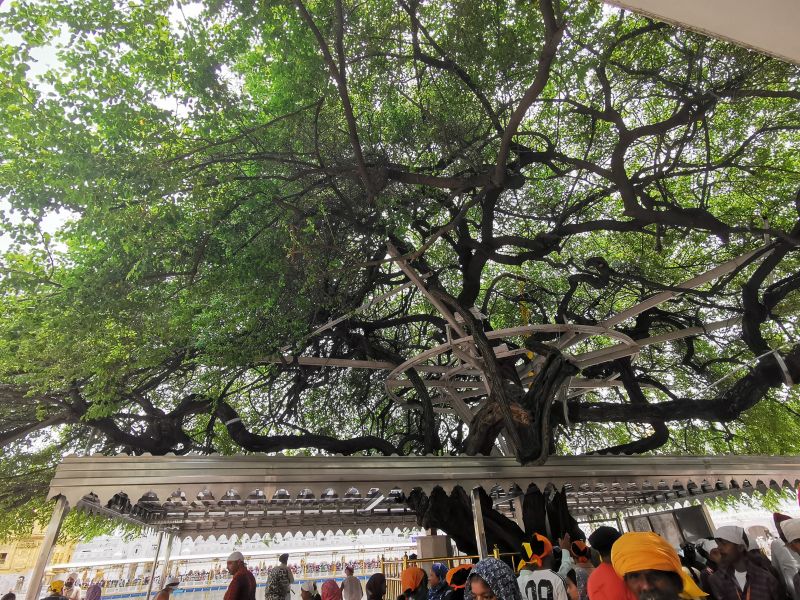
There are three ‘Ber’ trees within the inner complex, which used to be open ground but is now enclosed within a two-storied courtyard with verandas where people sit out of the hot sun. These trees are said to have sheltered previous leaders during the building of the complex, and one, ‘Dukh Bhanjani Ber’, is said to be the location where a Sikh was cured of his leprosy after taking a dip in the pool, giving the tree the name of ‘suffering remover’. Many people, including Shoba and myself, sat and prayed here, while others took a dip in the holy water, for healing of all manner of mind, body, and spiritual problems.
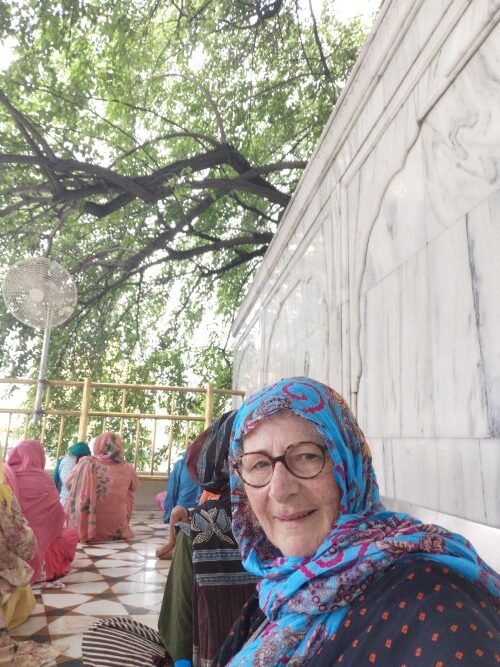
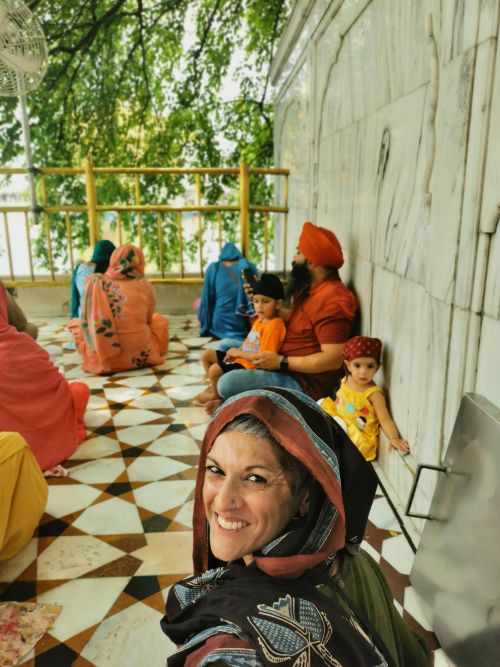
Teresa & Shoba sitting under the Dukh Bhanjani Ber tree at the Golden Temple
Ramgarhia Bunga at the Golden Temple Complex
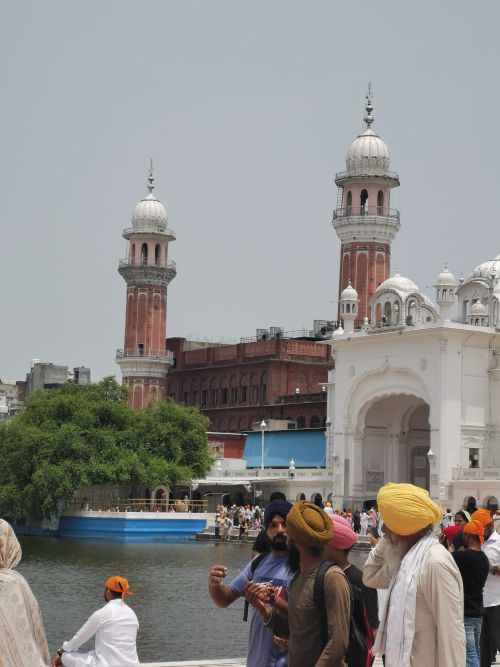
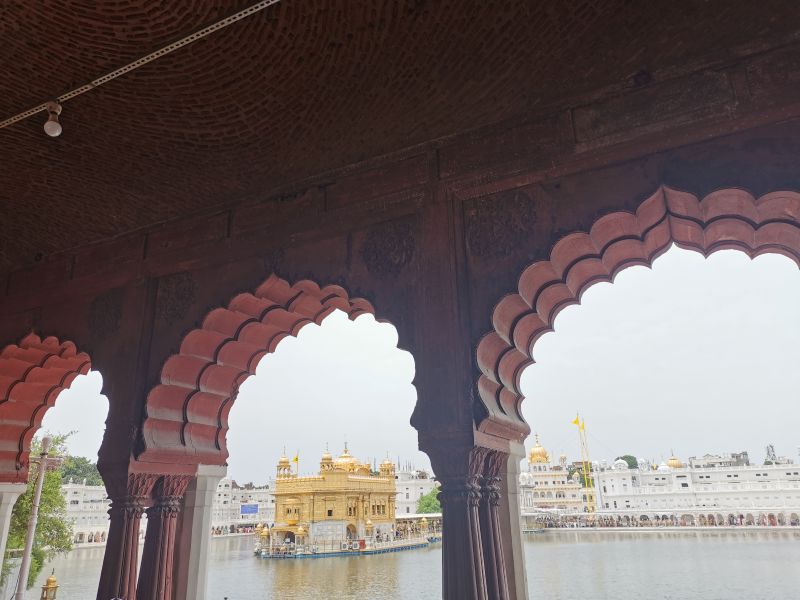
From here we entered the ‘Ramgarhia Bunga’, an 18th Century red sandstone building historically used as a military headquarters, but also the home of one of the former Sikh Leaders. It has two towers, built to detect and protect the temple from invaders, and three levels plus the rooftop, where one looks out over the ‘Amrit Sarovar’ (holy tank). The view through the abundant arches adds beauty for the photographer’s eye as well as shelter from the intense heat.
Remember to open up the groups of photos to see them fully!
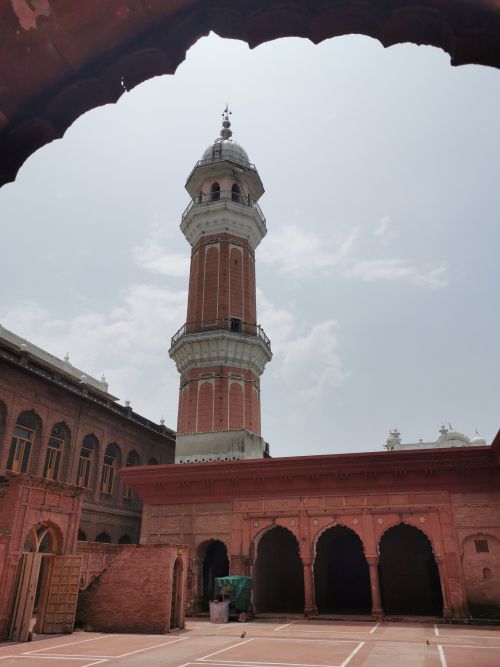
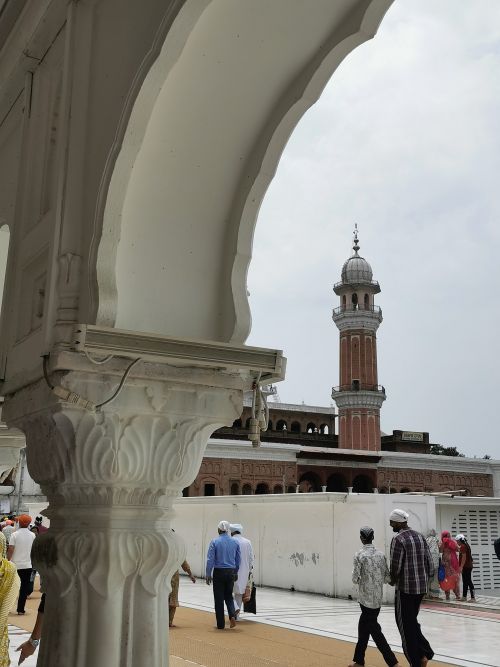
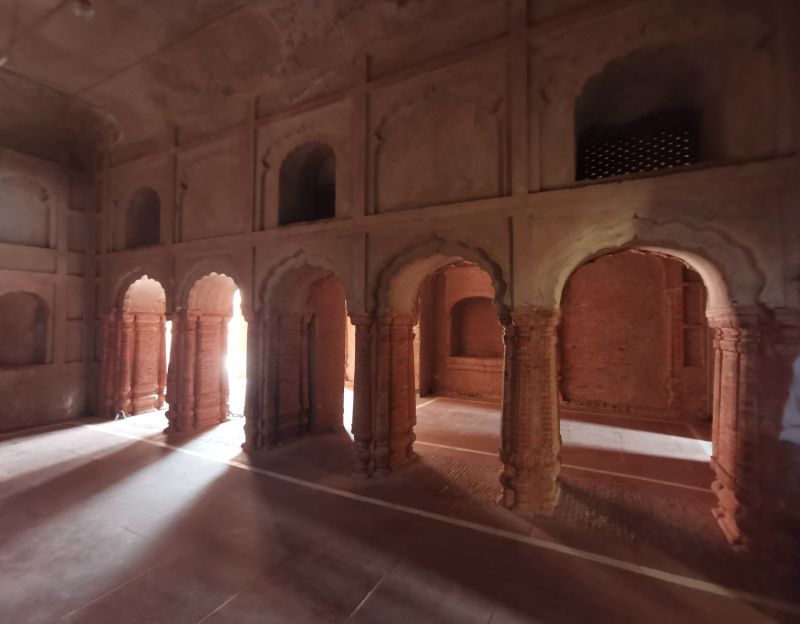
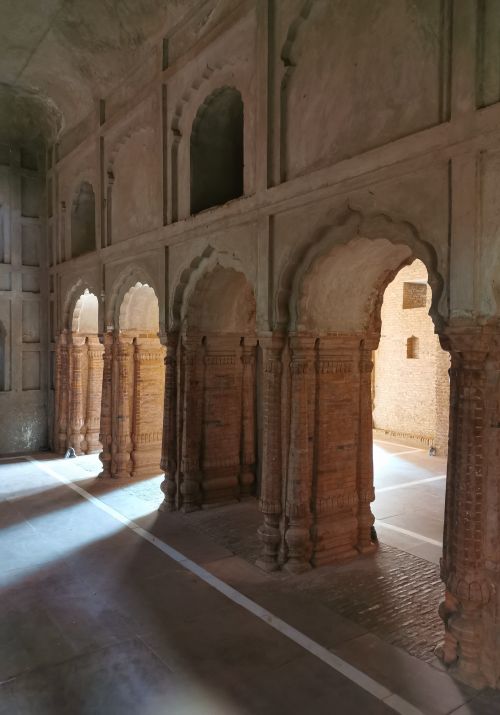
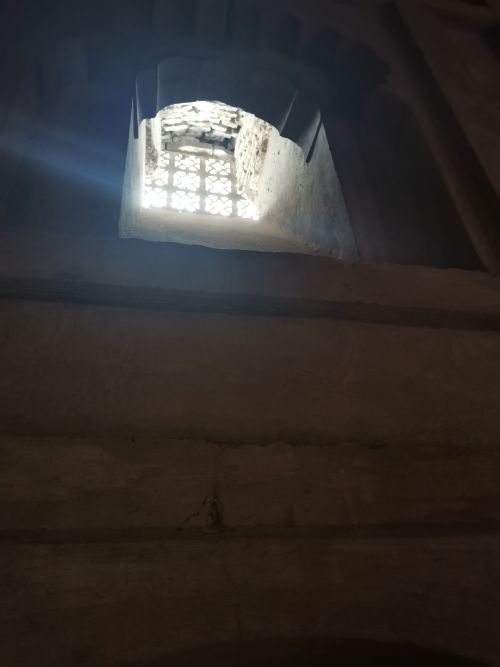
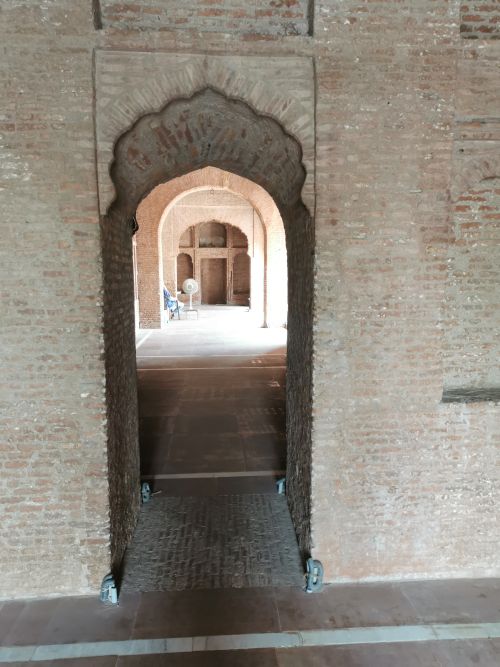
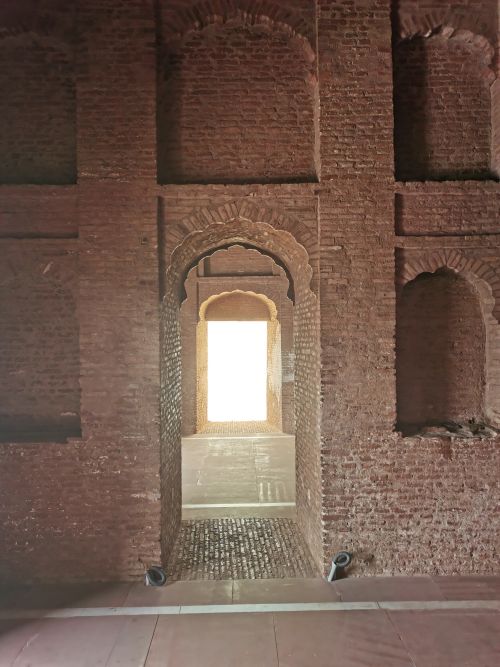
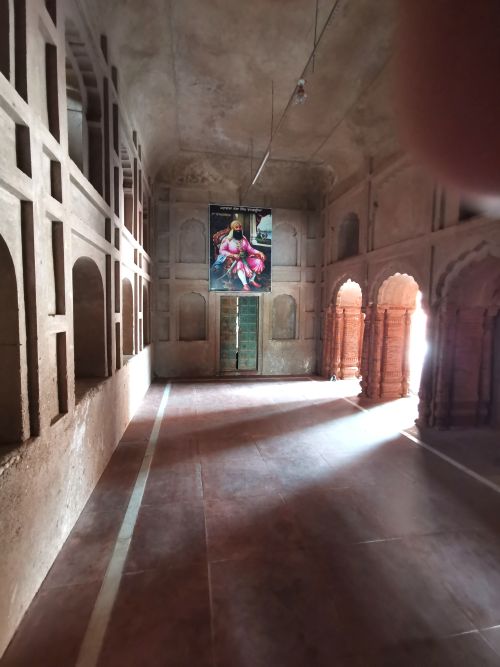
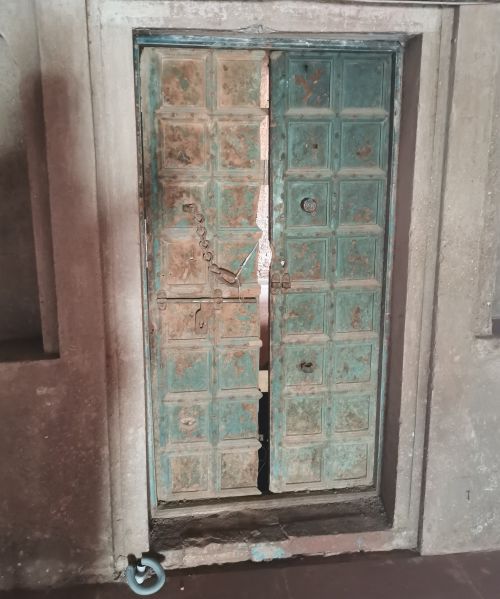
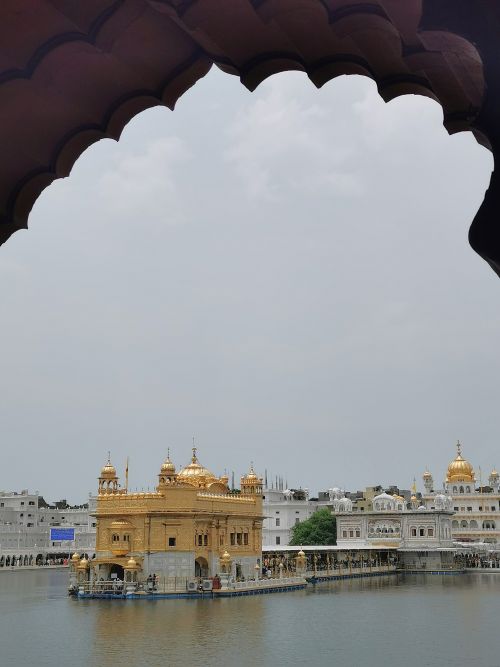
The ‘Langer’ in the Ramgarhia Bunga
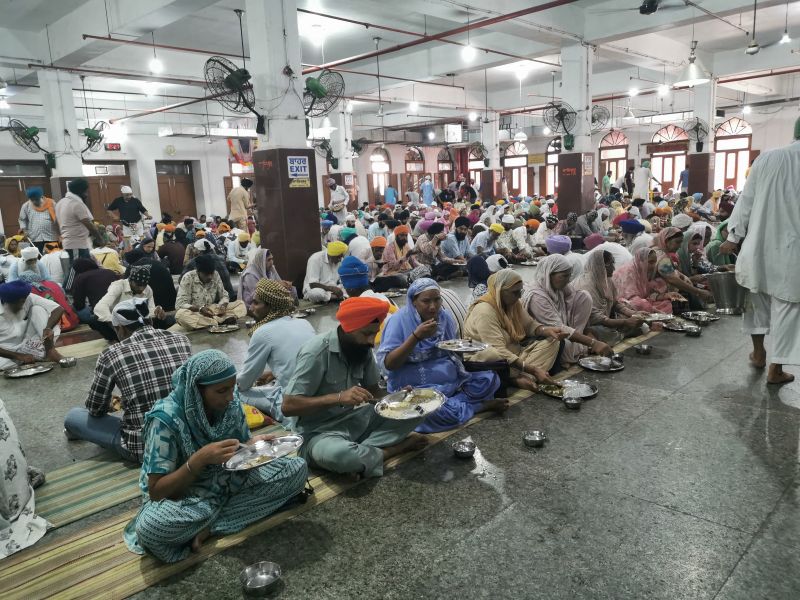
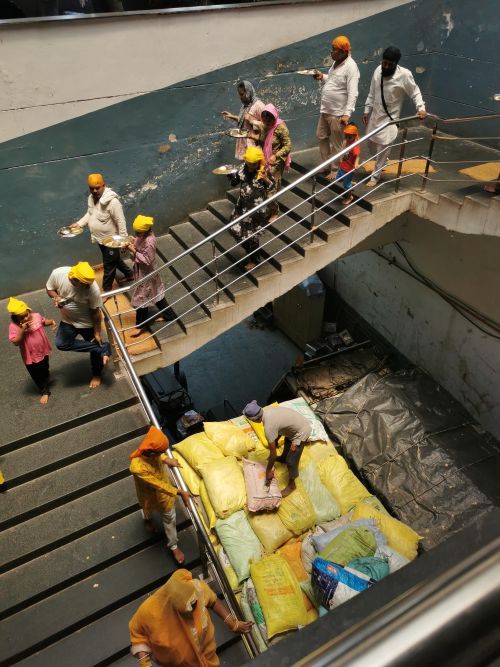
Located on the Southeastern edge of the temple complex, it now houses the ‘Langar’, a very large kitchen which serves free meals to many thousands of visitors daily, including many people who come to volunteer their time preparing vegetables, making chapatis, loading and unloading, washing dishes and utensils, and much more.
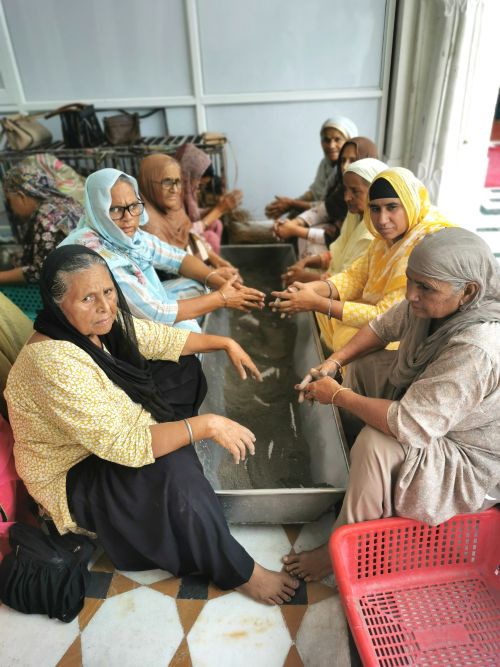
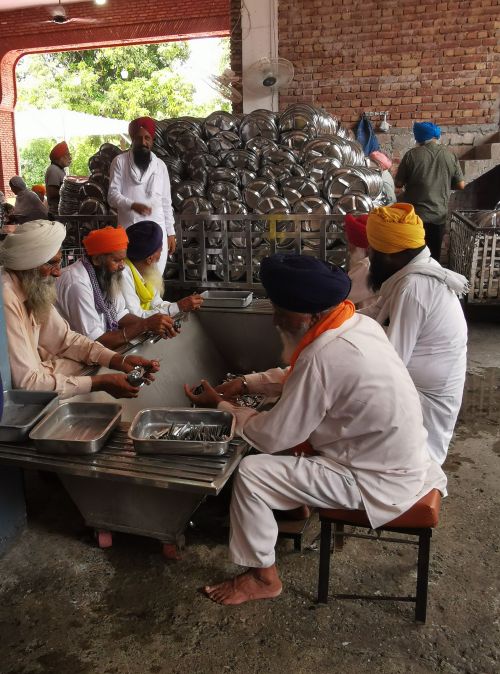
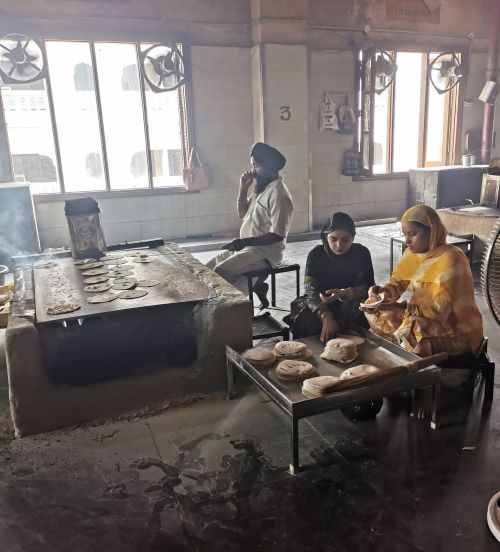
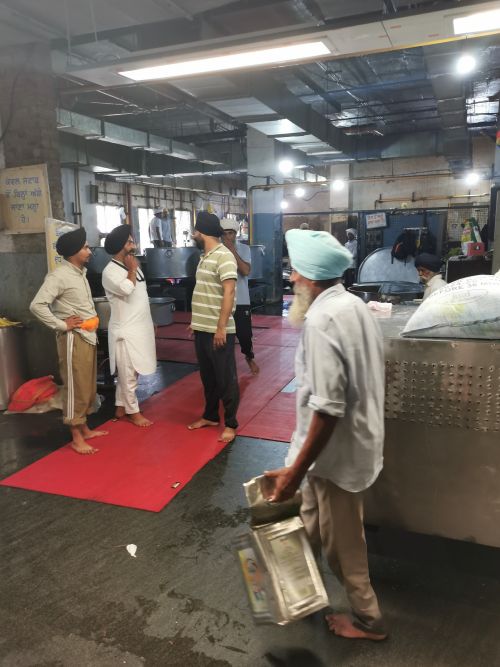
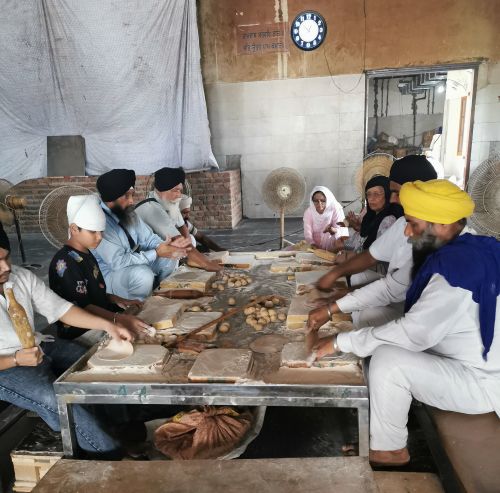
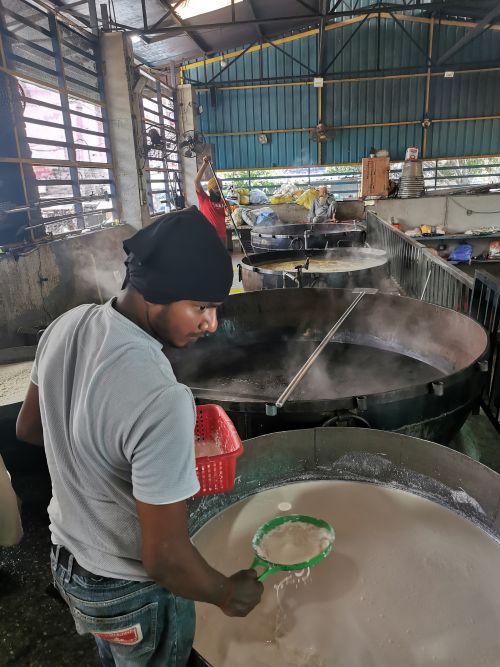
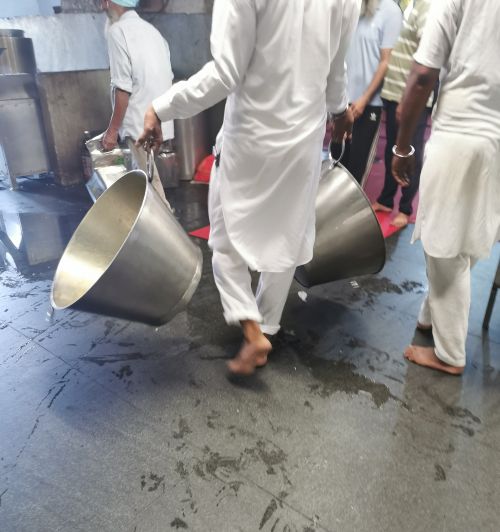
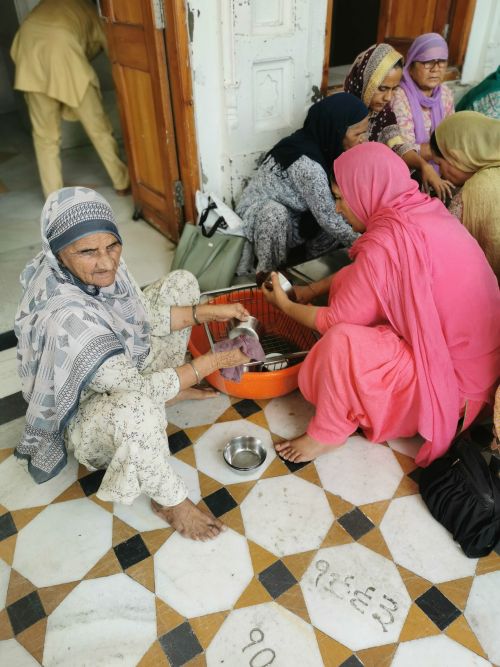
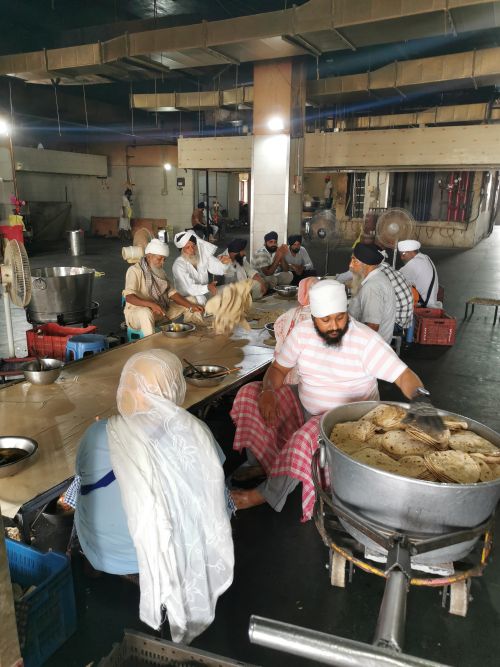
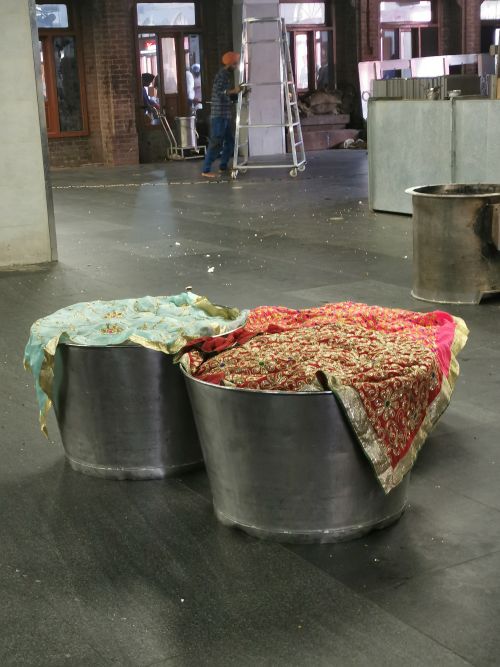

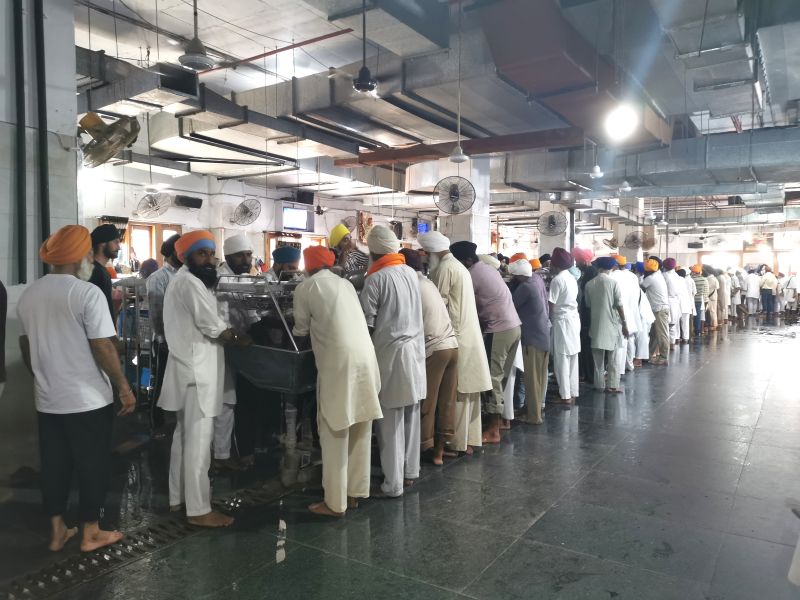
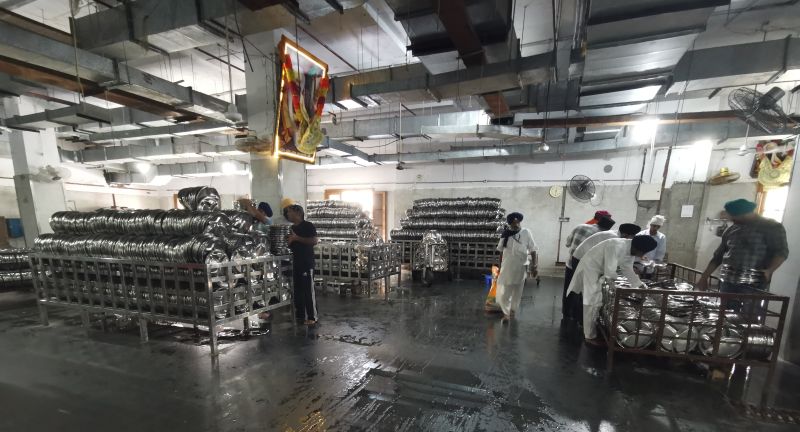
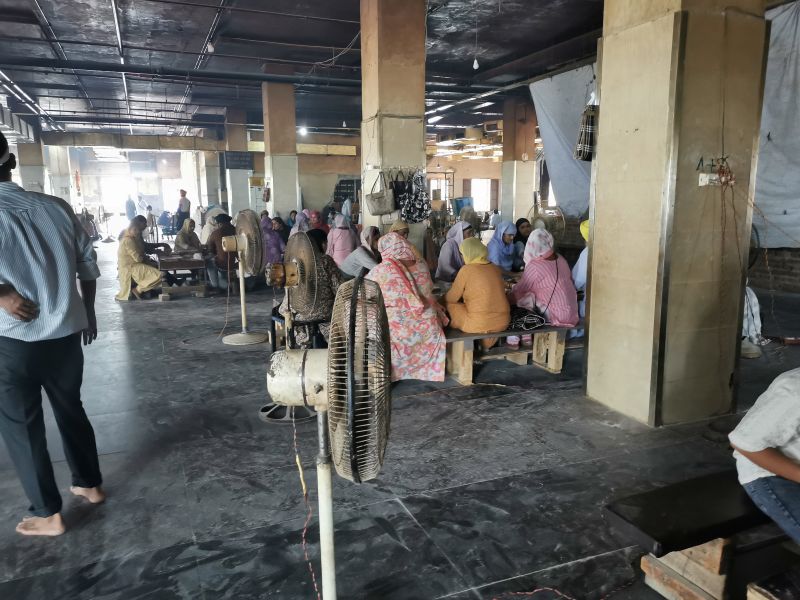
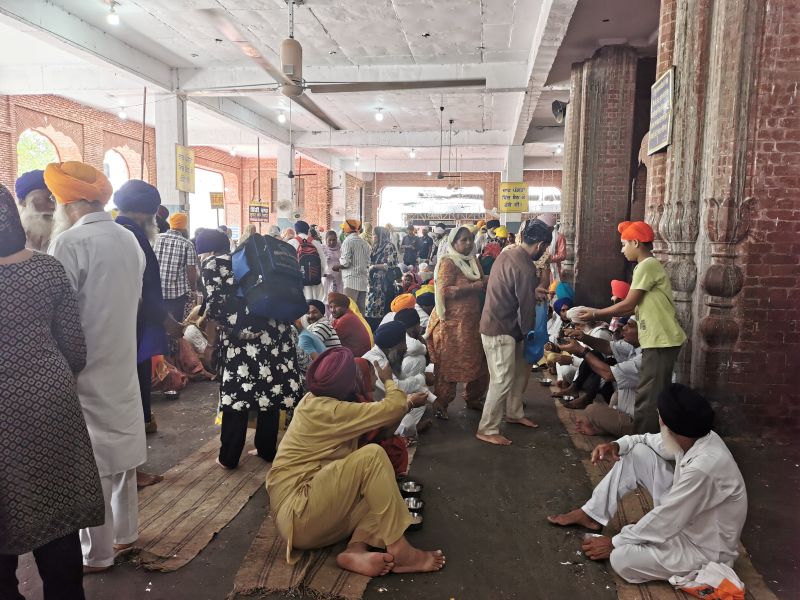
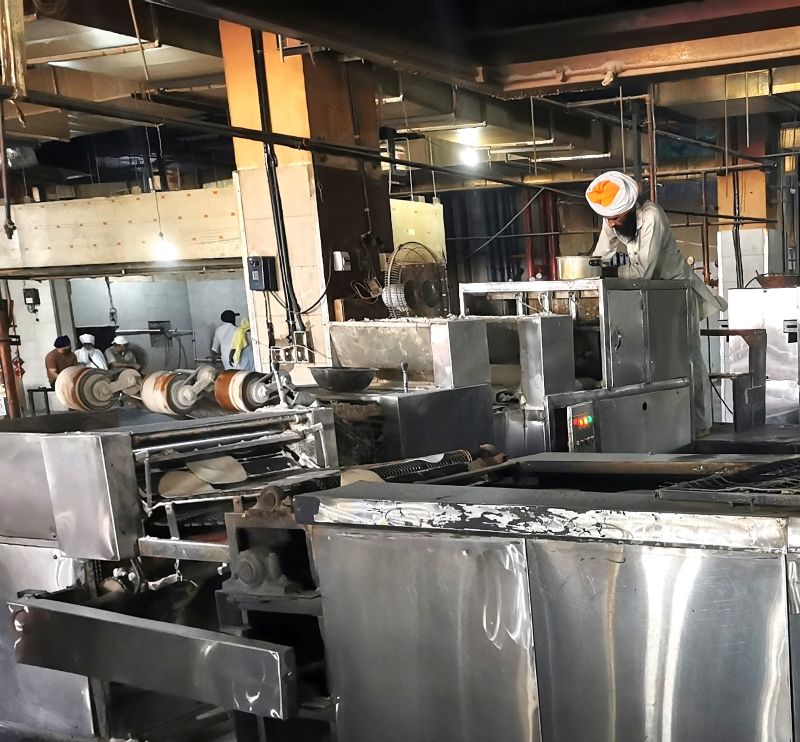
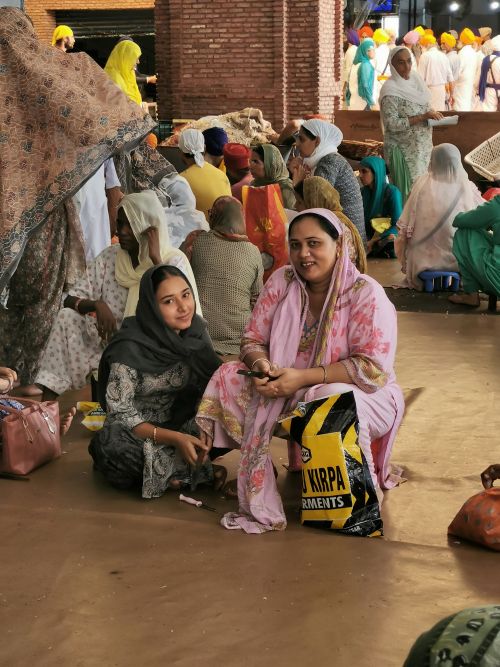
Scenes from the Langer
It was a fascinating place, offering the noisy busyness of people, the clatter of tin plates, atmospheric peace, quiet, and calm where light diffused through many windows and arches set over several levels of this lovely building.
The noisy clatter of stacks of tin plates being cleaned…
Nothing is wasted, and food scraps are composted while leftover chapatis are bagged and fed to animals in the surrounding rural area.
We walked through a garden area and around the rest of the temple complex, observing the long lines of pilgrims waiting to enter the inner sanctum to receive a blessing. We contemplated joining the line but decided it was time for a rest instead!
Remember to open up the groups of photos to see them fully!
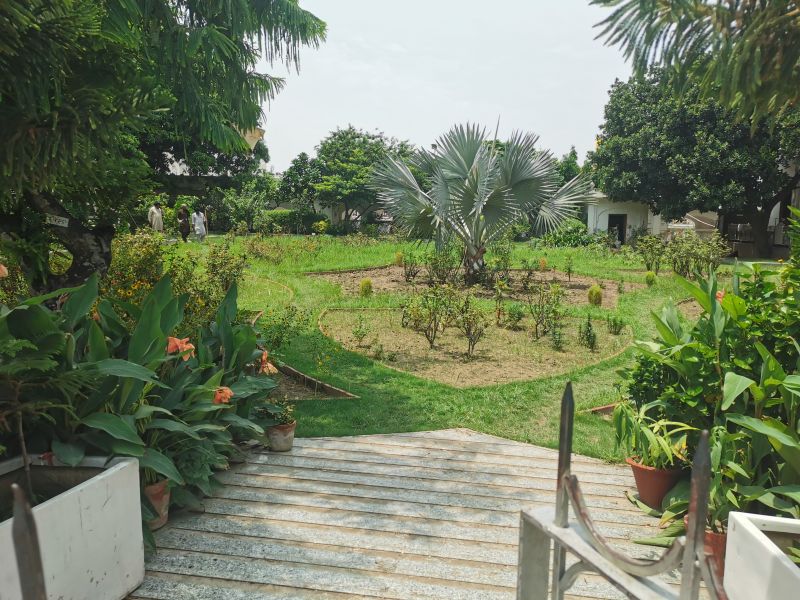
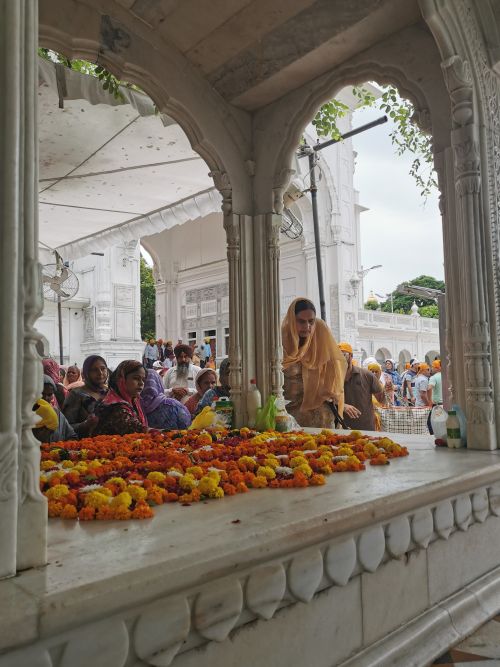
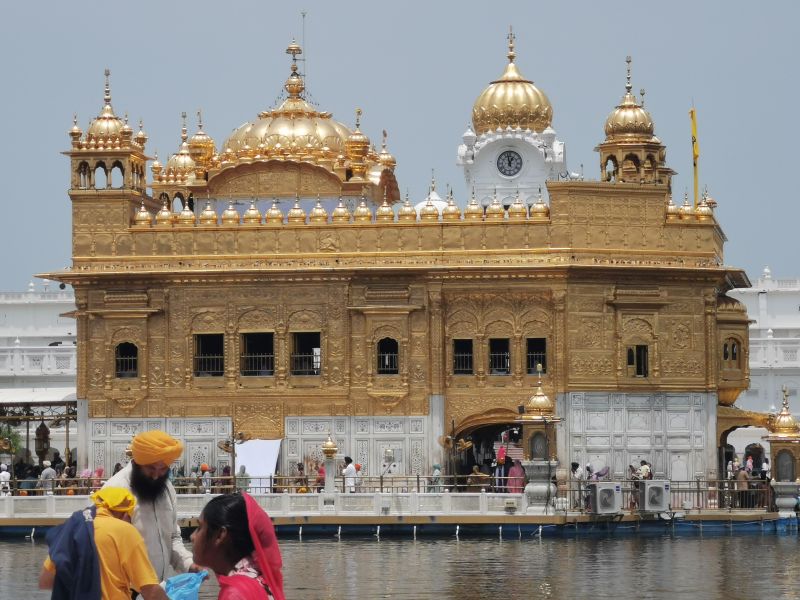
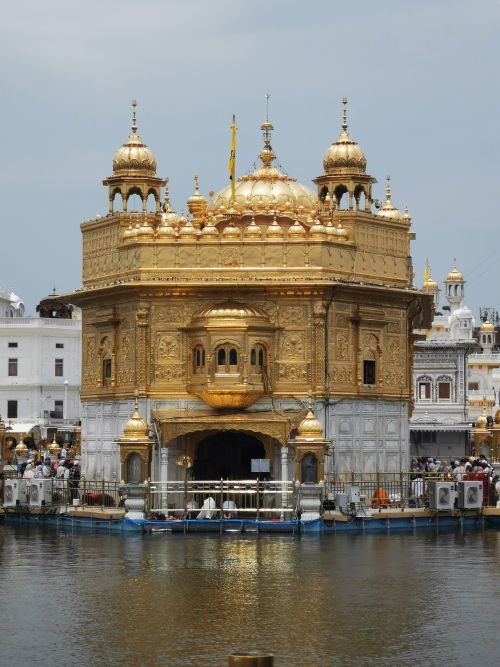
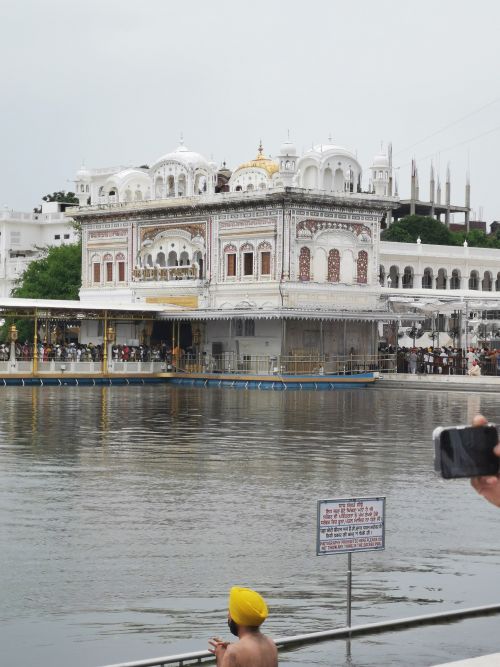
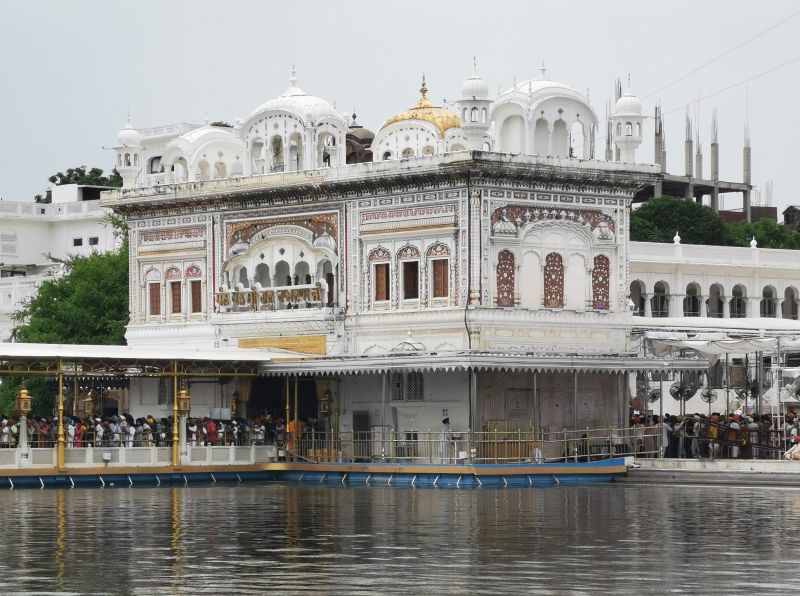
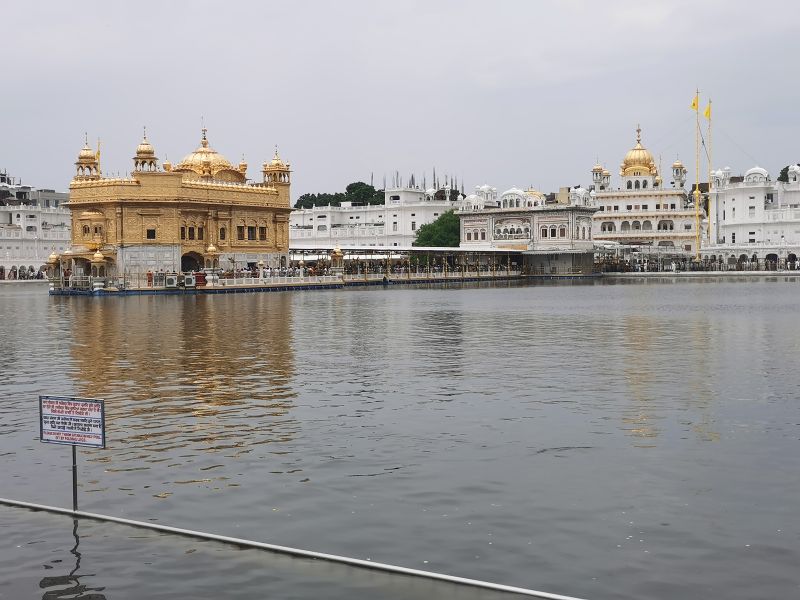
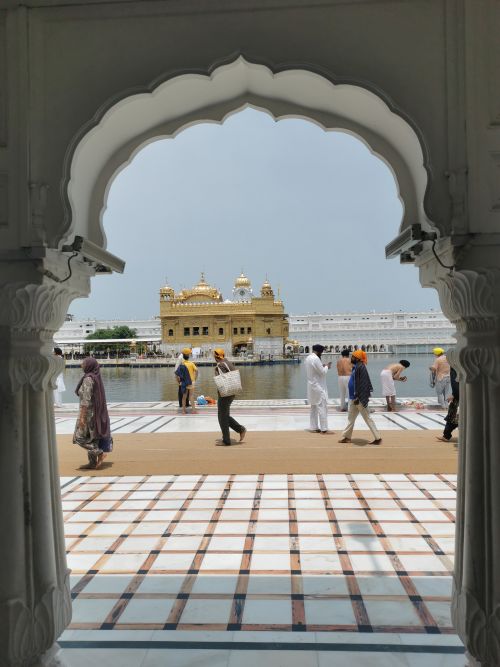
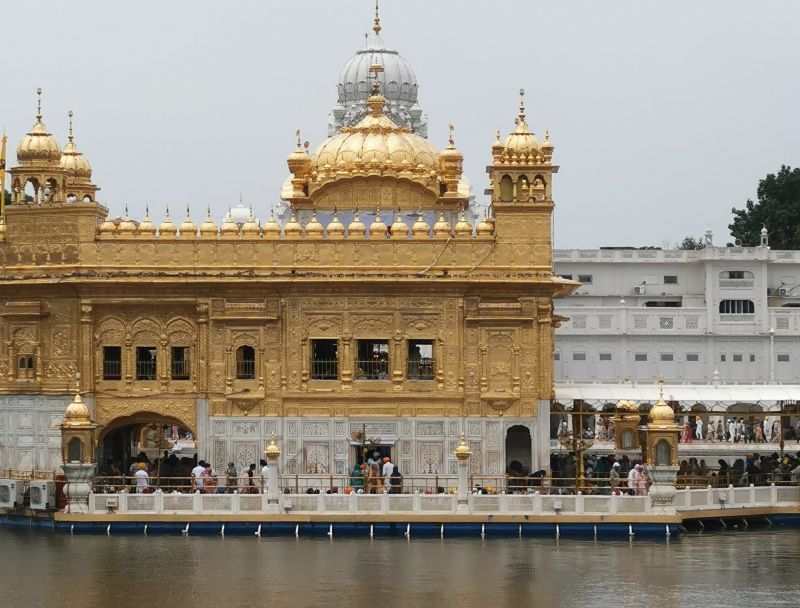
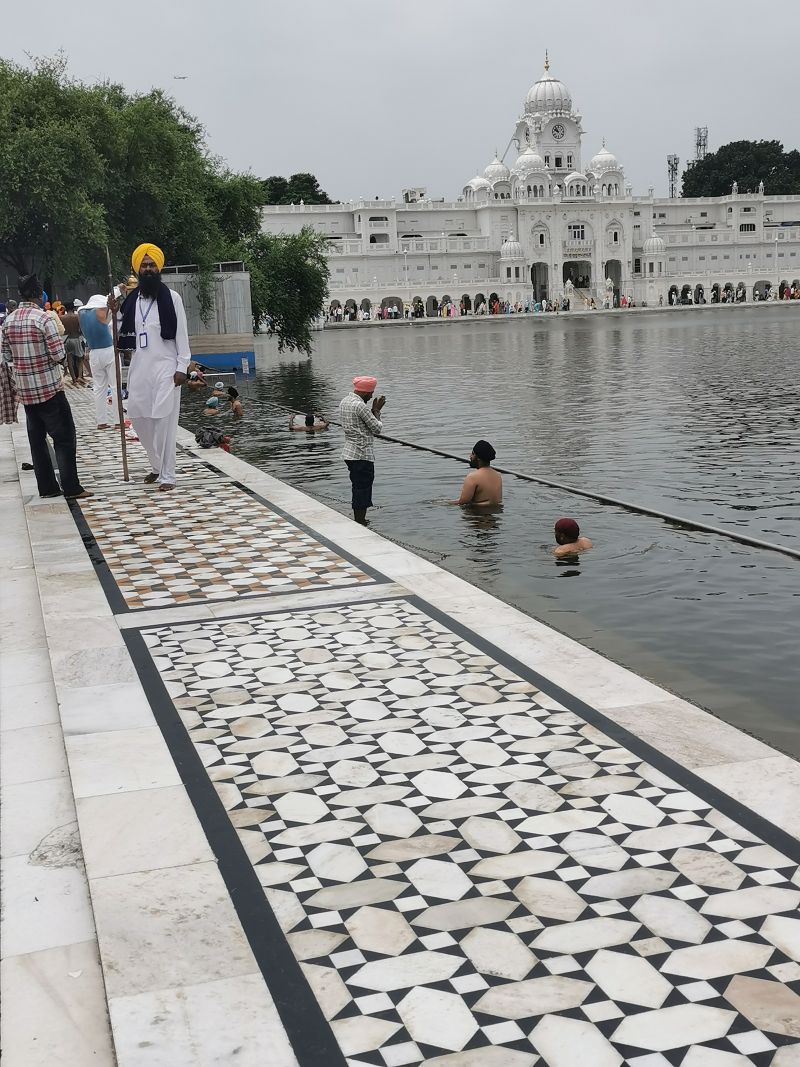
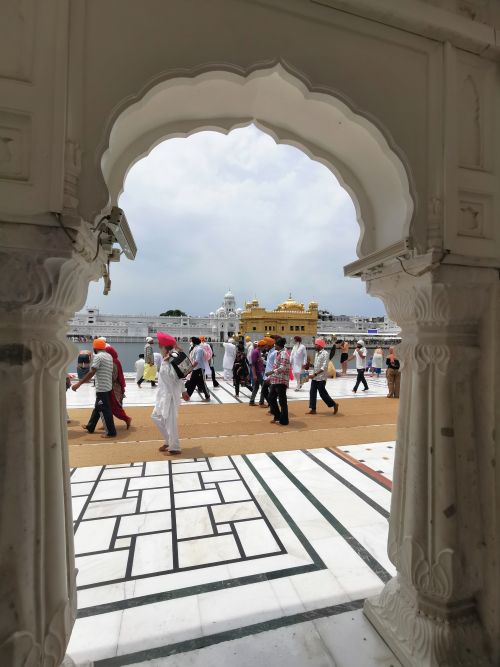
The garden near the ‘Ramgarhia Bunga’, and views around the complex, (near and far images) and the lines of pilgrims awaiting blessing in the temple
Check our more info here: https://www.goldentempleamritsar.org/
Attari-Wagah Border Ceremony
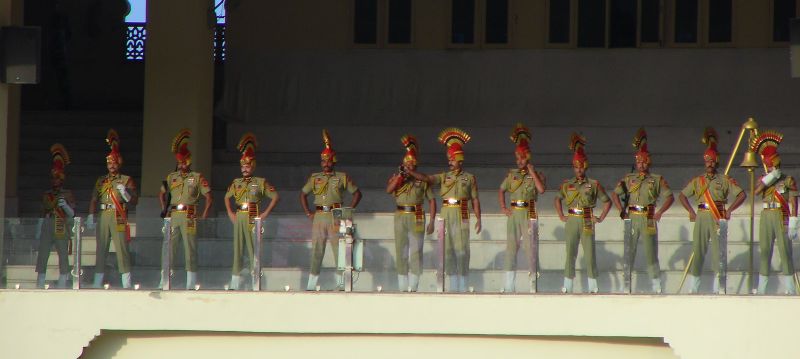
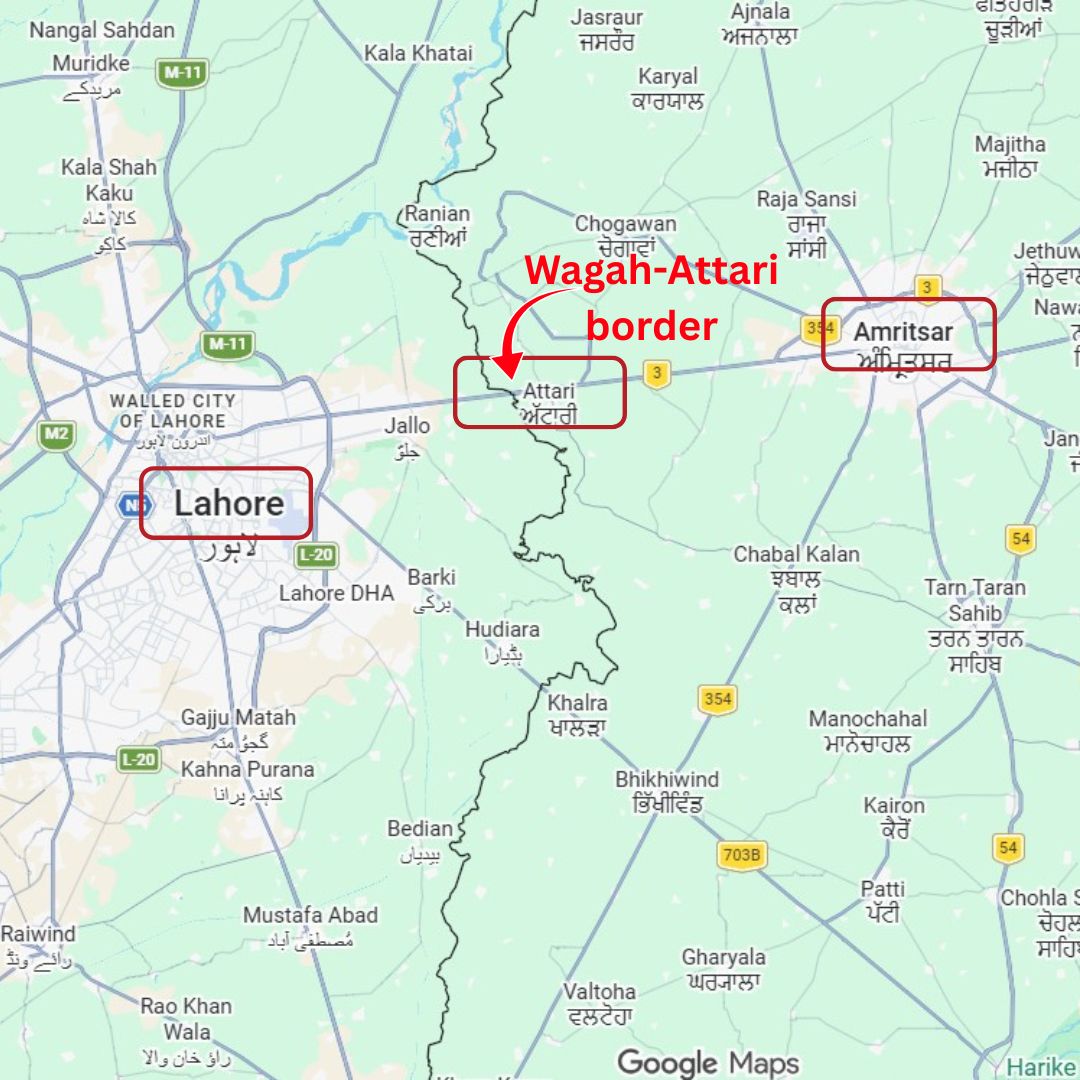
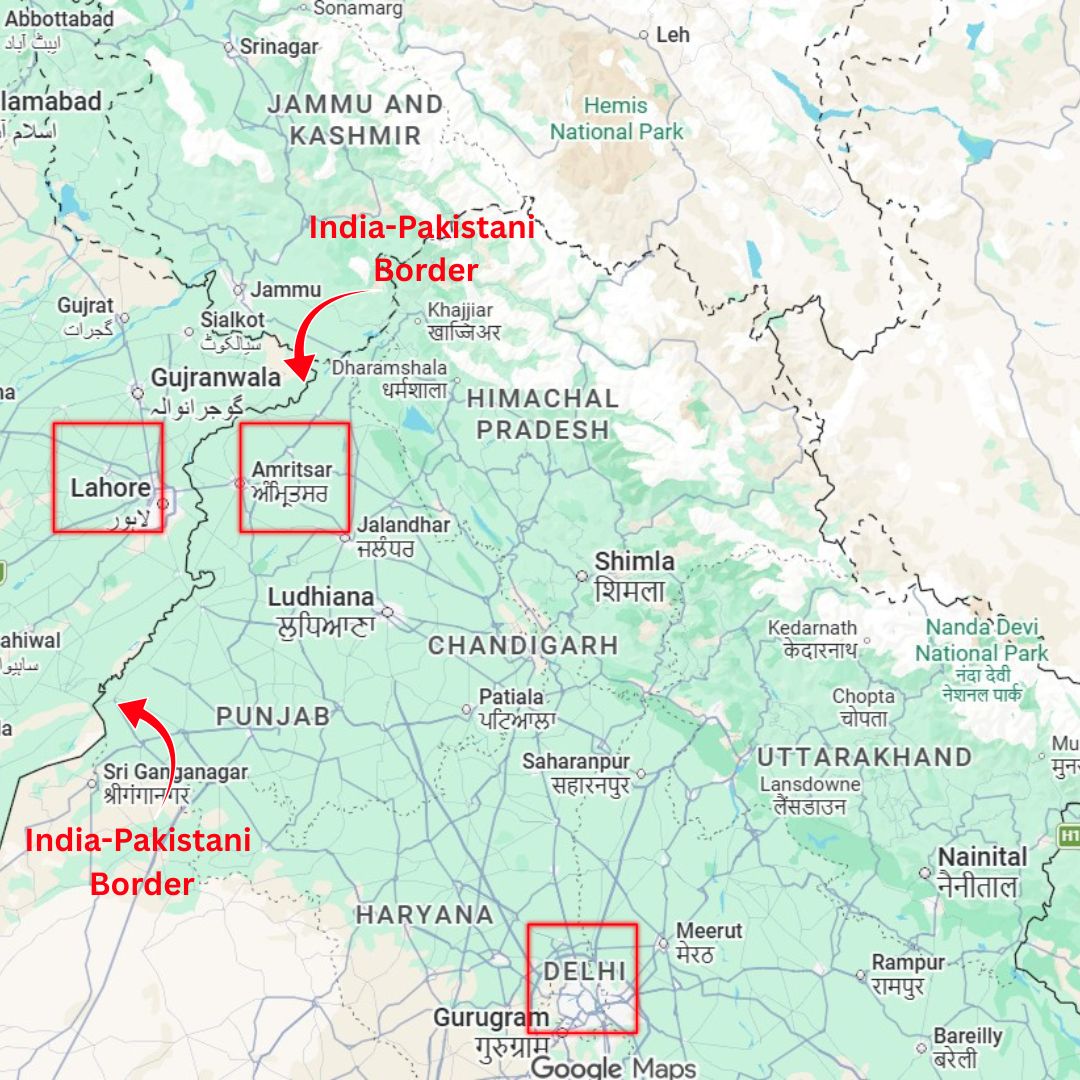
After a respite at the hotel, in the early evening, we drove the 30km (18.5mi) to the Indo-Pakistani border at ‘Attari-Wagah’. A stadium on the Grand Trunk Road is located alongside the Police Academy Campus and stretches into Pakistan with a gate on the border. Our purpose was to see the Wagah-Attari border ceremony, also called ‘Beating Retreat’, considered to be an energetic military drill held at sunset.
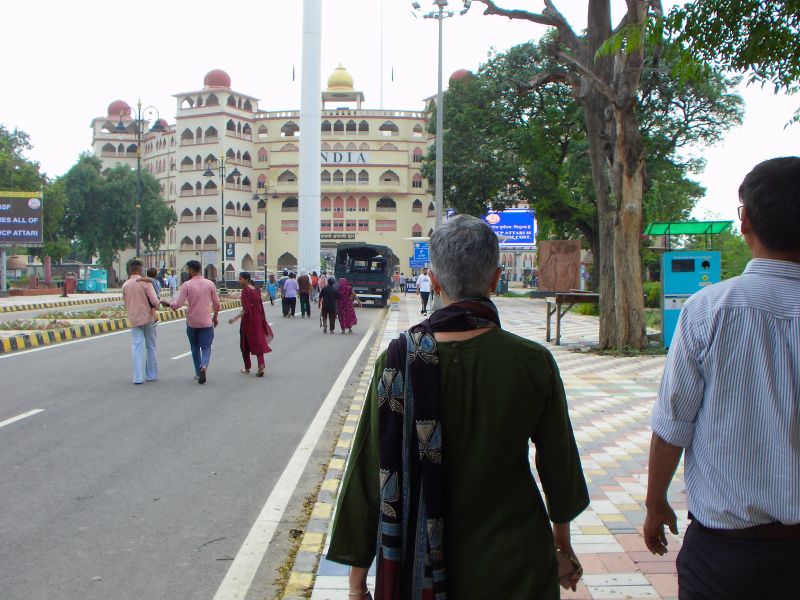
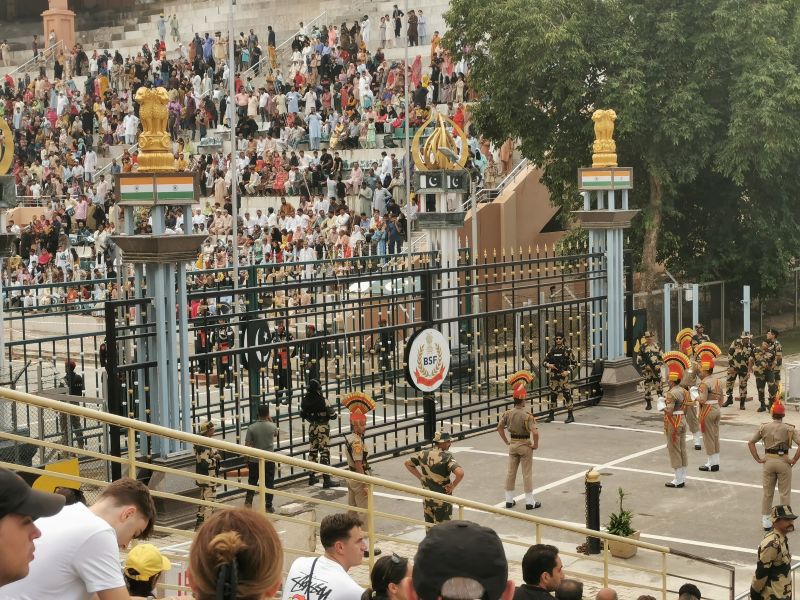
Approaching the stadium and the ceremony at the gates of the border.
Both the Border Security Force (India) and the Pakistan Rangers carry out a synchronised, high-stepping parade, reflecting both rivalry and mutual respect. At this time, the gates did not get opened, as they usually do, due to the recent (May 2025) short ‘war’ between the two countries. The ceremony, described as ‘pure theatre’, has been going since 1959. It actually began in October 1947 with the beating of three drums across a chalk line on the Grand Trunk Road, which is a check post, with flags on either side and a gate to regulate traffic and refugees. The symbology is of brotherhood and rivalry that both nations share, and the flags of each country are lowered in unison, ceremoniously folded, and after a handshake, the gates get closed and they ‘beat the retreat’.
Remember to open up the groups of photos to see them fully!
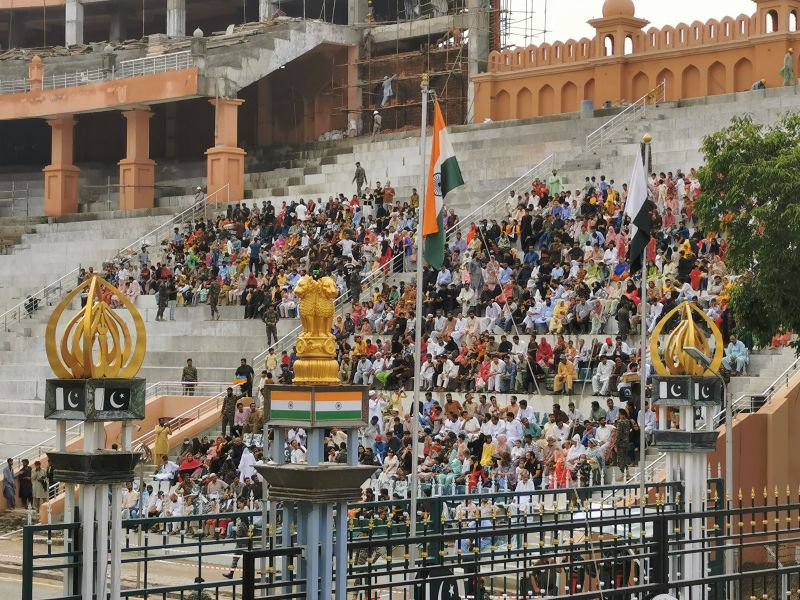
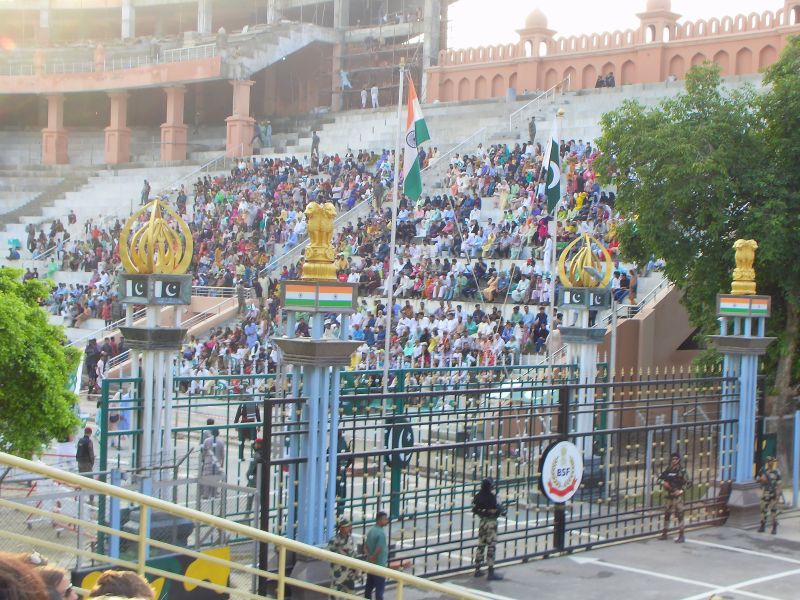
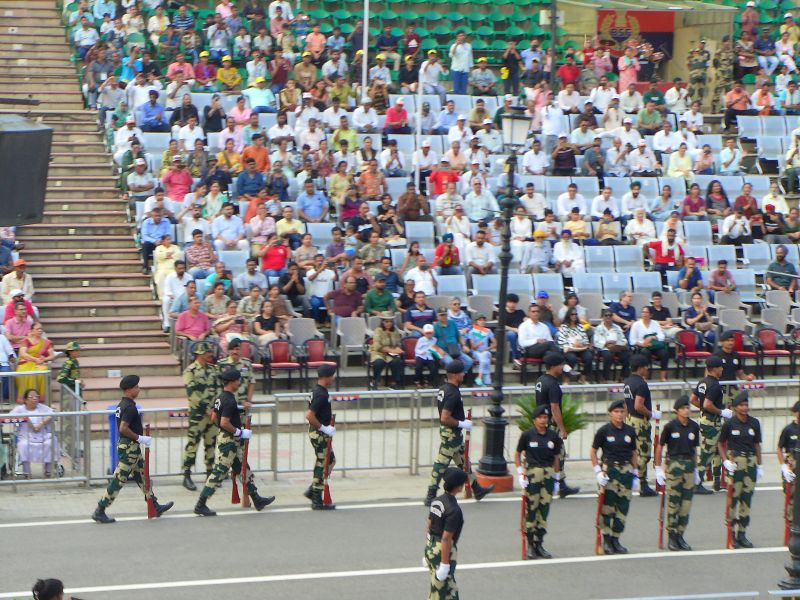
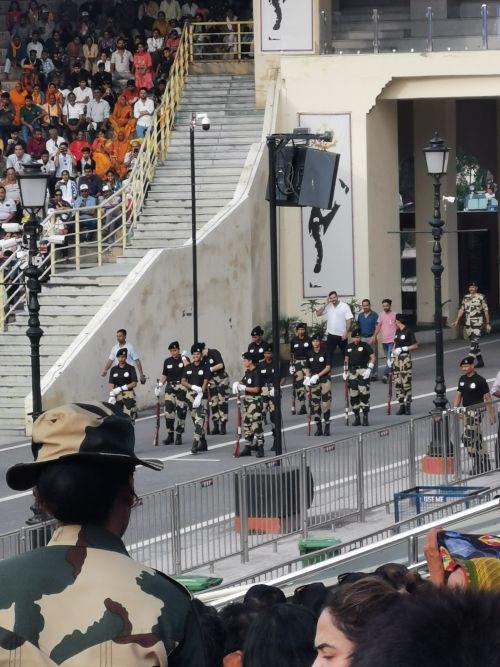
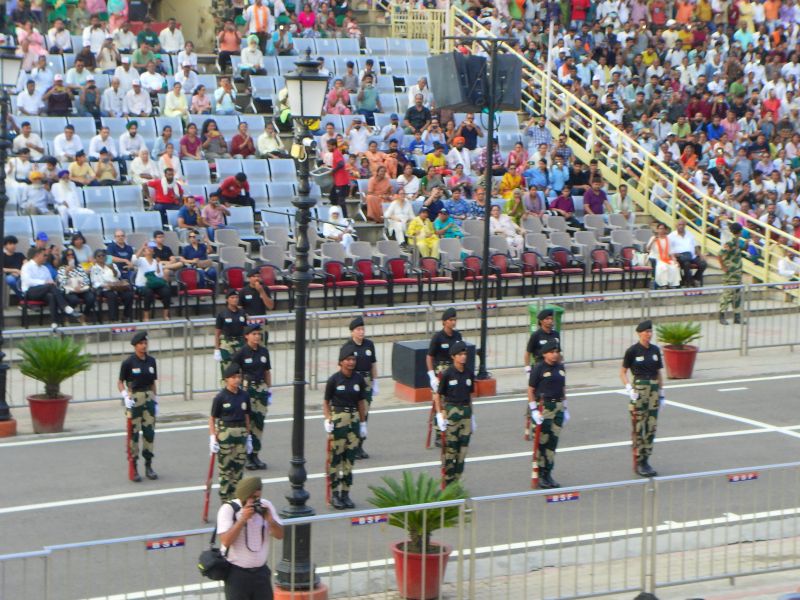
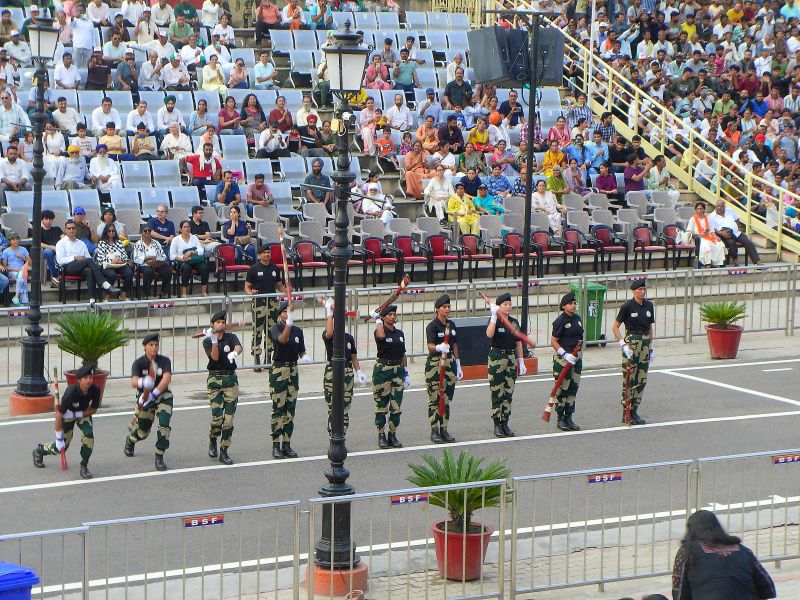
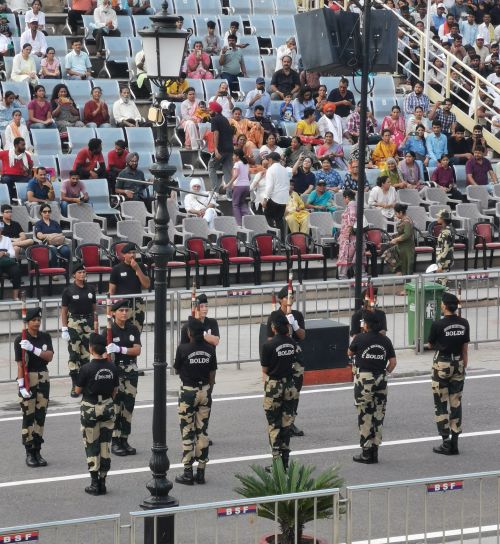
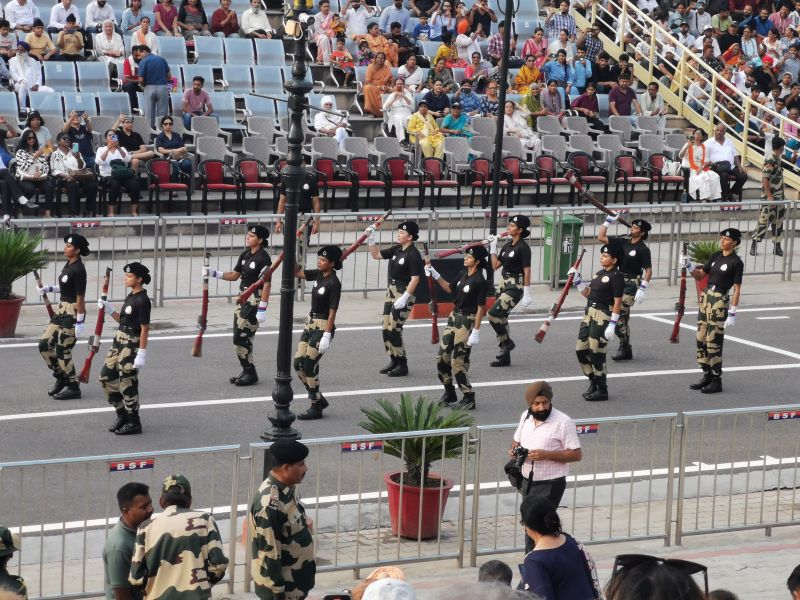
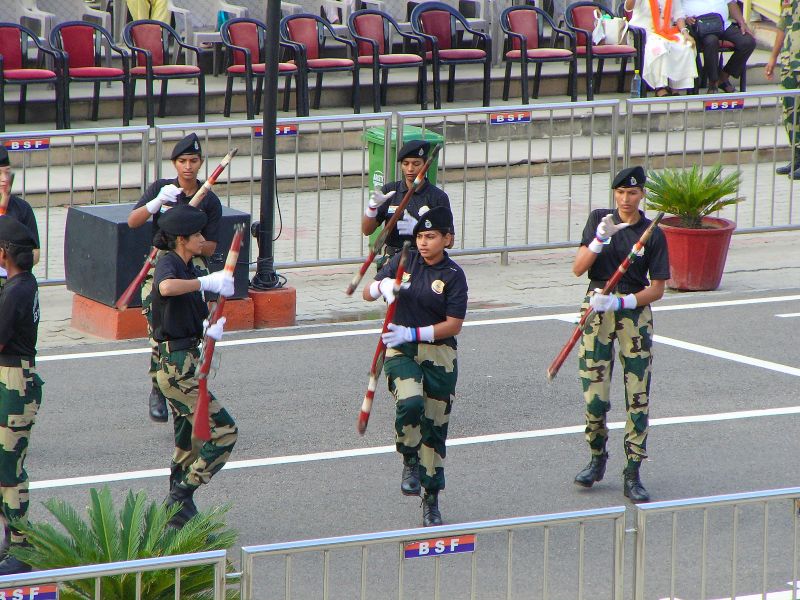
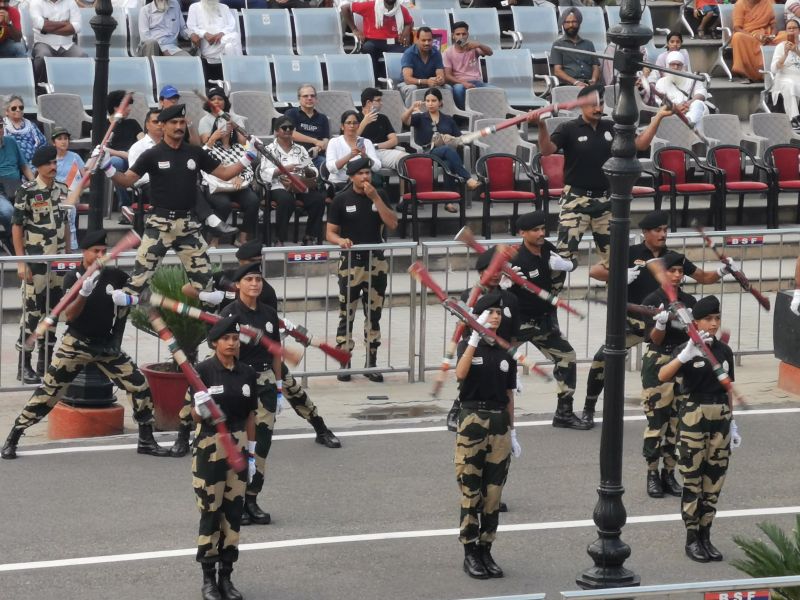

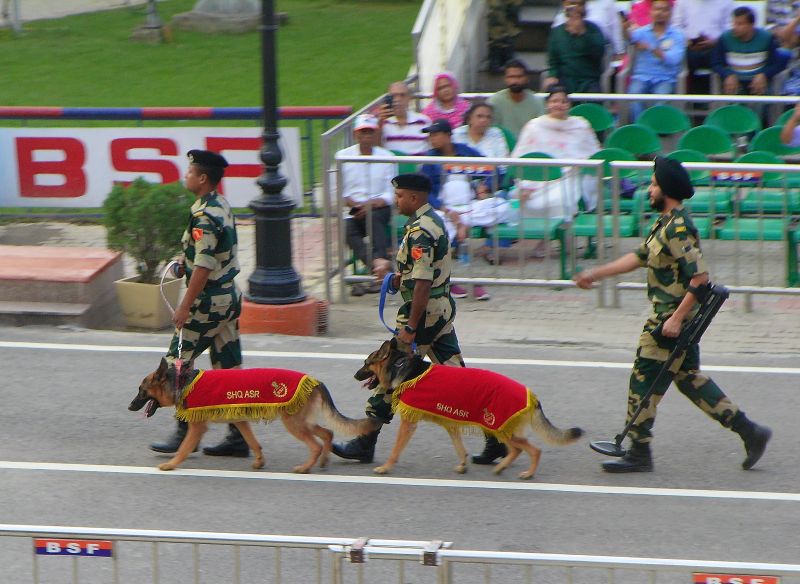
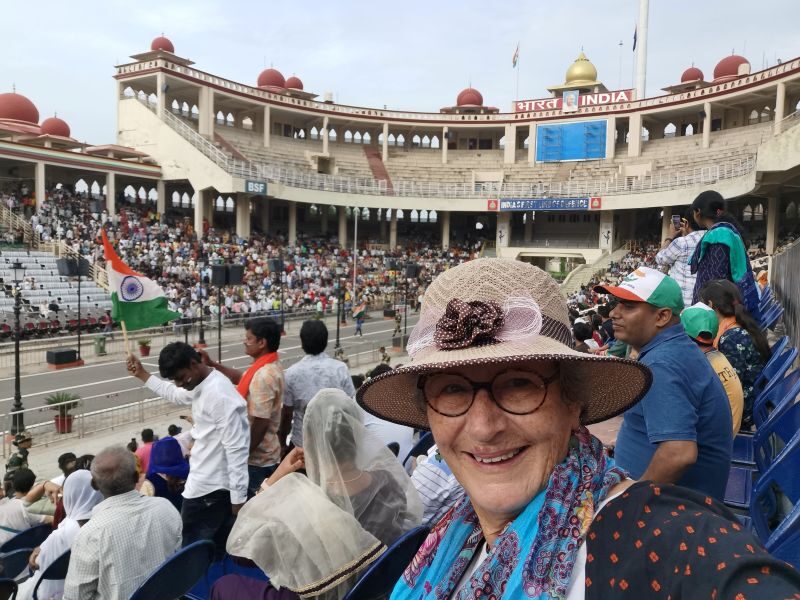
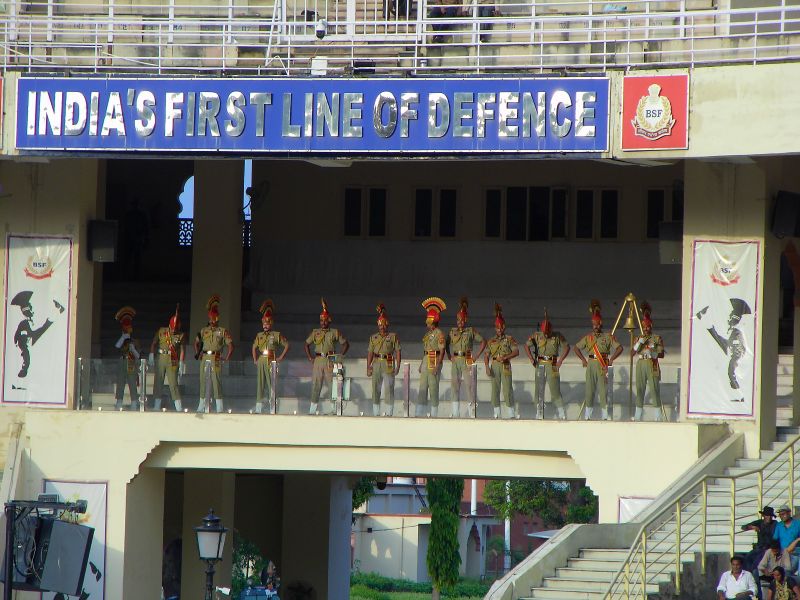
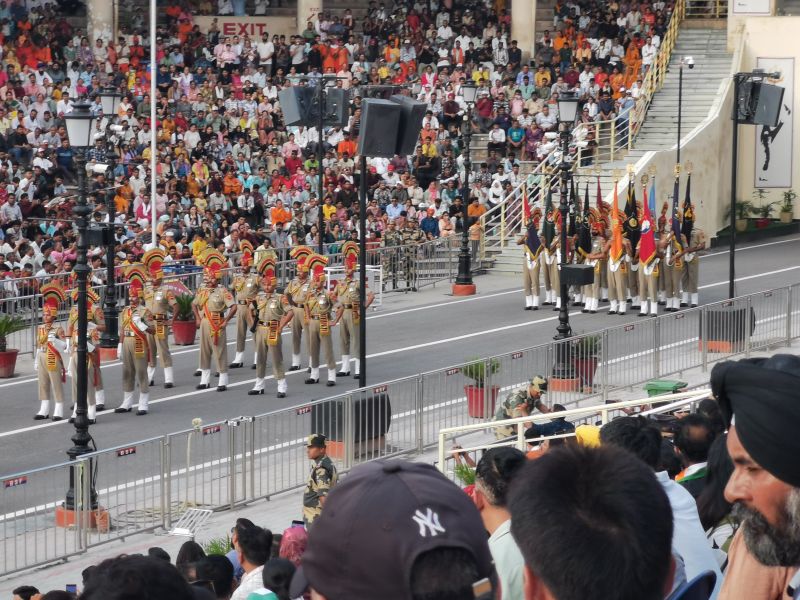
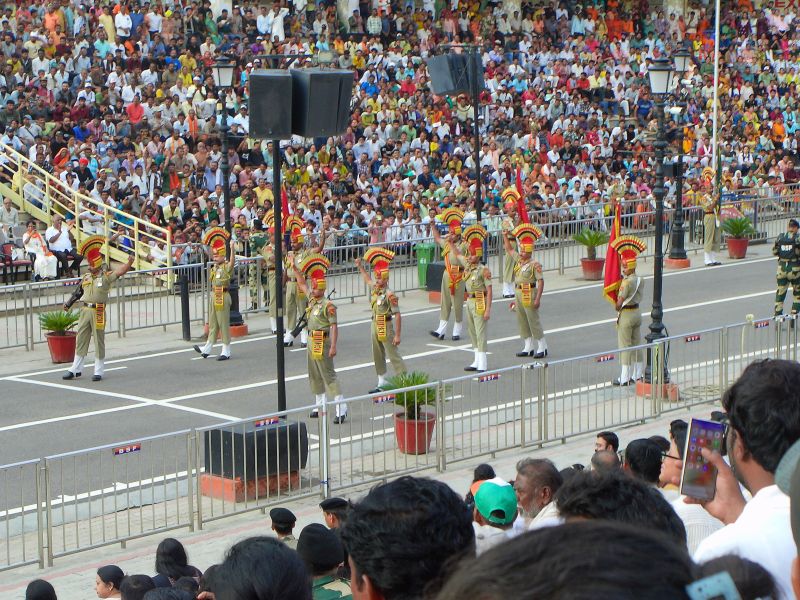
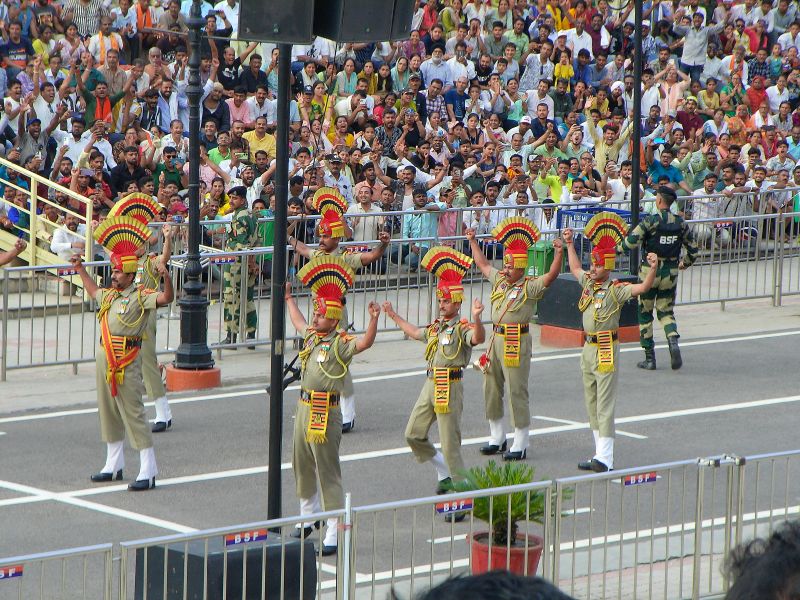
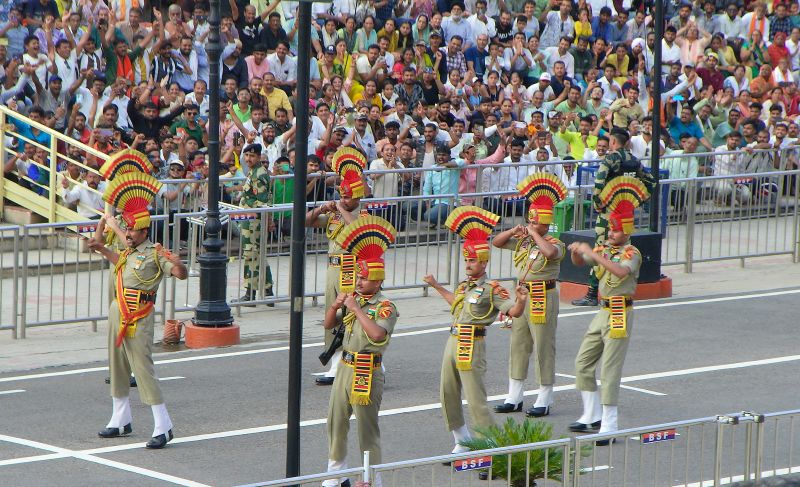
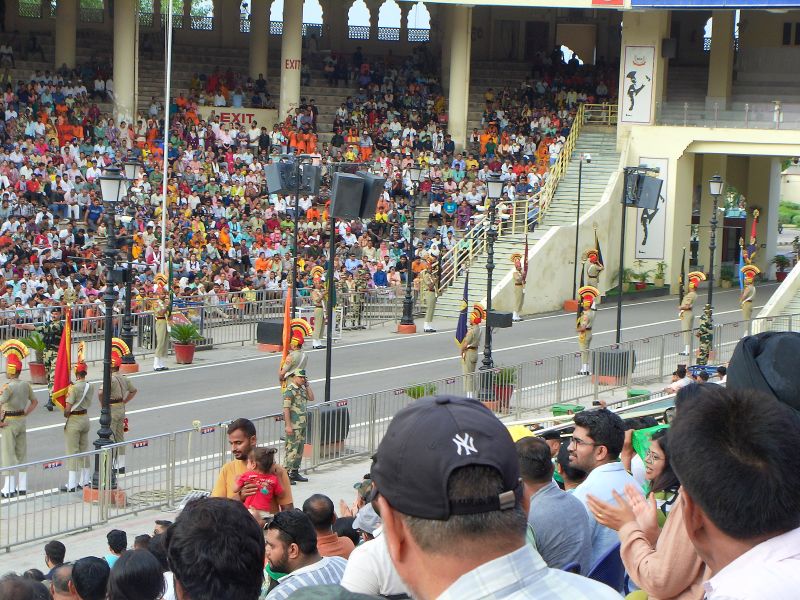
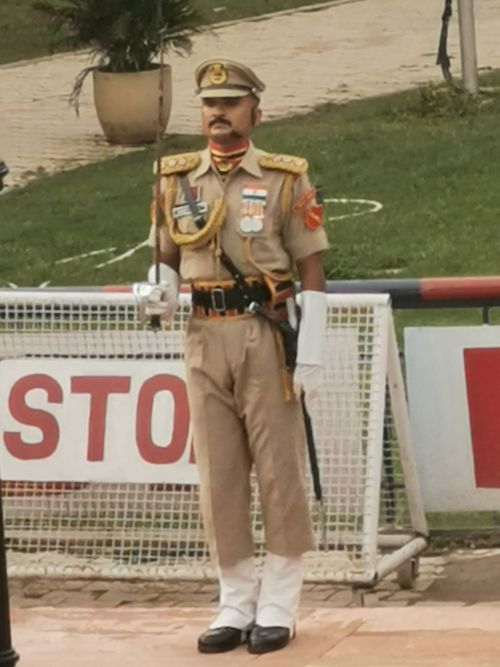
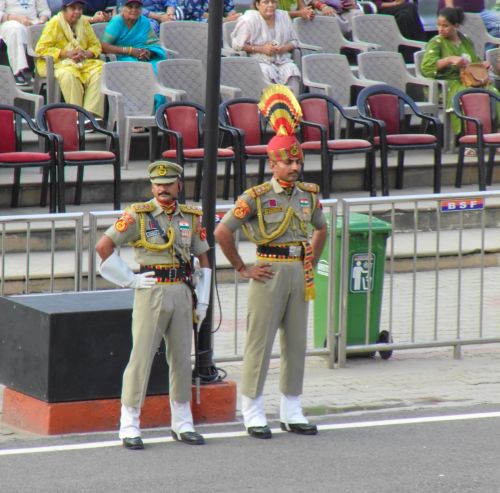
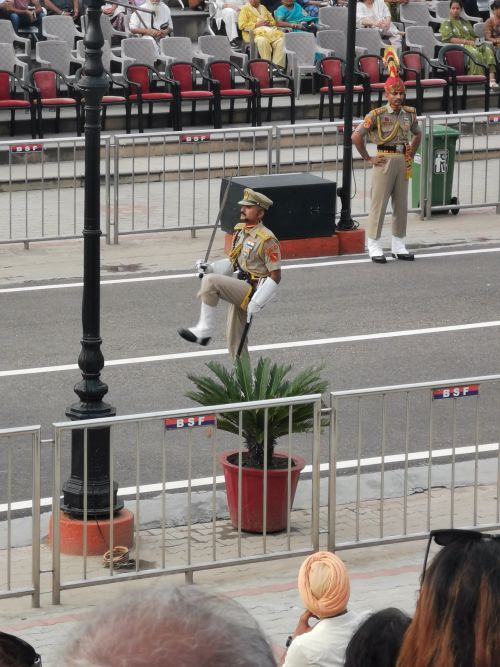
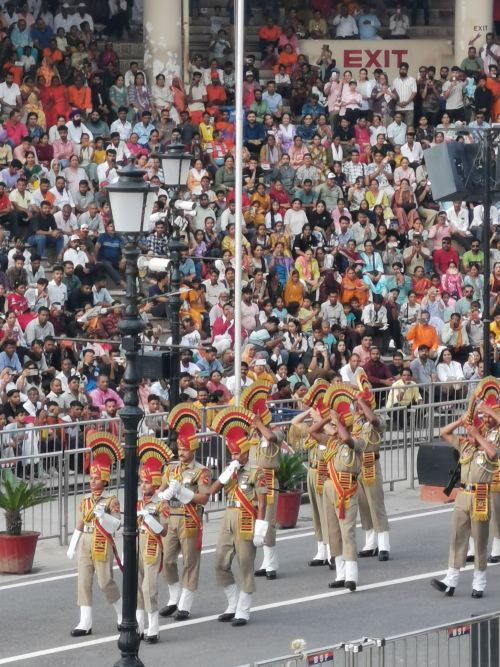
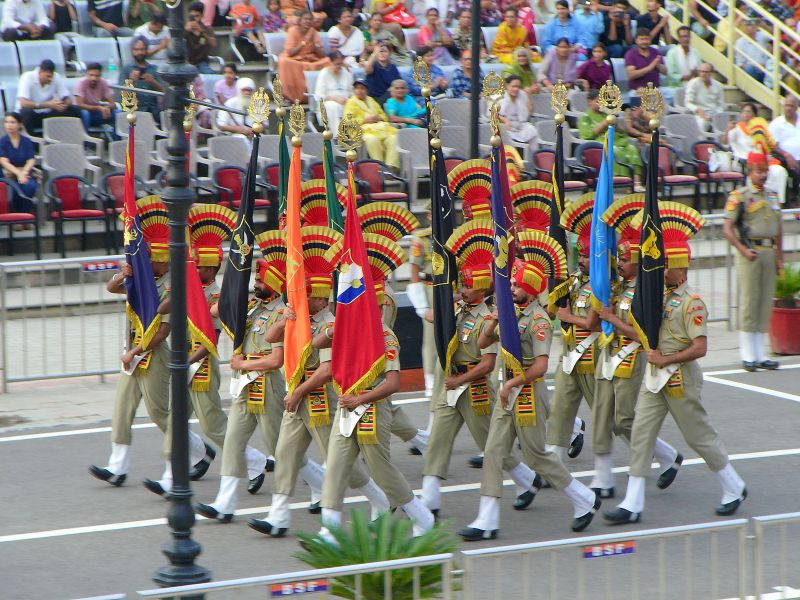
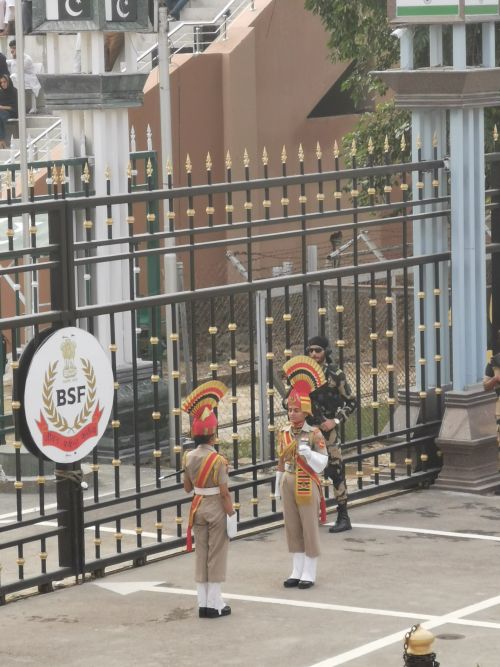

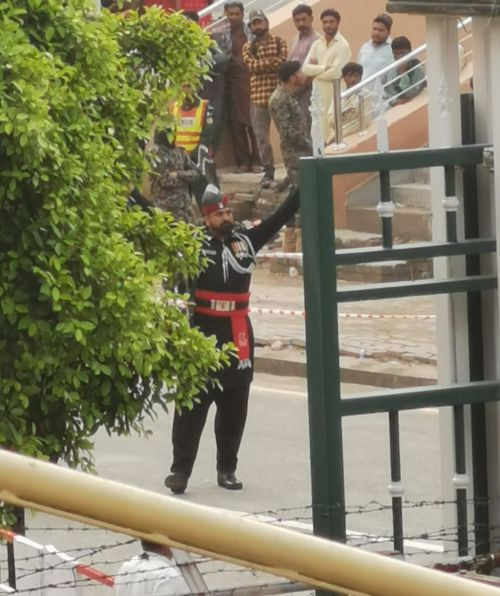
The crowd gathers, the drills and then the spectacle begins and the ‘Beating the Retreat’ gets underway.
We enjoyed the spectacle, Indians on one side, Pakistanis on the other side of the fence and gates, both making as much noise as possible in this somewhat carnival atmosphere – locals running up and down waving flags and enjoying ‘joining in’. This happens every night to the uproarious cheers of the willing crowds on both sides.
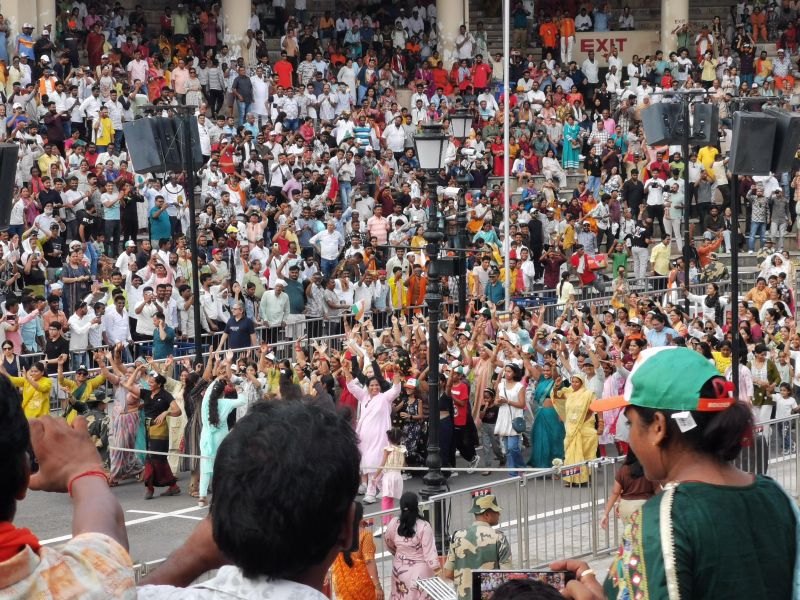
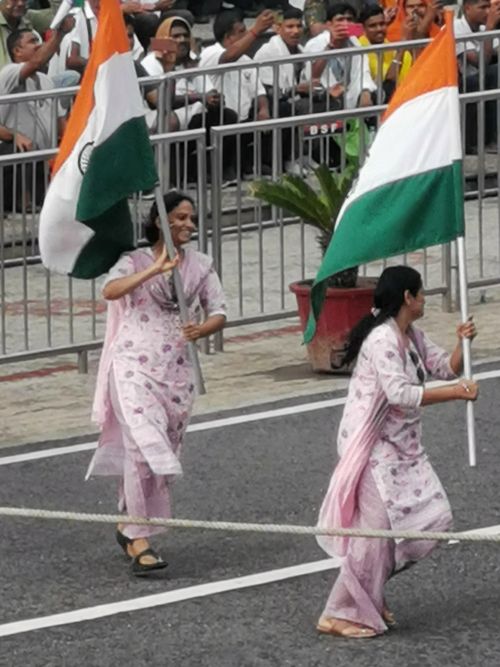
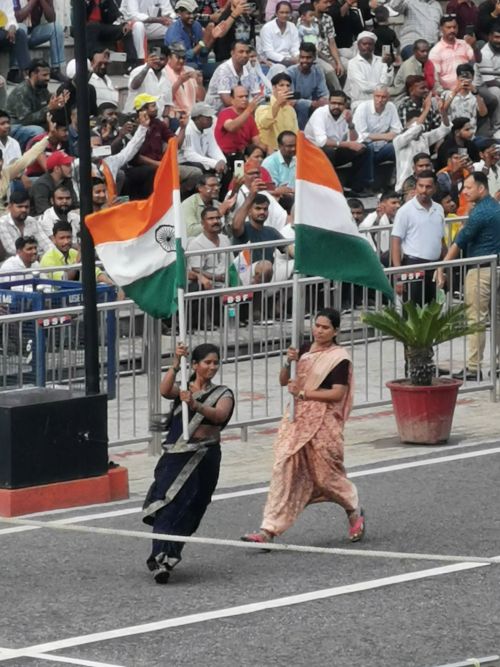
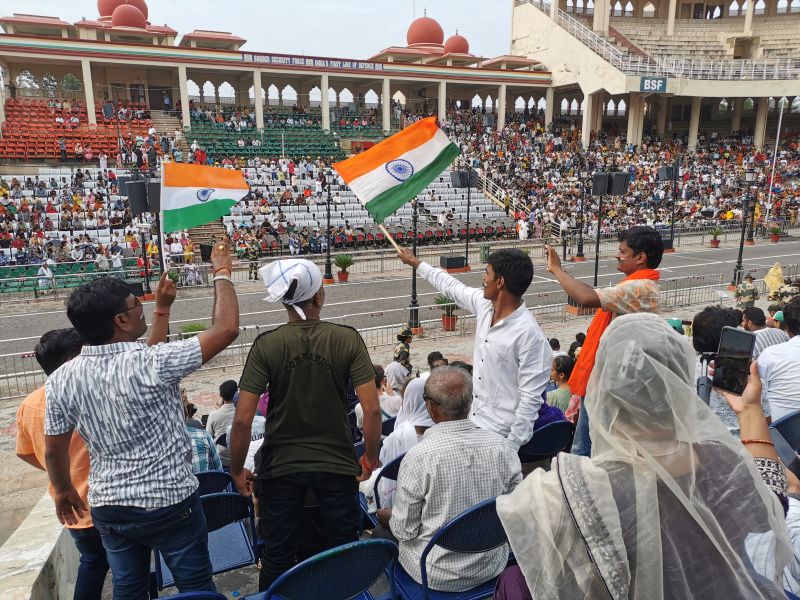
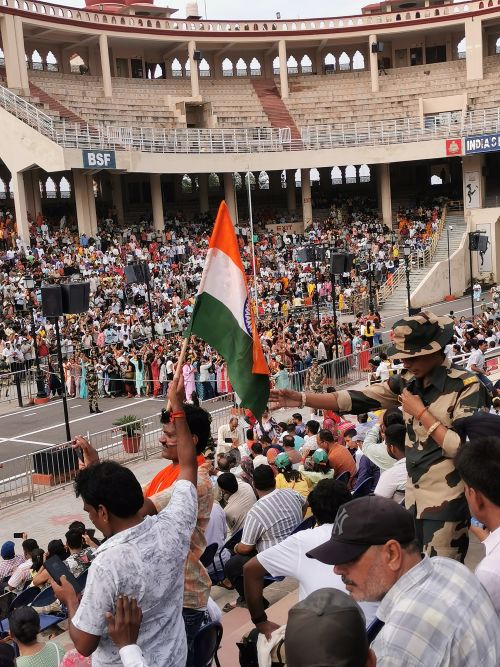
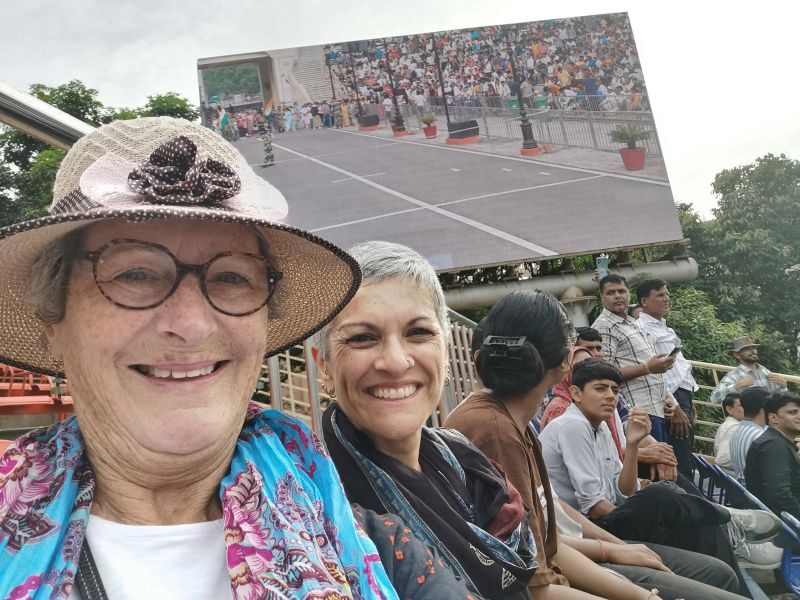
Preparations for the retreat show.
Take a deep dive here: https://shorturl.at/4NSWI (Wikipedia: Attari–Wagah border ceremony)
Enjoy some video from the ‘Attari-Wagah Border Ceremony’ and ‘Beating the Retreat’
The Grand Trunk Road
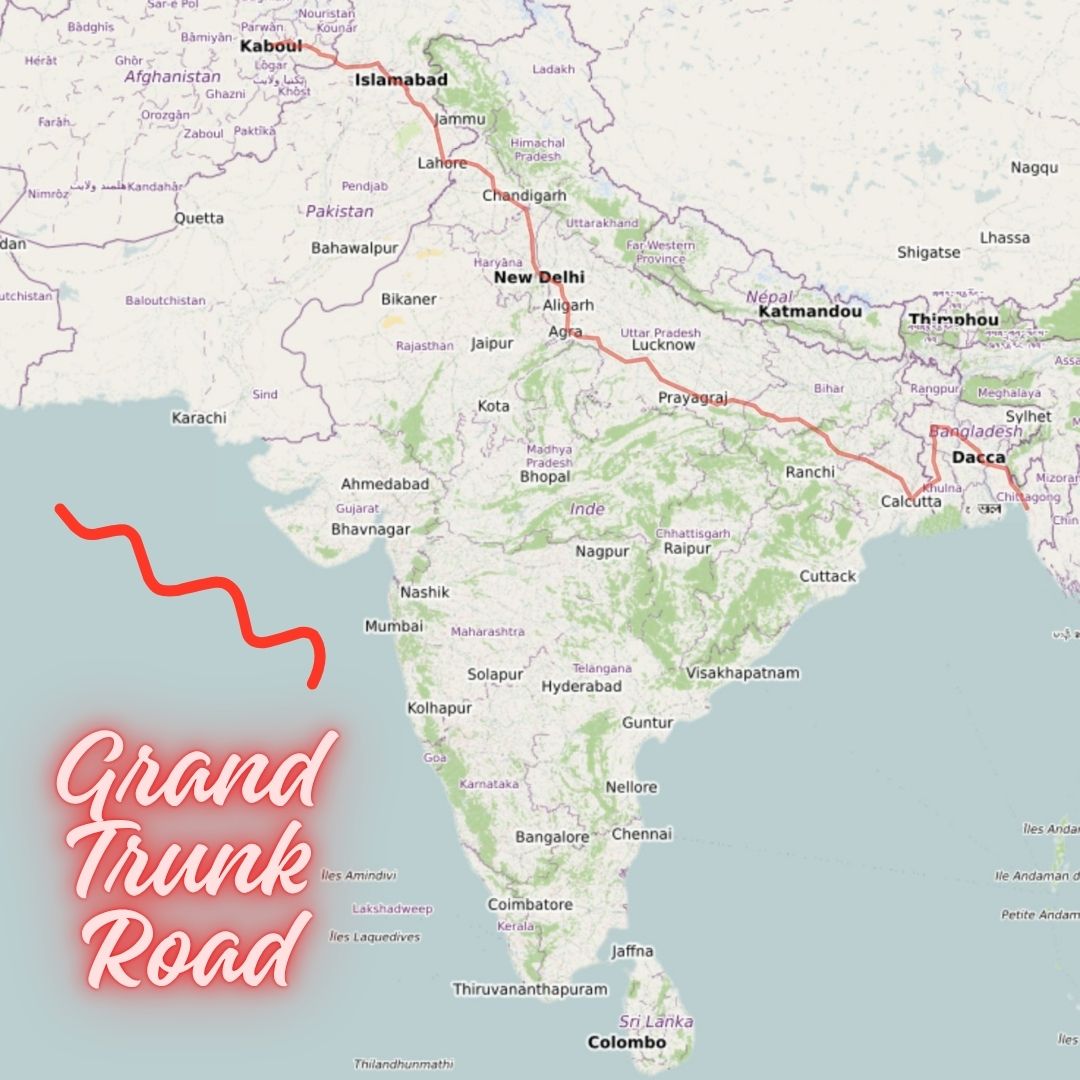
The Grand Trunk Road (GT Road), 3,655 km (2,271 mi), is the longest and oldest of the major roads in Asia, connecting with the Silk Road, which runs from Kabul in Afghanistan through Pakistan and India, to Teknaf in South-Eastern Bangladesh on the Myanmar border. Dating back 2,500 years, it was expanded and improved in the 16th century by Sher Shah Suri, when it was recognised as a strategic transportation route. Nowadays, parts of it have been widened to become part of the National Highway System.
‘From the Mauryan Empire to the Mughal Empire, from the British Raj to independent India, the road has been a witness to the triumphs and tribulations of countless civilisations. It served as a lifeline for communication and transportation, enabling the efficient administration of vast territories’. Quote from the link below.
See the map of the route and read more here:
https://aisrs.org/31/the-grand-trunk-road-gt-road-a-historical-highway-of-harmony-and-heritage
The Partition Museum
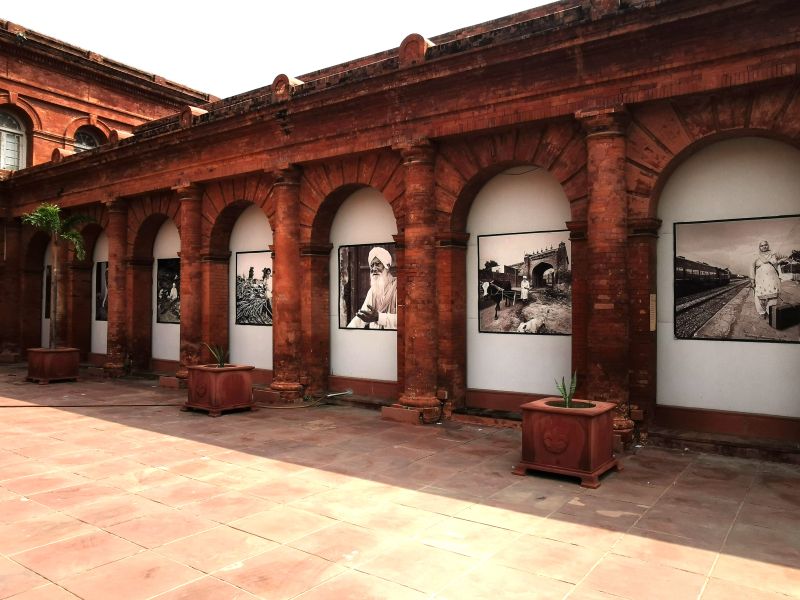
The following morning, we went to the Partition Museum, located in the grand, red brick building of the ‘town hall’ of Amritsar, situated near the Golden Temple. The entry walkway is filled with chandeliers and the building was constructed by the British in the 19th Century before being refurbished to house the museum holding items from the 1947 partition in seven galleries. This is the only museum dedicated to telling the stories of the division of India and Pakistan – where the world witnessed the largest migration of people to have ever taken place. It was an incredibly moving experience to visit this museum—sad and somewhat horrific all at the same time. I felt quite a visceral reaction to the displays, not because I didn’t know what happened, but the connection, being of British descent, became even more real in those moments.
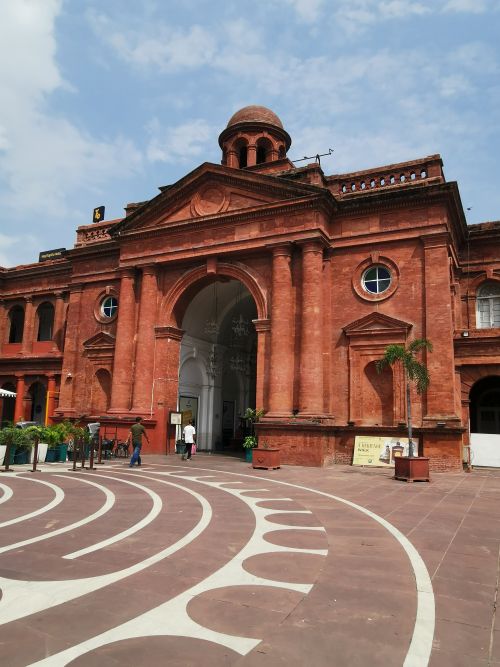
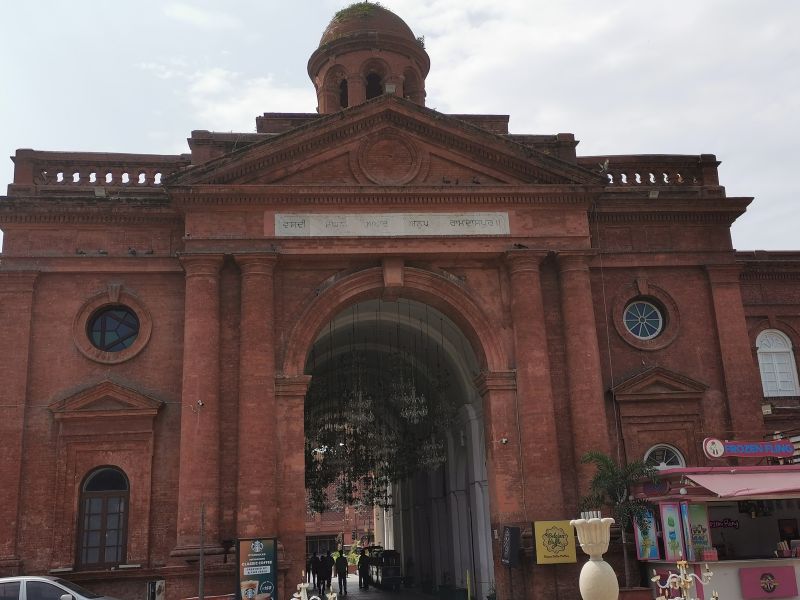
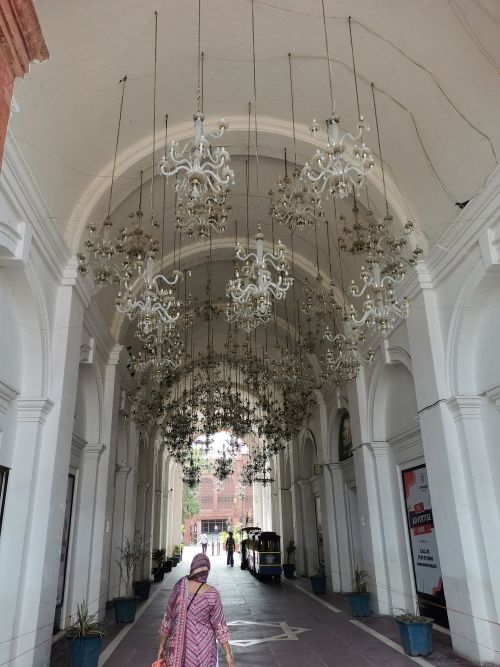
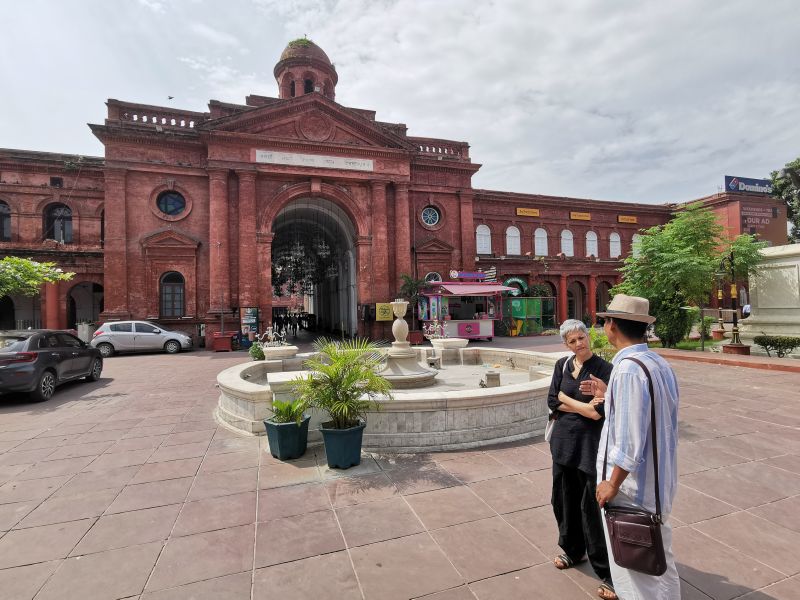
The Town Hall Housing the Partition Museum (no photography/videography inside)
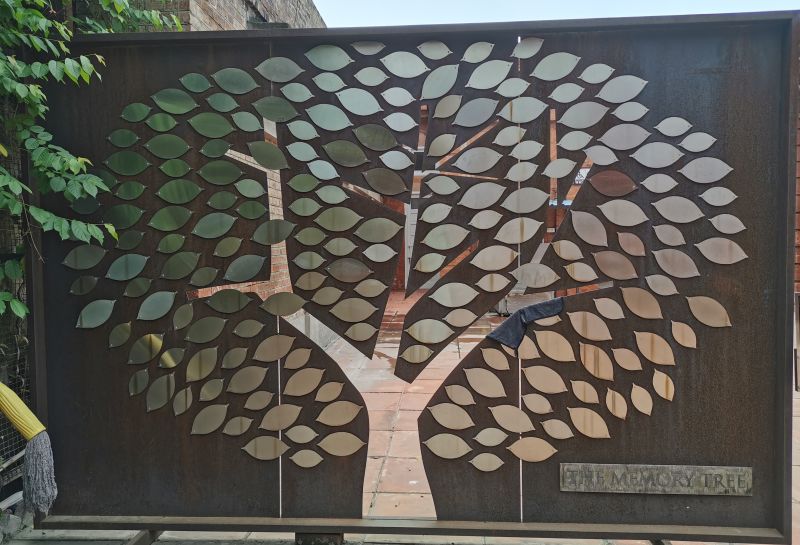
The museum is a stunning place to visit, offering a detailed visual account of this incredible time of change in Mother India. Outside is a statue of Jarnail Hari Singh Nalwa, a tribute to valour. He was a celebrated Sikh General of Maharaja Ranjit Singh’s, known for his military skills and contribution to the Sikh Empire, and is a symbol of bravery and leadership.
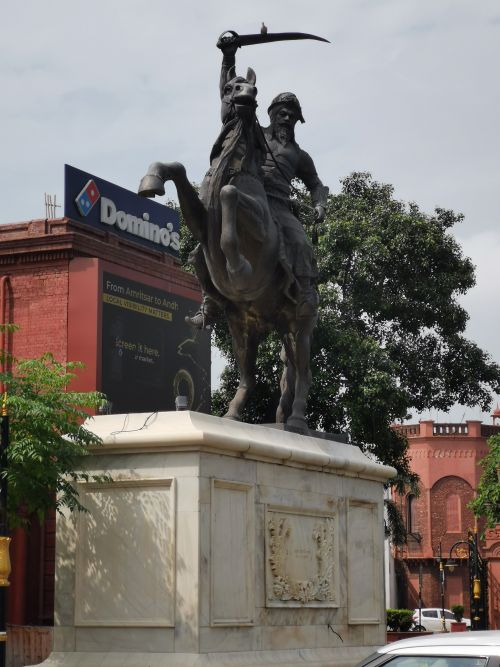
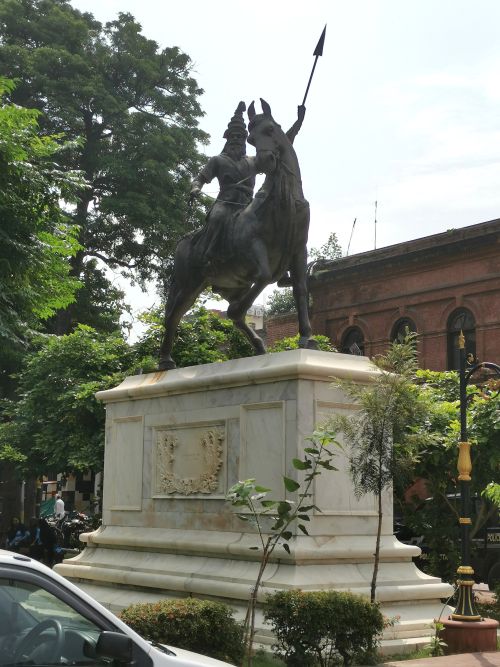

Jarnail Hari Singh Nalwa & Akali Phula Singh, Sikh General statues at the town hall Amritsar
See some more information and photos here: https://mainlymuseums.com/post/931/the-partition-museum-in-amritsar/
And here: https://www.partitionmuseum.org/
The Heritage Walk through Old Amritsar
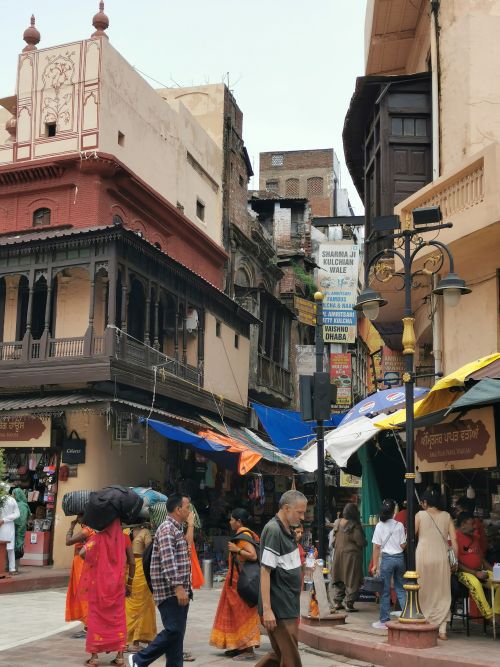
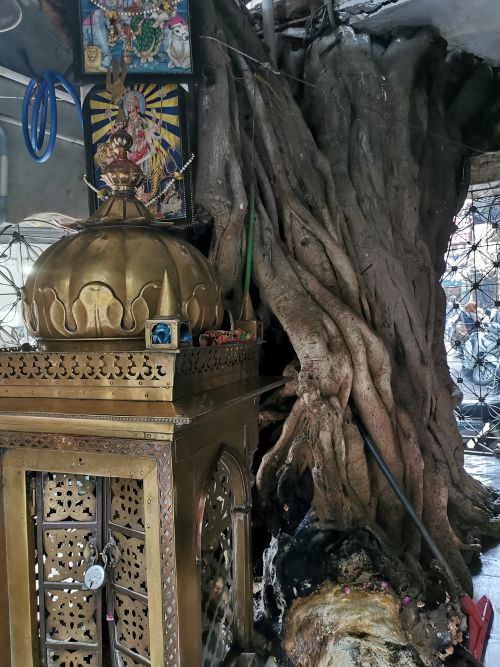
We walked through the narrow back lanes of Old Amritsar, on a ‘heritage walk’, marvelling at the tangle of streets and houses built of wood with intricately decorated carved doors and window shutters. Trees, considered sacred, grow out of houses and buildings and small temples, and were seen at various locations along the streets and lanes.
Remember to open up the groups of photos to see them fully!
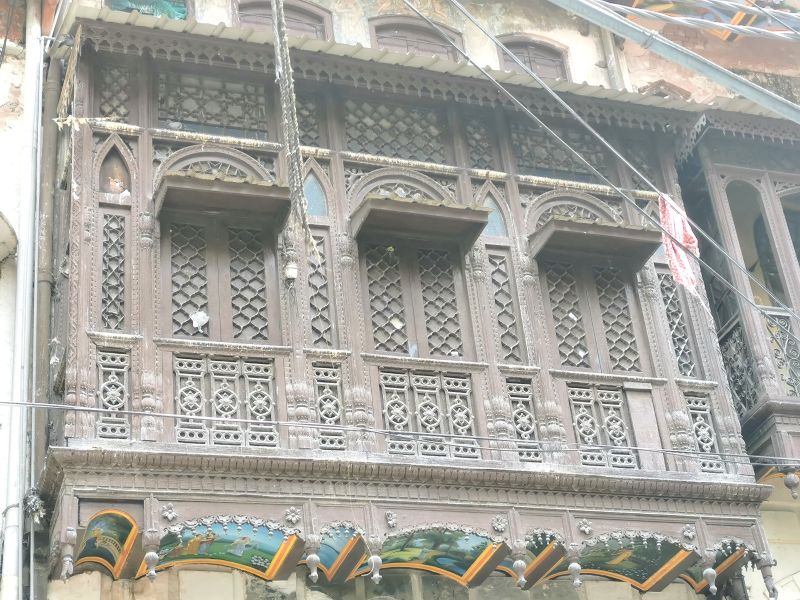
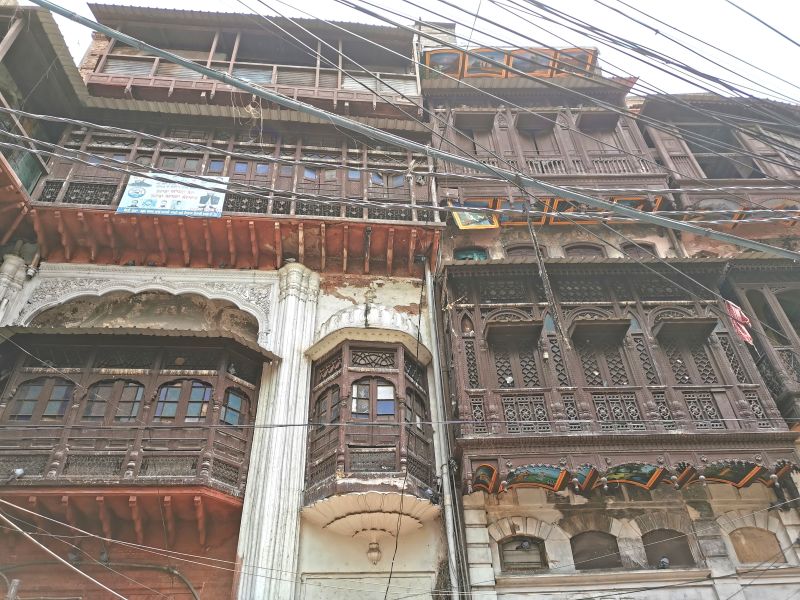
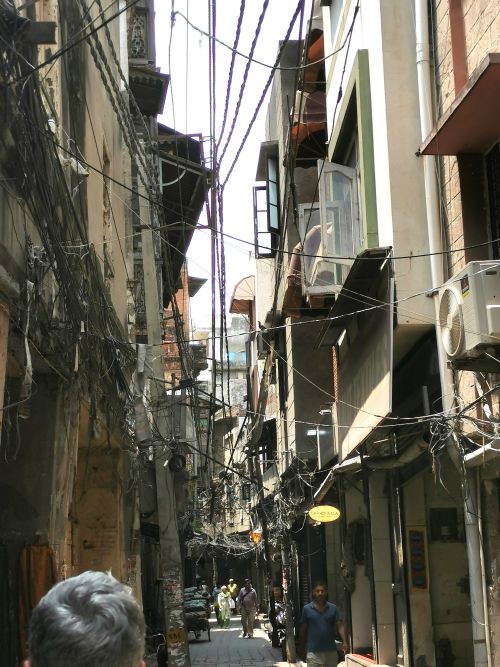
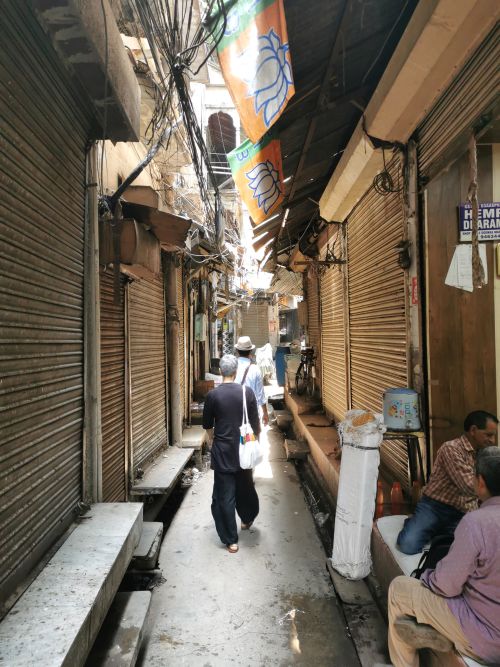
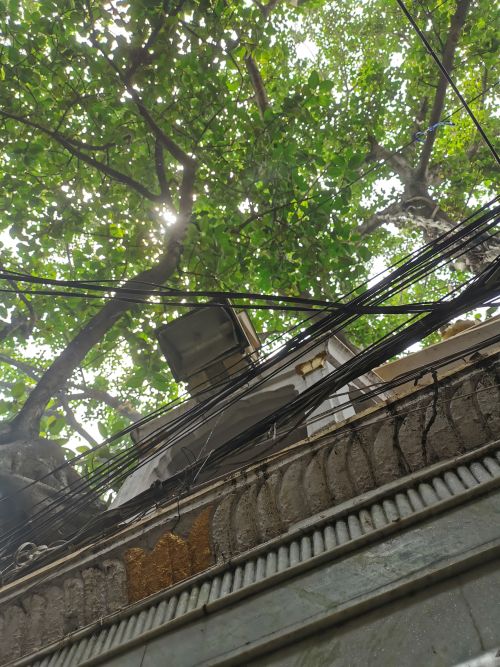
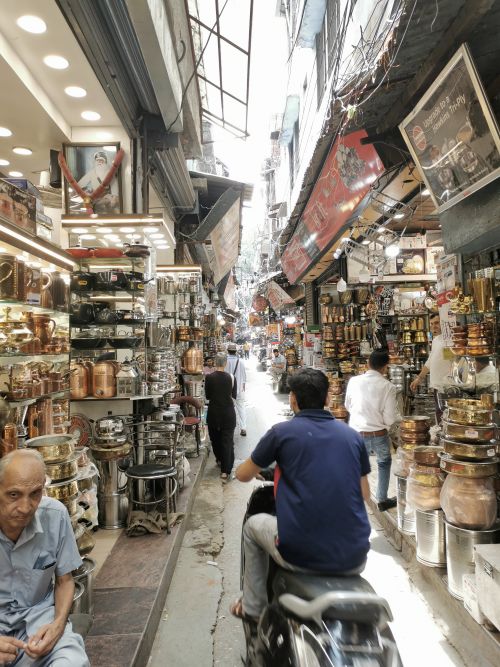
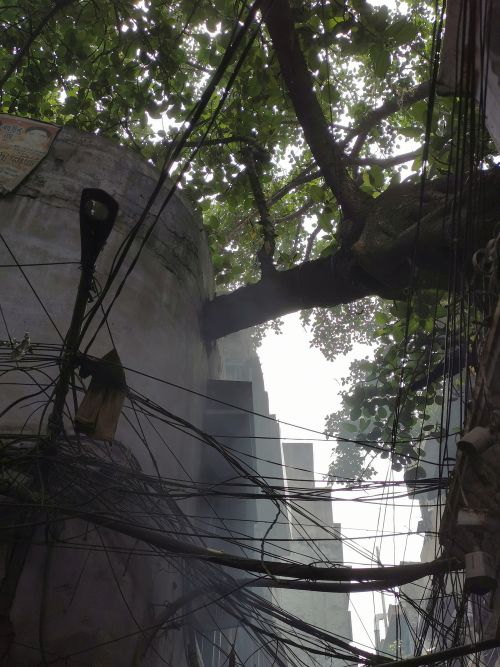
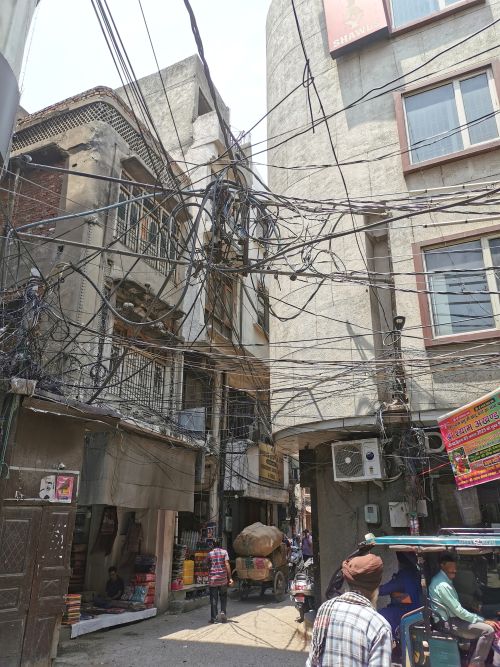
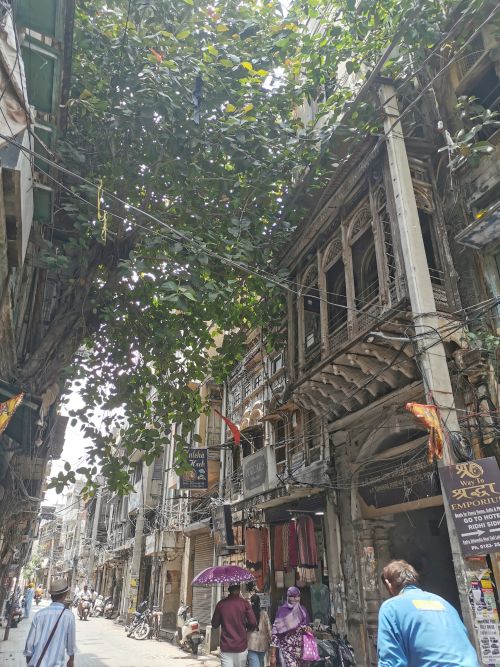
Narrow alleyways, ancient woodwork doors and windows, protected trees growing our of houses and shops, and a tangle of electrical wires in Old Amritsar
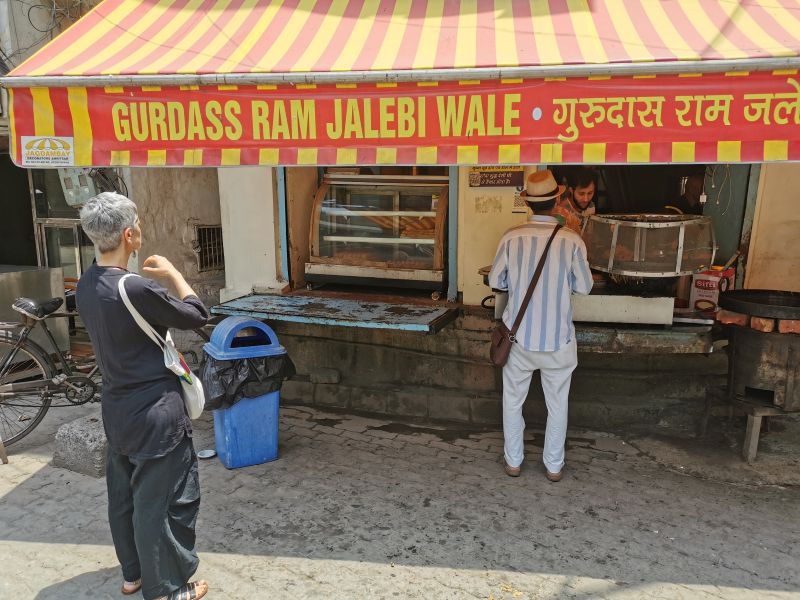
Jalebi Wale, lunch in Old Amritsar and centuries of working shops!
Remember to open up the groups of photos to see them fully!
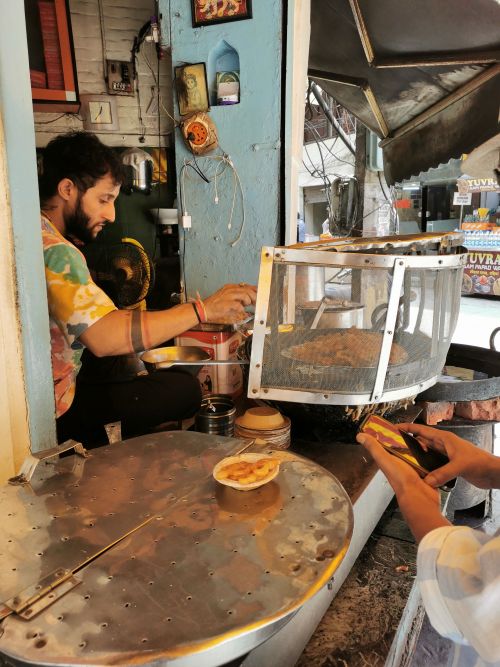
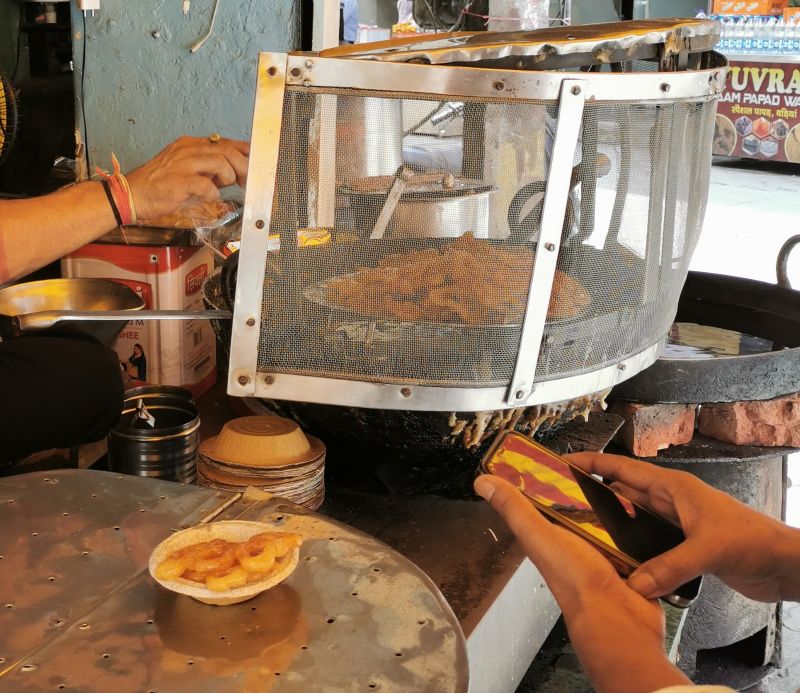
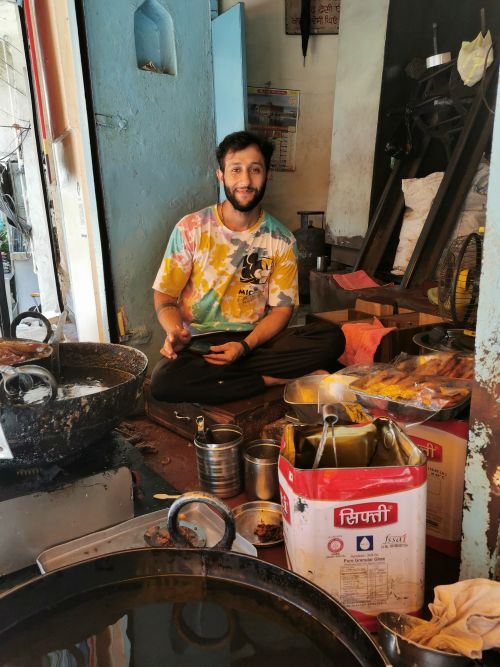
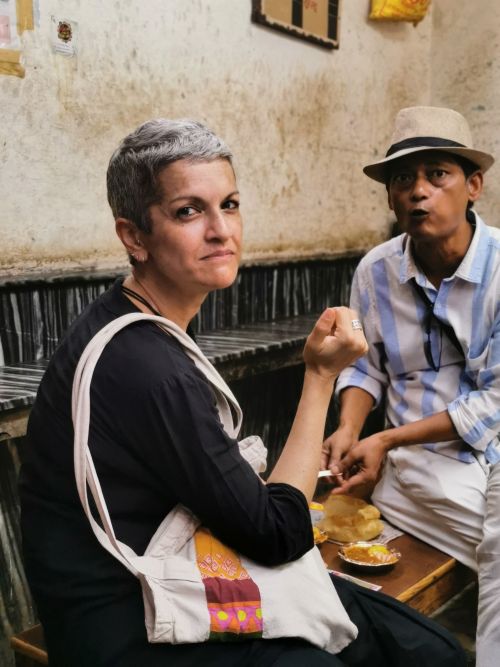
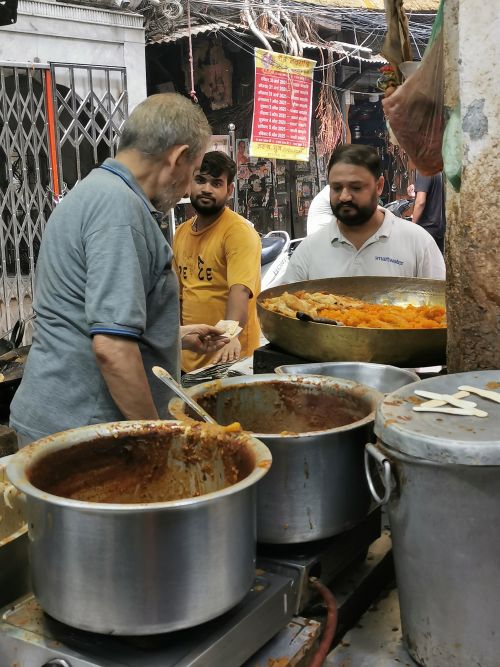
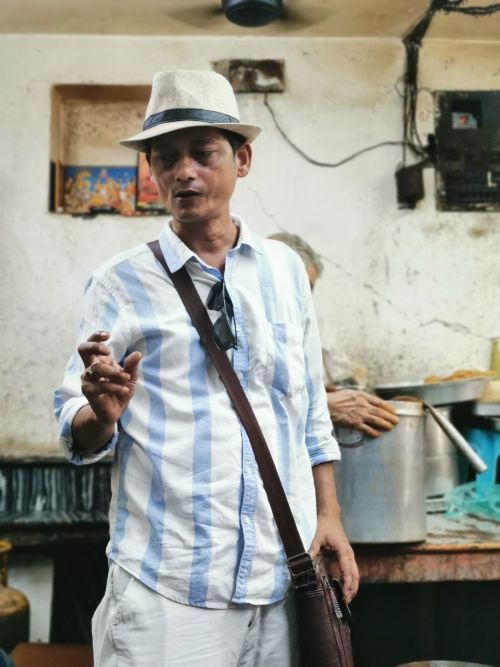
Enjoying Jalebi and lunch in Old Amritsar
We stopped at a Jalebi Wale to taste some freshly made Jalebi, then had lunch at a local street food shop. Amritsari cuisine is renowned for its rich flavours and hearty dishes, and it is said that the ‘must-try specialities’ include Amritsari kulcha, butter chicken, and lassi. We were then shown a craft shop with stamps and a hand-embroidered garment shop.

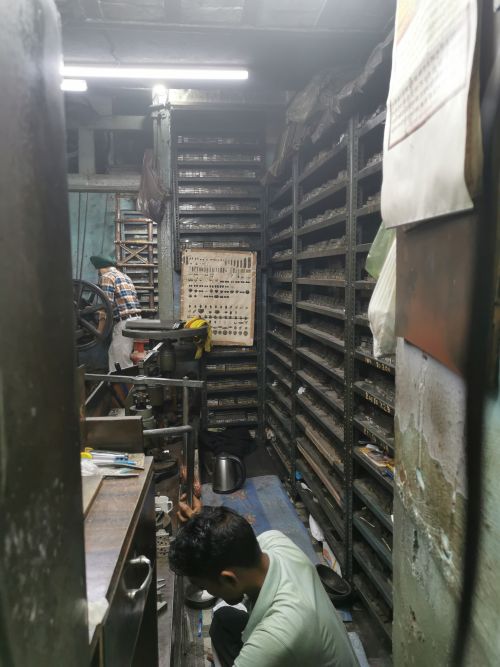
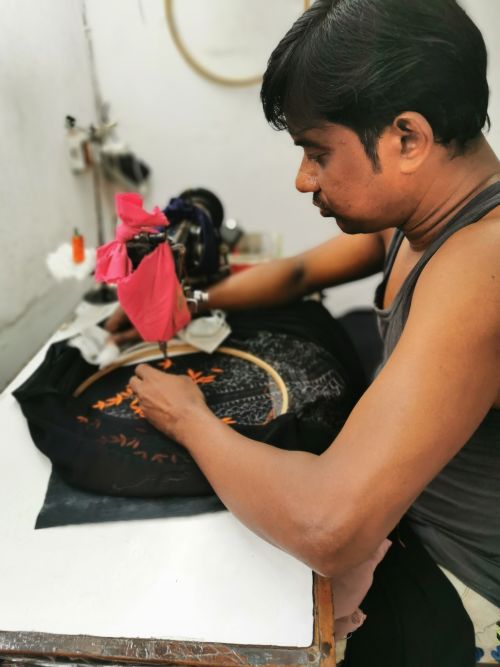
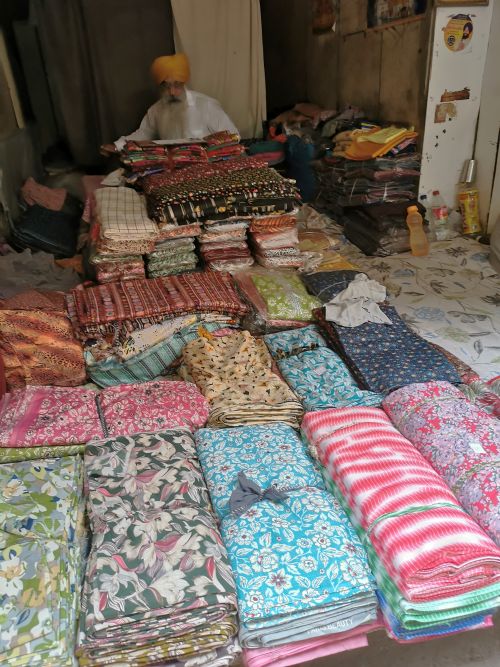
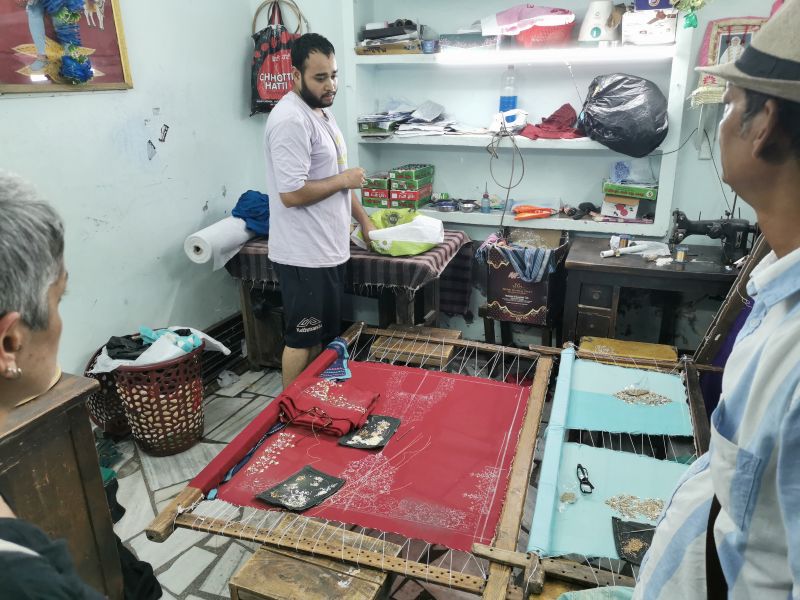
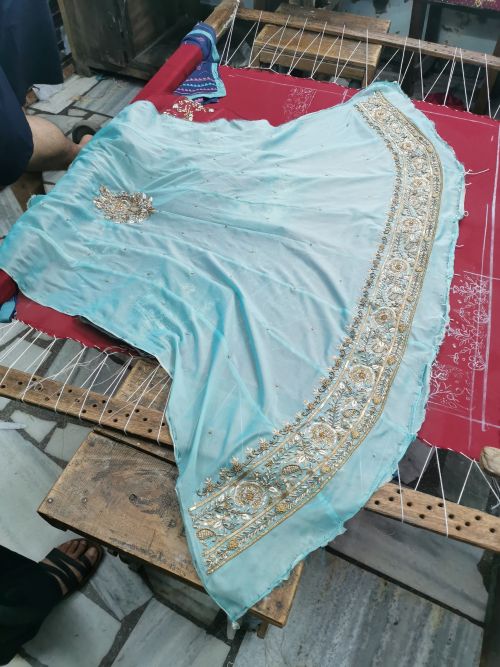
The stamp shop, the fabric and embroidary shops in Old Amritsar
Udasin Ashram Akhara Sangal Wala
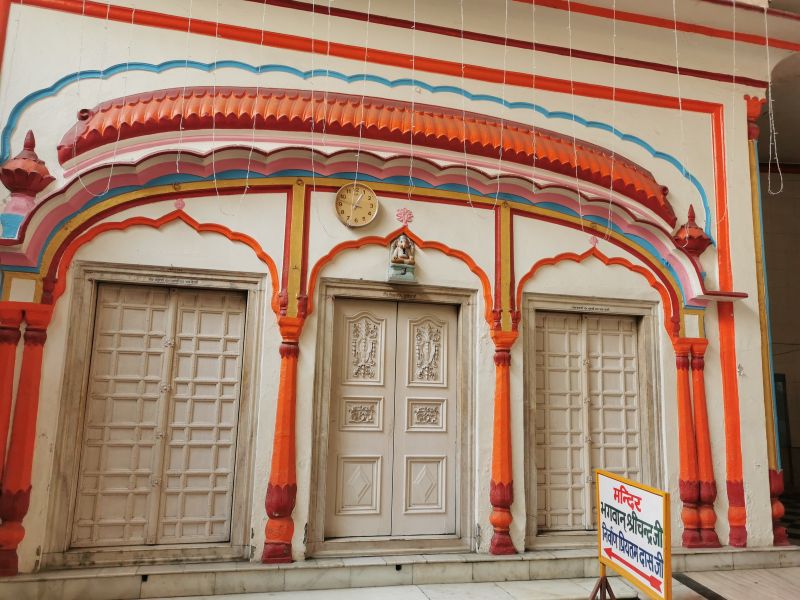
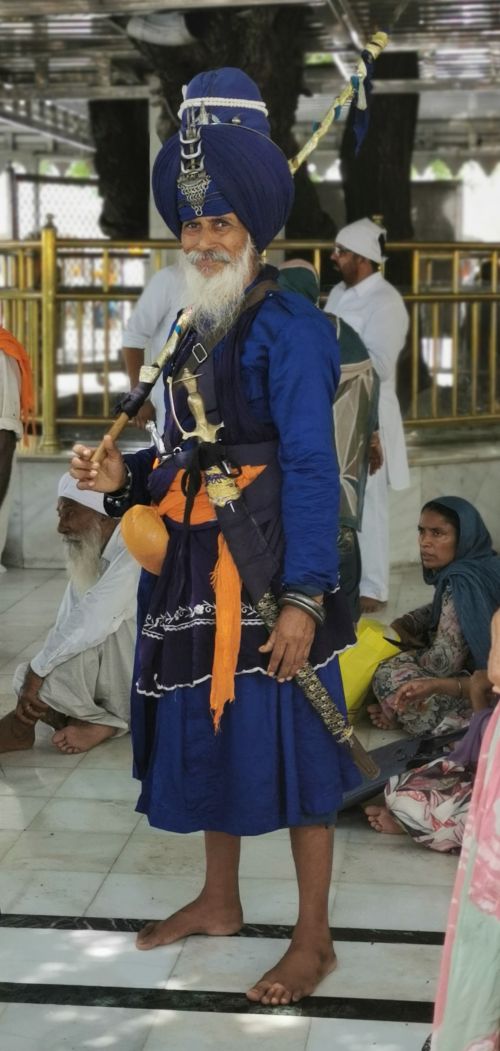
We visited a place in Basant Nagar, which is in the form of an ‘underground Akhara’ called the ‘Udasin Ashram Akhara Sangal Wala’. It houses the Nihang Sikhs, a traditional sect of Sikhs known for their distinctive way of life, their dress – Blue ‘bana’ robes – and tradition in martial arts, which are practised alongside their spiritual meditative practices. These ‘warriors’ are described as fearless; and Nihang, a Persian word meaning crocodile or alligator, refers to their fearlessness.
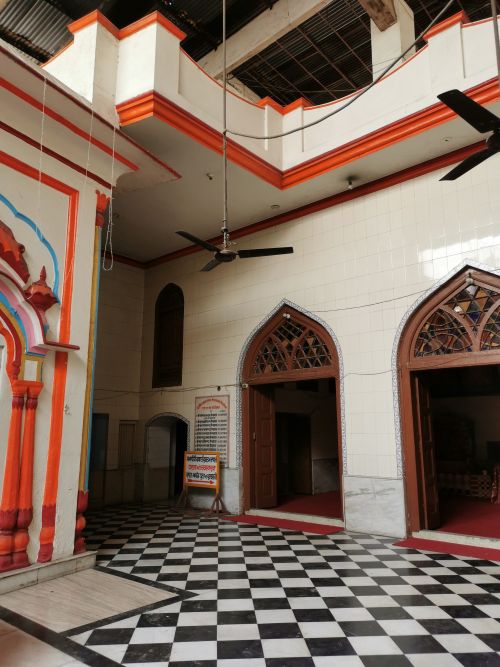
The complex also houses a Shiva temple, surprisingly big in its underground housing. This sect of Sikhs has a history dating back to the ‘Puranic Age’ and was established in 1494 based on the teachings of Guru Nanak’s elder son, Sri Chand, who, contrary to his father’s emphasis on participation in society, chose to live the life of an ascetic and renounced society to live a life of celibacy. He spent time alone in the wilderness practising yoga, meditation, and inner control while his teachings reflect spiritual wisdom, unity and compassion.
The history and origins are long and colourful, and you can read more about the Nihang, Guru Nanak, Sri Chand, and the Udasi here:
https://dvnetwork.org/page/nihangs
https://dvnetwork.org/page/pehli-udasi
https://dvnetwork.org/page/baba-sri-chand
The 18th Century ‘Ahluwalia Qila’ market area
Amritsar is the epicentre of Sikh culture, with numerous gurdwaras (Sikh temples) and historical sites. Experiencing the devotion and hospitality of the Sikh community is often reported as a highlight for many visitors. Within the bustling lanes of the old city, we visited the 18th Century ‘Ahluwalia Qila’ market area, established by Sardar Jassa Singh Ahluawalia, a prominent Sikh leader at that time and which used to house the Peshawar merchants, where every single shop sold a variety of textiles thought to be the best in the world and sourced along and beyond the Grand Trunk Road. Some of these shops survive today. Partially renovated in 2020, with the exposed red brickwork patched up here and there, the shops embody a blend of British-era and local architecture.
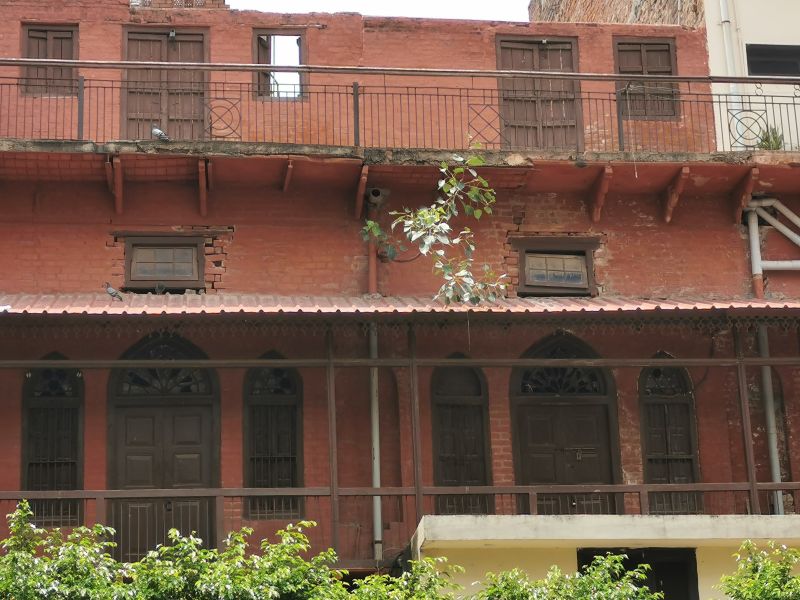
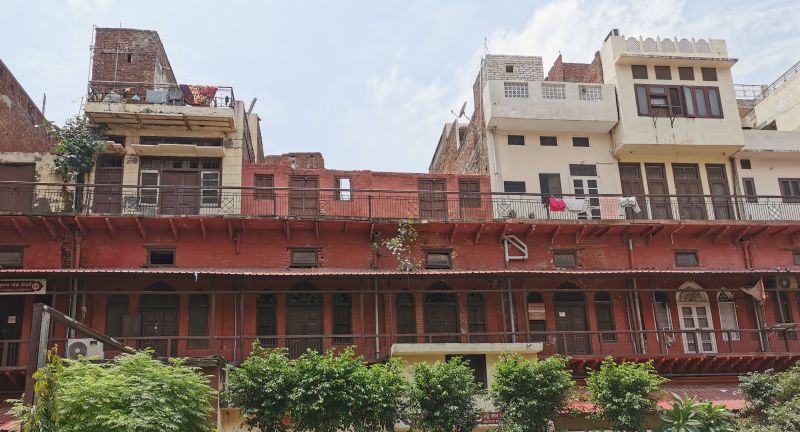
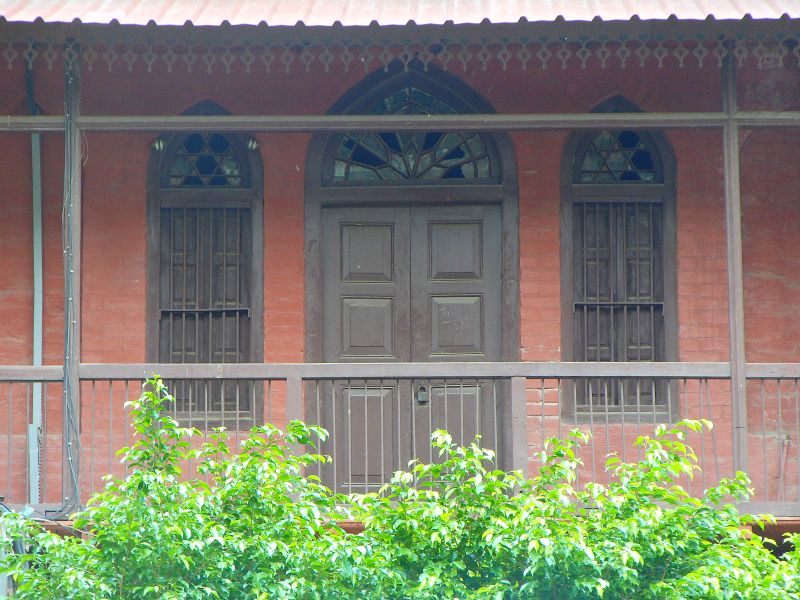
Photos depicting the area are seen here: https://medialit.in/thevoices/forgotten-treasures-of-amritsar-a-photo-feature-of-historic-structures-seeking-attention-in-amritsar-punjab/
A touch of shopping!
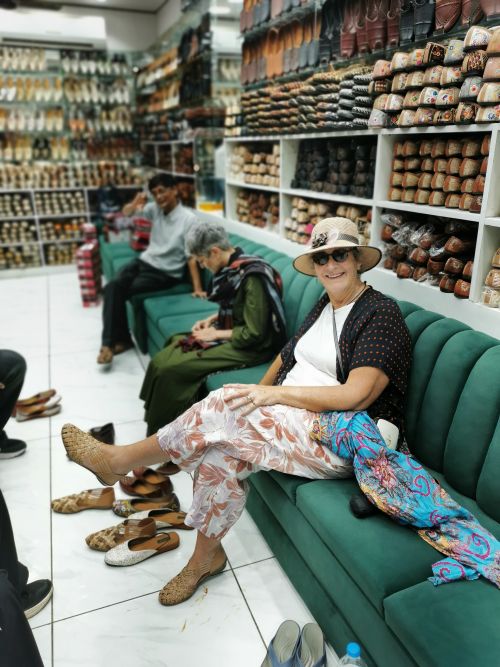
It was during one of our visits to the tangle of streets around the Golden Temple complex that we went to a shop that sells traditional Punjabi Juttis (Mojaris) shoes, of all colours and sizes, plain and embroidered. What a feast for the eyes and feet as we had many pairs thrust in front of us at such a dizzying speed that a halt had to be put on this extravaganza so we could at least look at them, try them on, and choose our purchases.

Durgiana Temple
We also briefly visited the Hindu ‘replica’ of the Sikh Golden Temple called the Durgiana Temple, which, to us, did not have the same ‘feeling’ and appeal, but was nice to visit.
See more here: https://durgianamandir.in/
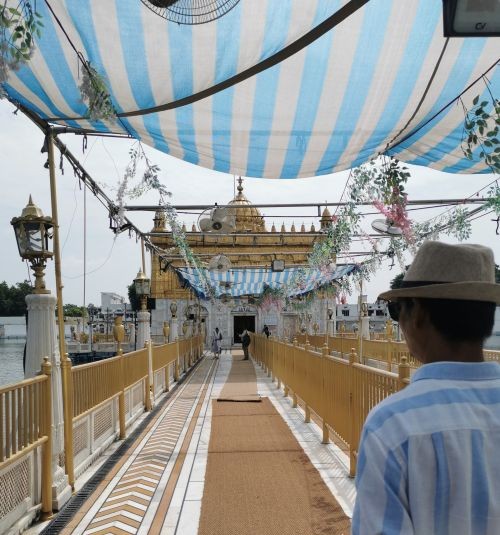
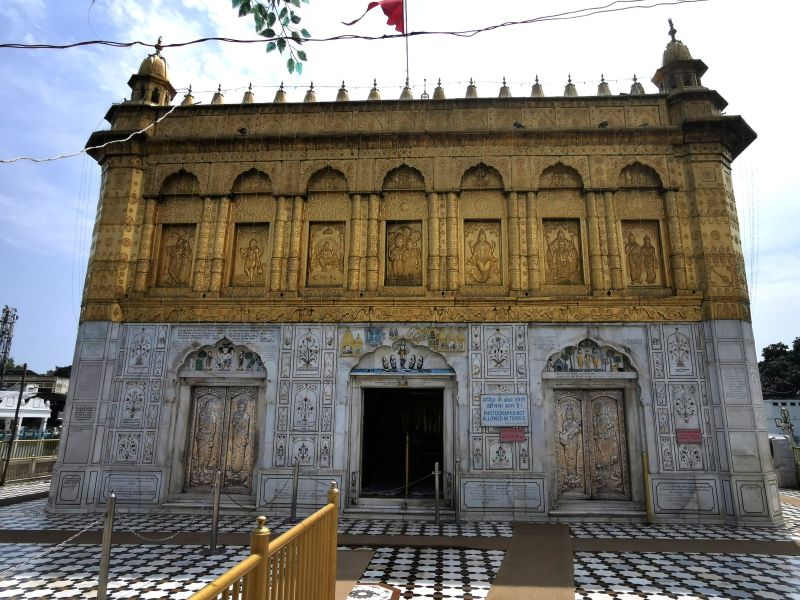
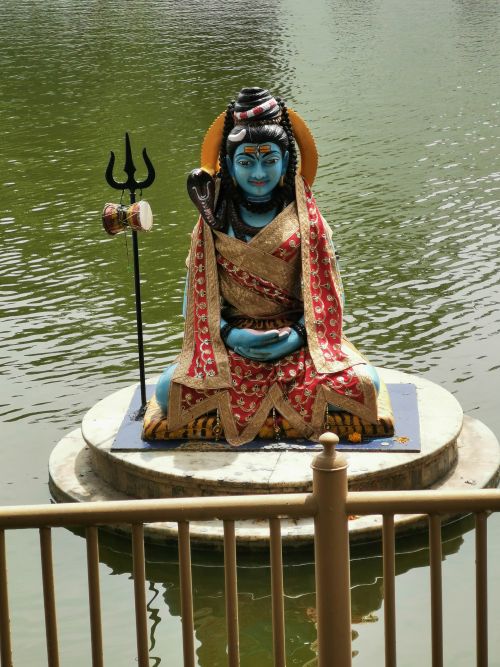
The Durgiana Temple & the Shiva Statue in the surrounding water tank
The last night at the rooftop bar at our hotel!
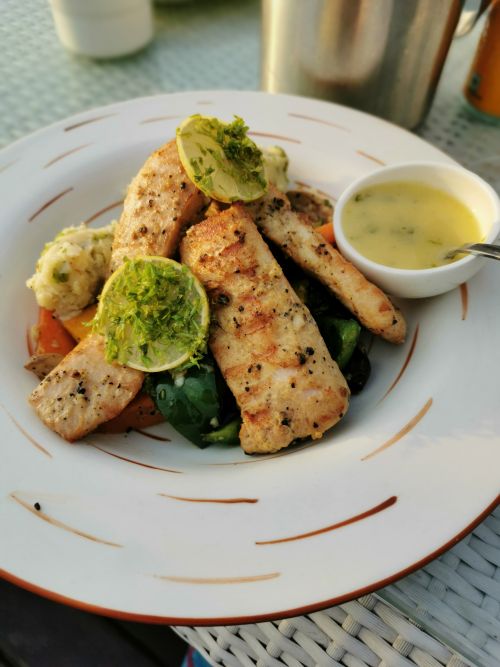
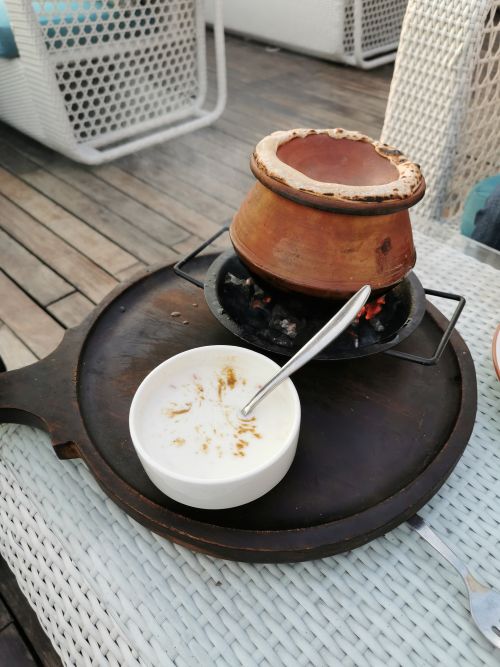
Enjoying and celebrating our last rooftop dinner in Amristar
Experiencing the ceremonial ‘Book of Wisdom’ at the Golden Temple
That night after our rooftop cocktails and dinner, we slept early, for the following day, very early in the morning, we returned to the Golden Temple to witness the ceremonial transport of the Sikh ‘Book of Wisdom’ being brought out of its overnight resting place in the ‘Akal Takht’ and transported into the temple over the water. After parking and making our way on foot to the temple complex, I was surprised at the number of people out at the early time of 3.30am! Once inside, we saw how the lights made the ‘Golden Temple’ and the surrounding white buildings glow and reflect in the water.
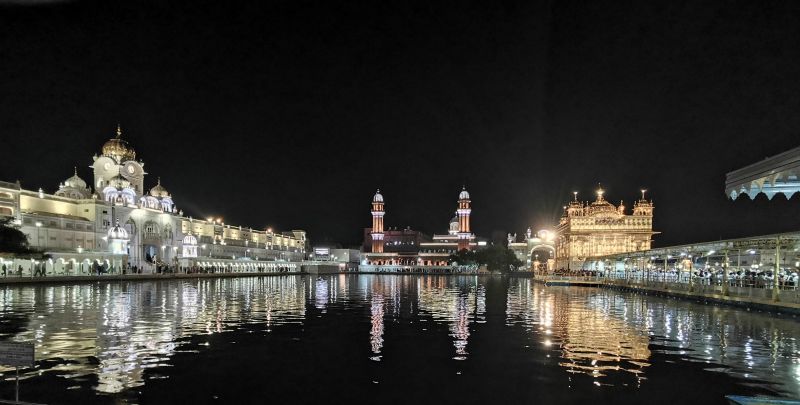
Remember to open up the groups of photos to see them fully!
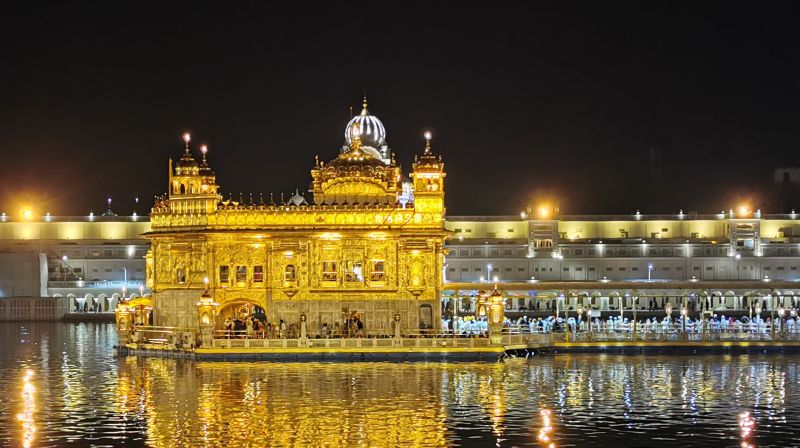
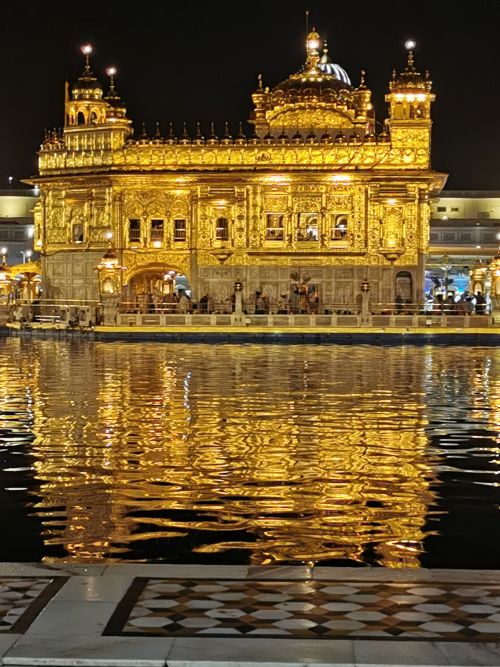
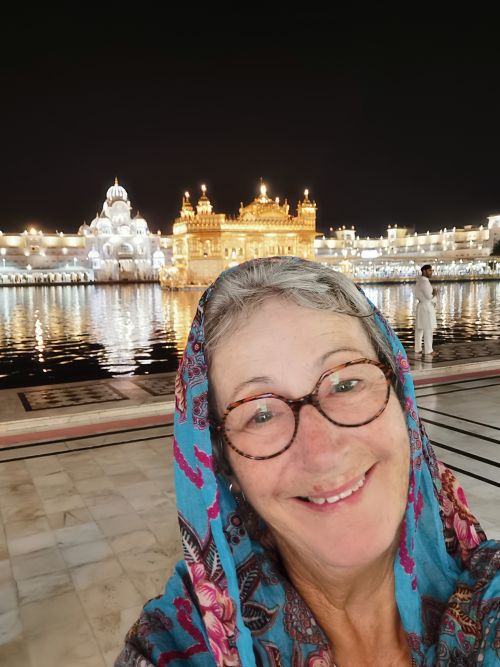
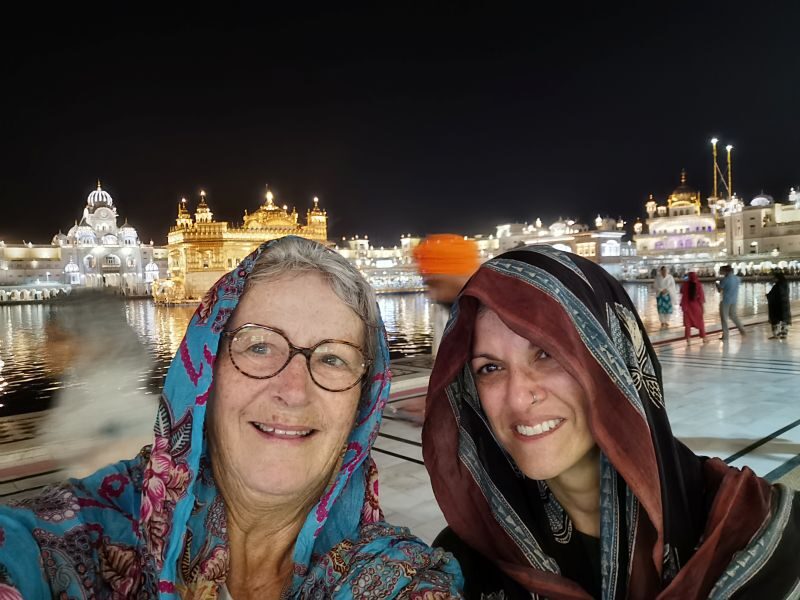
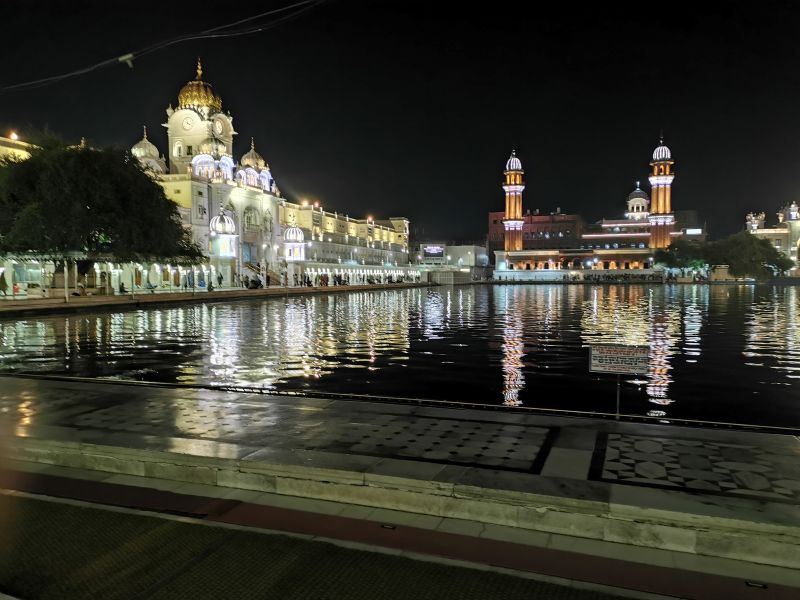
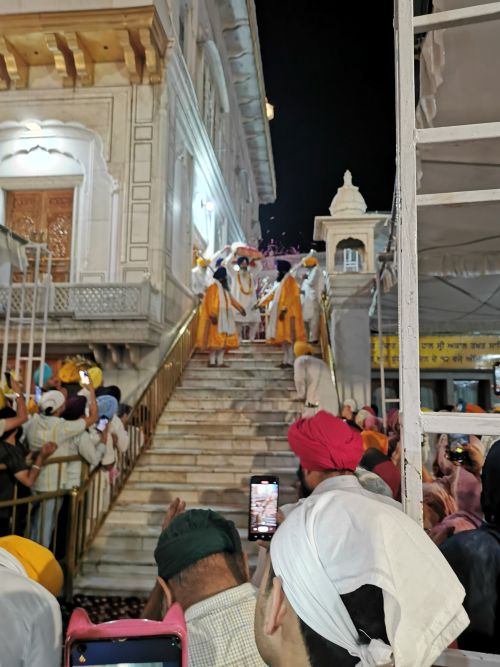
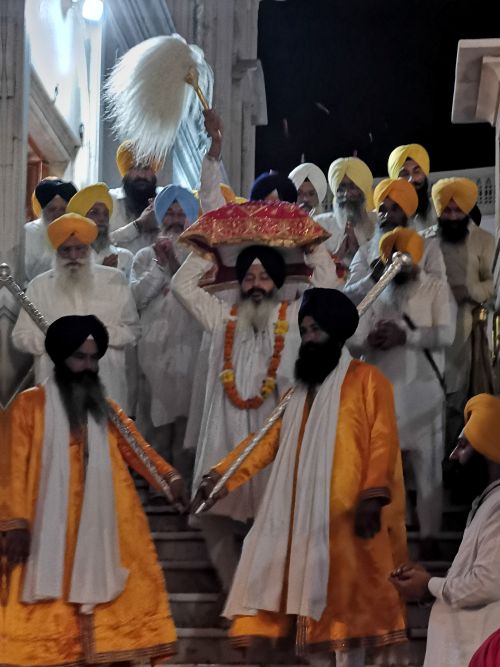
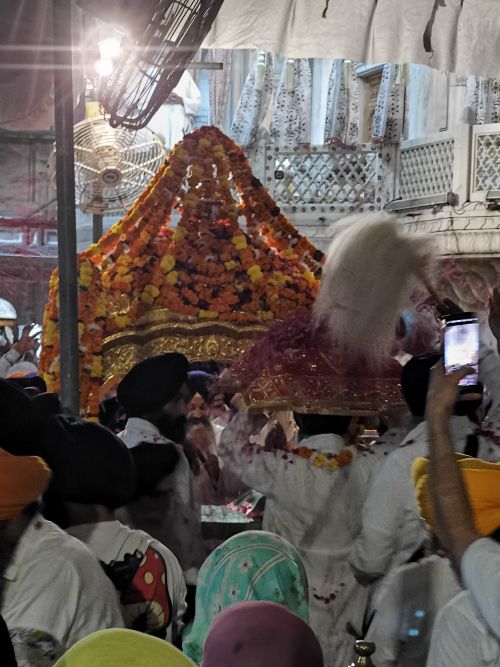
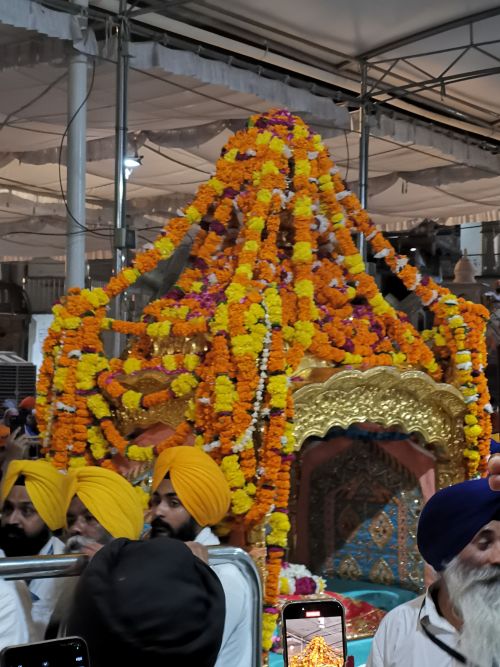
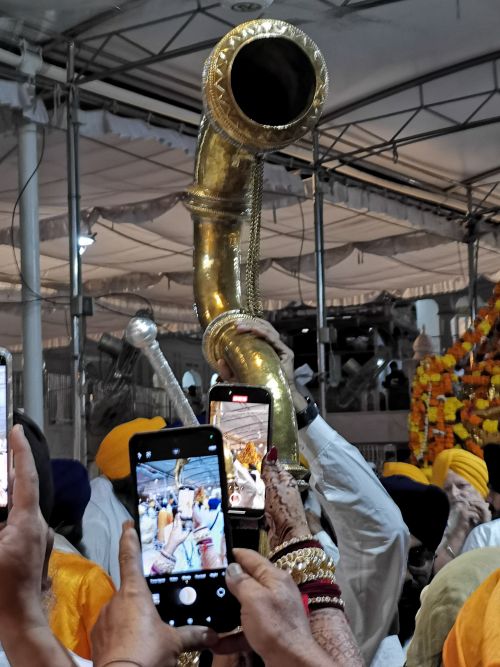
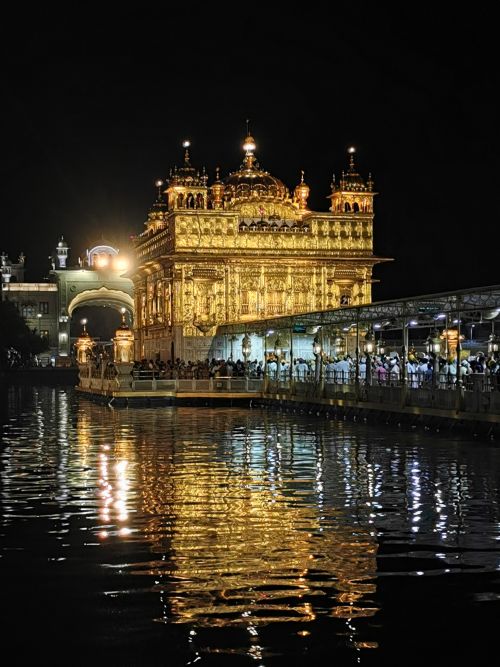
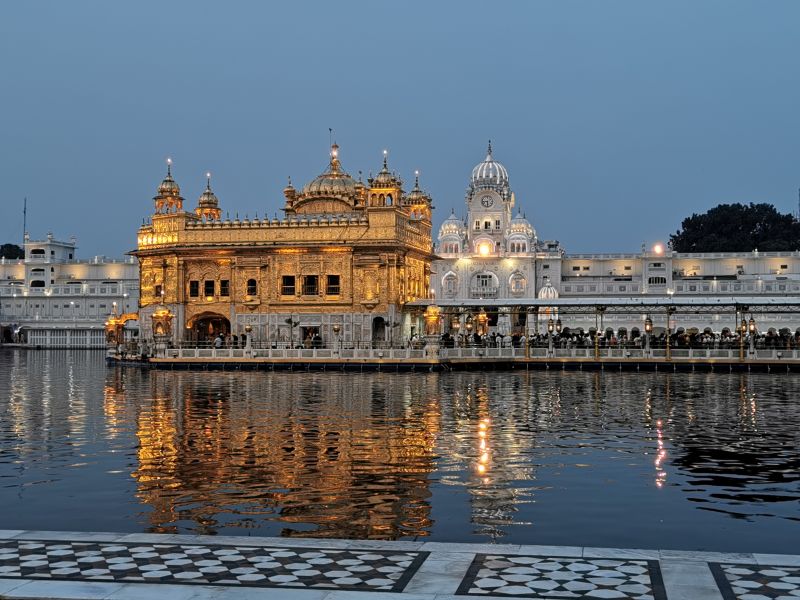
The lovely ‘before sunrise’ ceremony at the Golden Temple and then when the dawn broke
The ceremony was moving to watch, and we stayed until the sun came up and the lights of the complex faded. Holding the spiritual greatness of this place in our hearts, we returned to the hotel and onwards to the airport, to return to Chennai.
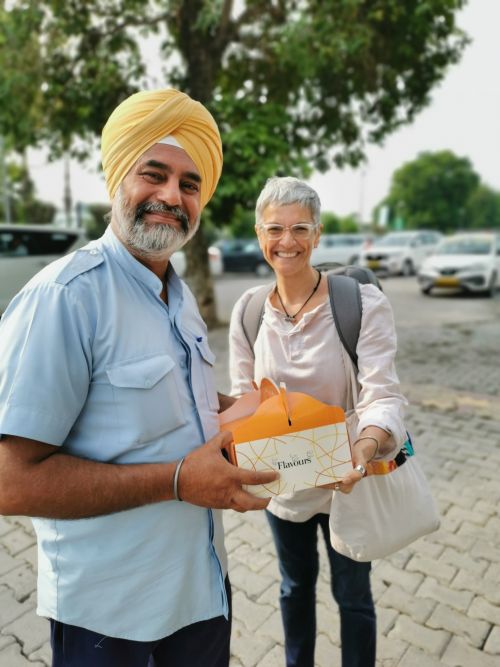

At the airport, giving thanks and saying goodbye to our driver
The visuals and their detailed explanations have been both enriching and informative. Your journey through prehistoric, past, present, and future places of prominence around the planet is truly insightful — offering readers an almost real-life spot experience.
Life is journey of exploration and a meditation too, for you as a gracious couple, and for Shobha. ✨
Thankyou Maheshji! your words are both poetic and encouraging!! your comments are a hightlight of my day!! Thankyou!